Have you ever felt like your sales team is busy all day but still not closing enough deals? Leads come in. Calls are made. Emails are sent. But at the end of the month, the numbers are not where you want them to be. This is a very common problem in many companies today.
Most of the time, the real issue is not effort. It is structured. Without a clear system, sales work becomes messy. Deals get lost. Follow-ups are late. Some leads are strong, but they do not move forward. That is where CRM pipeline management becomes very important.
In this article, we will talk step by step about how to build a clean and simple sales process. We will explain what CRM pipeline management is, why it matters in 2026, and how you can use it to close more deals in a smart and easy way.
What Is CRM Pipeline Management?
Let’s make this very simple. CRM pipeline management means tracking every deal from the first contact until it is closed. It helps you see where each lead stands. You can see who is new, who is ready to buy, and who needs more time.
Think of it like a clear road map. A lead starts at one point and moves step by step until the deal is done. With good CRM pipeline management, you can see this whole journey in one place. Nothing feels hidden or confusing.
Many people think CRM software and CRM pipeline management are the same thing. They are connected, but not the same. The software is the tool. Pipeline management is the way you use that tool to move deals forward in a smart and clear way.
When you manage your pipeline well, your team knows exactly what to do next. No guessing. No chaos. Just clear steps and better results.
Why Your Sales Process Is Not Closing Deals
Now let’s be honest. Many sales teams work hard, but they still struggle. Why? Because they do not have clear stages. Leads jump from one step to another without rules. Some deals stay open for months with no action.
Another big problem is poor follow-up. A lead shows interest today. But no one calls back tomorrow. Or the proposal is sent, but no one checks in after that. Without proper CRM pipeline management, these small gaps turn into lost sales.
Sometimes, teams also chase the wrong leads. They talk to people who are not ready to buy. Or who do not have a budget. This wastes time and energy. A strong pipeline helps filter weak leads early.
When your CRM pipeline management is clear and simple, you remove confusion. You see stuck deals. You see strong deals. You see what needs attention. And that alone can change your results.
The Basic Stages of a CRM Sales Pipeline
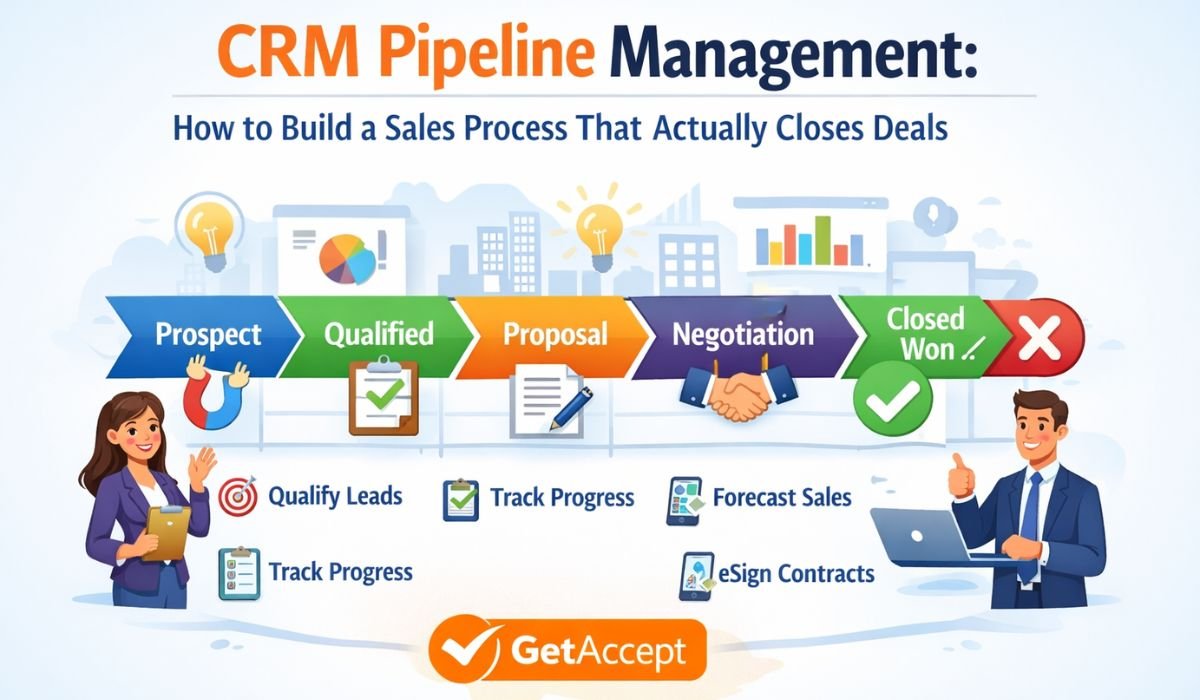
Every good sales process has clear stages. First comes the prospect stage. These are new leads. They may have filled out a form or replied to a message. They are just getting started.
Next is the qualified stage. Here, you check if the lead is serious. Do they have a need? Do they have money to buy? Are they ready to move soon? This step saves time and keeps your CRM pipeline management clean.
Then comes the proposal stage. This is when you send an offer or plan. After that, there may be a short talk about price or details. Finally, the deal is either closed won or closed lost.
When these stages are clear and simple, your team feels calm and focused. Everyone knows what each stage means. That is how CRM pipeline management stays strong and easy to handle.
How to Build a Clear Sales Process Step by Step
First, you must know who your ideal customer is. Not everyone is your buyer. When you define your perfect customer, your sales team works smarter. They speak to the right people and avoid weak leads.
Second, create simple rules for each stage. For example, a deal only moves to the proposal stage after a call is done. Clear rules protect your CRM pipeline management from becoming messy.
Third, set simple follow-up steps. Maybe call after two days. Send a reminder after five days. Keep it easy and clear. When follow-ups are planned inside your CRM pipeline management, deals do not slip away.
Finally, give each team member clear tasks. Who calls? Who sends proposals? Who checks updates? When roles are clear, your pipeline feels smooth and controlled.
How to Qualify Leads the Right Way
Not every lead is a good lead. This is very important to understand. If you try to close everyone, you waste time. Smart CRM pipeline management starts with asking simple and clear questions.
Does the person really need your product? Do they have the money? Can they make the decision? Are they planning to buy soon? These basic questions protect your time and energy.
When you qualify leads early, your pipeline becomes clean. You focus only on real chances. Your close rate improves. Your team feels less stress. This is why good CRM pipeline management always includes strong lead checks.
In 2026, sales teams cannot afford to guess. Data matters. Clear answers matter. And simple systems win every time.
How to Track Deals Without Losing Opportunities
Now let’s talk about tracking. Many deals are not lost because of price. They are lost because someone forgot to follow up. A call was delayed. A message was not sent. This is why CRM pipeline management must be checked every single day.
When you track deals inside your system, you can see who needs attention. You can set simple reminders. You can check how long a deal has stayed in one stage. If a deal sits too long, that is a sign something is wrong.
In 2026, smart sales teams do not rely on memory. They rely on clear tracking. With good CRM pipeline management, you always know what is happening. No guessing. No surprises. Just clear and simple control.
How Forecasting Becomes Easy with a Strong Pipeline
Forecasting sounds big, but it is simple. It means knowing how much money may come in next month. When your pipeline is clean, you can look at each deal and estimate your future sales in a calm way.
For example, if you have five deals in the final stage, you can guess how many may close. If your CRM pipeline management shows strong data, your guess becomes smarter and more real.
Managers love this part. They can plan hiring, marketing, and spending based on clear numbers. When CRM pipeline management is done right, the business feels stable and safe.
How Enterprise eSignature Tools Speed Up Closings
Many deals slow down at the last step. The contract is ready, but the signing takes too long. Emails go back and forth. Papers get lost. This delay can hurt momentum.
This is why enterprise esignature management is very important for modern sales teams. Digital signing tools allow clients to sign from anywhere. No printing. No scanning. Just fast and easy approval.
When signing becomes simple, deals close faster. And when deals close faster, your CRM pipeline management moves smoothly. The last stage should feel easy, not stressful.
How GetAccept Helps Improve Sales Performance
Many sales teams in 2026 use smart tools to support their process. One strong example is GetAccept. The company helps teams manage documents, track engagement, and close deals in a clear and simple way.
GetAccept supports better CRM pipeline management by showing when a client opens a proposal or reads a contract. This gives sales reps useful insight. They know when to follow up and what to say.
Instead of guessing, teams act with confidence. Tools like GetAccept connect well with sales systems and help remove friction at the final stage. When document flow is smooth, closing becomes easier and faster.
If you want to learn more about practical CRM strategies, you can explore this guide on CRM pipeline management to see how modern teams structure their process in a smart way.
Common Mistakes to Avoid in CRM Pipeline Management
Many companies make their pipeline too complex. They create too many stages. Sales reps feel confused. Deals move back and forth without clear rules. This weakens CRM pipeline management over time.
Another mistake is ignoring old deals. Some teams leave lost or dead deals sitting in the system. This makes reports wrong and forecasts unclear. A clean pipeline must be reviewed often.
Also, some managers focus only on adding new leads. But they forget to improve quality. Strong CRM pipeline management is not about more leads. It is about better leads and clear action.
Best Practices for Long-Term Pipeline Success
To keep your pipeline healthy, review it every week. Ask simple questions. Which deals are stuck? Which stage needs help? Where are we losing most clients? Small checks prevent big problems.
Keep your stages simple. Train your team well. Make sure everyone understands what each stage means. Clear understanding keeps CRM pipeline management strong and easy to handle.
Use automation where possible. Reminders, task updates, and alerts save time. But keep the system simple. The goal is clarity, not complexity. In 2026, the best sales teams win because they keep things clean and clear.
Final Thoughts
Closing more deals is not magic. It is structure. It is clarity. It is simple steps followed every day. When your sales process is clean, your team feels calm and focused.
CRM pipeline management gives you that structure. It helps you track, qualify, forecast, and close in a smart way. It removes chaos and replaces it with control.
When you combine clear stages, smart tracking, strong lead checks, and tools like enterprise esignature management, your sales process becomes powerful. Add support from companies like GetAccept, and your team gains speed and insight.
In the end, success is not about doing more. It is about doing the right things in the right order. And that is exactly what strong CRM pipeline management is built to do.