

Ofcom’s most recent media survey put adult UK viewing time on YouTube at over 40 minutes per day on average, and a small but growing share of that pipe is supplied by independent British creators rather than imported content. The economics are tight on this side of the Atlantic — production budgets for solo channels rarely cross five figures — and that tightness has made the UK creator scene unusually quick to adopt AI tools like UniFab that bring down post-production cost. Here is a look at which tools are doing the heavy lifting and why. The pattern echoes earlier waves of British independent media where constrained budgets sharpened production craft rather than diluting it.
Why UK creators reached for AI sooner than expected
Three factors lined up. UK studio rents and equipment costs are high relative to US peers, so the upgrade from a 1080p camera to a true 4K setup is a much bigger budget jump. Energy prices have made desktop GPU upgrades cost more to run year-round. And the British creator economy skews towards independent specialists — heritage, food, travel, motoring — for whom polished delivery matters because the topics are themselves premium. AI enhancement is the lever that lets that work look like it deserves a serious audience without the gear bill.
What a UK creator should evaluate
Four criteria show up in nearly every conversation with British creators who have committed to an AI workflow.
- Cloud option for low-power machines. Domestic energy bills make local GPU rendering expensive on long-form work.
- Honest free tier or trial. A working creator’s budget cannot absorb a misjudged subscription.
- EU/UK data posture. Tools that route footage through clearly stated jurisdictions are easier to defend if a client asks.
Reasonable subtitle workflow. Public Service Broadcasting culture has primed UK audiences to expect captions on everything.
The first and second carry the most weight in practice.
Four AI video tools UK creators are using
We tested the four below against three reference clips: a 1080p London street piece, a 4K interview shot in Yorkshire, and a 720p archive vlog. Hardware: a mid-range Windows laptop and a Chrome browser for the cloud tools.
UniFab Video Upscaler AI
This Video Upscaler covers up to 16K output through four specialised models and offers both local GPU and FabCloud paths. For the British creator’s typical archive-to-4K project, the cloud path is the relevant one because it bypasses laptop power constraints. Four model choices (Equinox, Kairo, Vellum, Titanus) gave us room to find the right balance between detail recovery and grain integrity on the Yorkshire interview. Trade-off: pricing is not clearly listed on the page and requires a checkout walk-through.
Topaz Video AI
Topaz remains the desktop reference and a fixture in many UK colorist suites. The one-time license is friendlier than a recurring subscription for working professionals, but the hardware requirement matters more here than in the US.
Tensorpix
Tensorpix is a browser-based option preferred by some UK creators for its simple pay-per-minute pricing. Output is consistent but trails the desktop options on heavily archival footage.
HitPaw VikPea
HitPaw VikPea is approachable for editors moving up from purely browser-based tools. The watermarked trial is the chief obstacle to proper testing on a real archive.
A heritage channel that rebuilt its archive without a grant
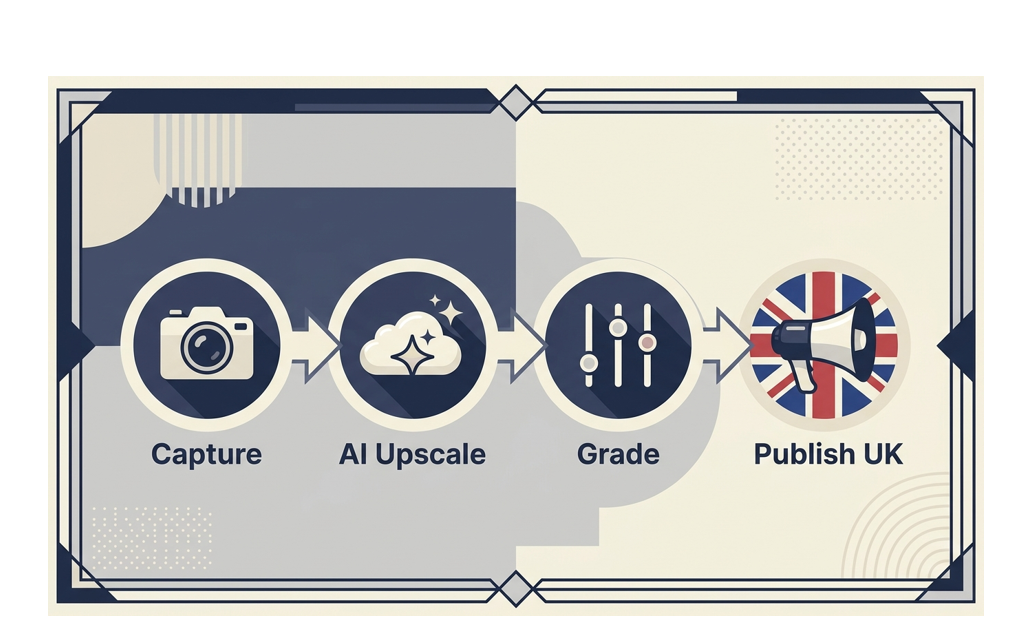
A British heritage channel covering steam railways across the country needed to refresh six years of 1080p footage when it began applying for broadcast partnerships. The channel owner used a browser-based AI Video Enhancer Online pass to upscale and clean the archive without buying a new GPU rig, then handed the masters to a small post house for final colour. Total cost came in below the price of a single broadcast camera. The channel landed two partnership offers in the next quarter.
FAQ
Are these tools GDPR-compatible?
Most cloud services publish a GDPR posture. Read the data residency and retention statements before processing footage of identifiable people.
Can I use AI tools for BBC iPlayer deliverables?
Public service broadcasters have their own tech specs. AI enhancement is allowed but disclosure may be expected. Check the current spec sheet.
Will my Welsh-language captions stay intact?
Yes if the tool preserves the original frame rate and does not re-encode the subtitle track. Test on a short clip.
Are British creators using these tools for client work?
Increasingly yes, often disclosed in the deliverables. Honesty has become a competitive advantage on this side of the Atlantic.
Are there any UK-specific creator funding programmes worth applying for?
Yes — several regional film and creator funds quietly accept AI-enhanced archive material in their submission processes. Check the latest BFI and devolved-nation arts council programmes for current windows.
Final thoughts
British creators have always made more out of smaller budgets, and AI video tools have given that habit a new outlet. The UK conversation is less hype-driven than the US one, partly because the work is judged by audiences who expect both polish and honesty. The tools that win here will be the ones that respect both expectations.
