
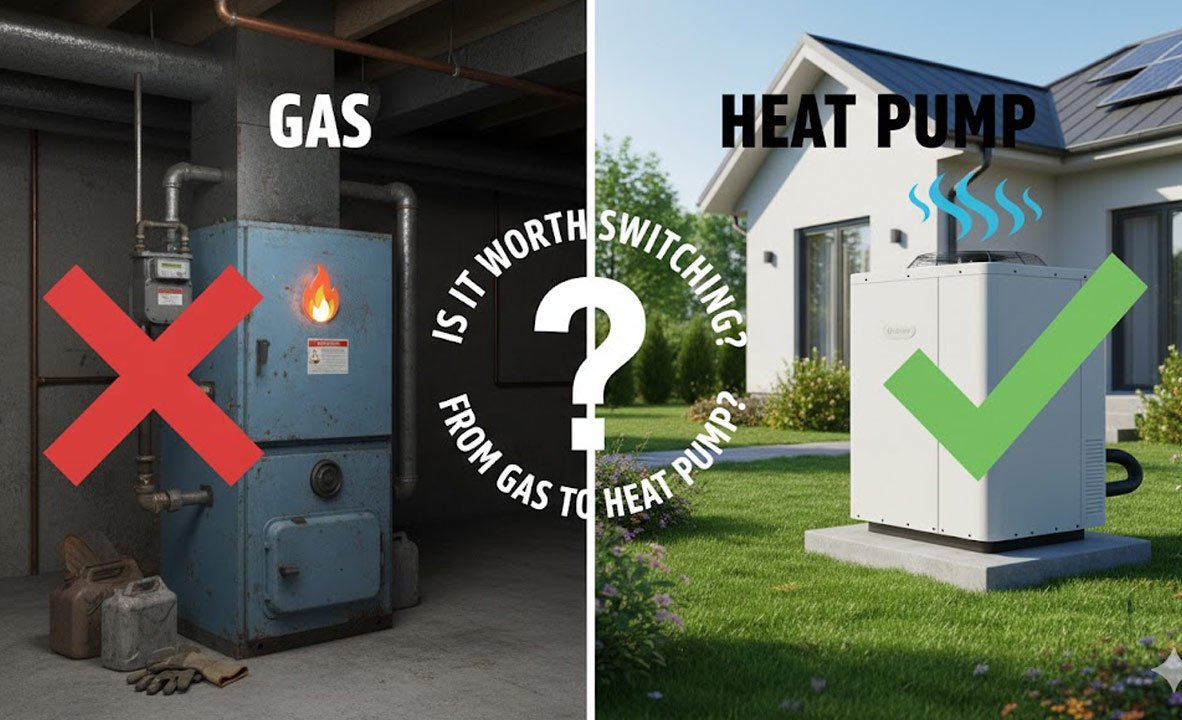
Many UK homes still use gas boilers. But now, heat pumps are becoming popular. A heat pump uses electricity instead of gas to heat your home. It works by pulling heat from outside air or ground.
This heat then warms your home and water. People are asking if switching is a good idea. Let’s look at how heat pumps work, their benefits, costs, and whether switching is really worth it.
What Is a Heat Pump and How Does It Work?
A heat pump works by taking heat from the air or ground outside your house. It then pushes that heat into your home to warm it. You can also use it to heat your water. It works a bit like a fridge in reverse. In the winter, it pulls heat in. In the summer, it can cool your home too. Heat pumps run on electricity, not gas. That means you won’t burn gas to keep warm anymore.
How Much Does a Heat Pump Cost?
The price of a heat pump is higher than a gas boiler. An air source heat pump costs about £7,000 to £13,000, while a ground source heat pump can cost over £20,000. You may need new radiators or underfloor heating too.
Installation takes longer than fitting a gas boiler, but the government gives grants to help cover the cost. Under the Boiler Upgrade Scheme, you can get £7,500 toward the switch. For some households, combining these incentives with local schemes can essentially lead to a Free Air Source Heat Pump, making the transition significantly easier for many UK residents.
Will It Lower My Energy Bills?
A heat pump uses electricity instead of gas. Electricity is more expensive than gas per unit. But heat pumps are very efficient. They can make three units of heat from one unit of electricity. So, your bills could go down.
But it depends on your home. Well-insulated homes save more money. Old or draughty homes may need insulation first. If your house is ready, you may see savings over time. This could help with rising energy costs.
Are Heat Pumps Better for the Environment?
Yes, heat pumps are much better for the environment than gas boilers. Gas boilers burn fossil fuels. This releases carbon dioxide, which harms the planet. Heat pumps do not burn gas or oil. They use clean electricity instead.
If your electricity comes from wind or solar, even better. This means heat pumps lower your carbon footprint. The UK wants to be net zero by 2050. Switching to heat pumps is one step in the right direction.
Are Heat Pumps Good for All Homes?
Heat pumps work best in homes that are well insulated. If your home leaks heat, they will not work well. You may need to improve wall, loft, or floor insulation first. They also work better with underfloor heating or large radiators.
In small homes or flats, it may be harder to install them. Ground source heat pumps need garden space. Air source ones can fit outside walls. A survey can tell if your home is suitable.
How Long Do Heat Pumps Last?
Heat pumps can last a long time—up to 20 years or more. That’s longer than many gas boilers. They need regular servicing to keep them working well. If looked after, they stay reliable for many years.
Parts may need replacing over time, like fans or pumps. But overall, they’re built to last. Long life means more value for your money. And since they are efficient, you save more in the long run.
Do Heat Pumps Work in Cold Weather?
Yes, heat pumps work even when it’s cold outside. Air source heat pumps can work in freezing weather. They are used in colder countries like Norway and Sweden. Ground source heat pumps use heat from the ground, which stays warmer than air.
So, they work well in cold weather too. They may take longer to heat your home on very cold days. But they keep working. You just need the right size and setup for your house.
What Help Can I Get from the Government?
The UK government offers help through the Boiler Upgrade Scheme. You can get £7,500 for a heat pump. This helps cover the cost of switching. You must own your home in England or Wales. You also need a valid energy performance certificate.
Your home must not need too many insulation changes. Installers apply for the air source heat pump grants on your behalf. There may be other local grants as well. These make switching more affordable for many people.
Will I Still Need a Gas Connection?
Once you switch, you might not need gas anymore. If you only used gas for heating, you can disconnect it. You can cook with electric hobs or induction stoves. Your hot water can come from the heat pump too.
This can save you the gas standing charge. But check if you still need gas for anything else. Some people keep both systems for backup. It depends on your needs and your home setup.
What Are the Pros and Cons of Switching?
Let’s start with the pros. Heat pumps are good for the environment. They can lower your energy bills. They need less maintenance and last longer. You can get help from the government to buy one. Now the cons. They cost more upfront. You may need home upgrades. They can take longer to heat your home. Installation can be tricky in small spaces. But for many people, the pros are worth it.
Is It Worth Switching to a Heat Pump?
It depends on your home, your budget, and your plans. If your home is well-insulated, a heat pump can save money. If you care about the environment, it’s a smart choice. If you plan to stay in your home for many years, the savings add up.
If you qualify for a grant, switching becomes easier. But if your home is not ready, costs can rise. So, think carefully. Ask an installer for advice. Then decide what’s best.
Conclusion
Switching from gas to a heat pump is a big change. But it can be a smart one. It helps the planet and can save you money over time. The UK is moving toward greener heating. Grants can help with the cost. Make sure your home is ready first. Then decide if it’s right for you. Talk to experts. Ask about costs, savings, and options. With the right plan, a heat pump can be a great upgrade.