
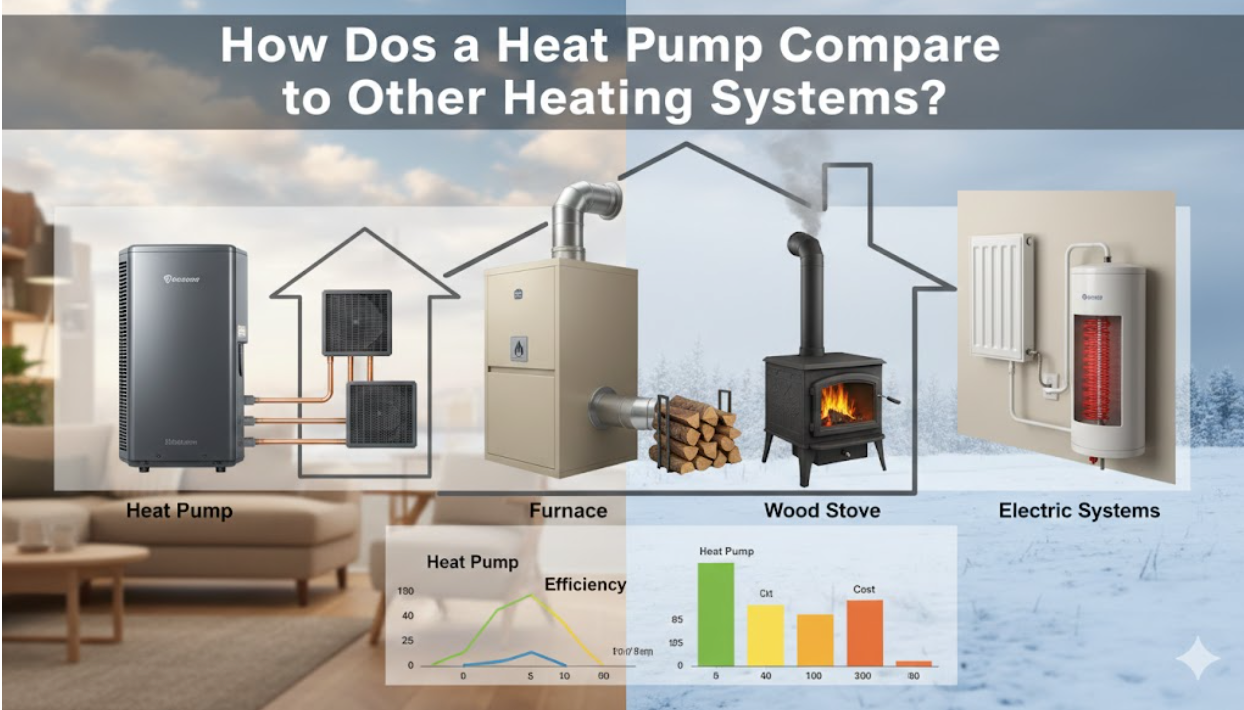
Heat pumps nowadays gain more popularity than other technologies in the UK for heating homes. This eco-friendly system is also energy-efficient. It consumes energy 300% better than a gas boiler or some other heating systems. Though the initial costs may sometimes be twice or thrice, savings are so much more superior in terms of long-run energy gains compared to other heating technologies.
Not just that, the air source heat pump grant is available for eligible homeowners and tenants who are on benefits. So, low-income households get rid of the upfront cost too. But how do they compare to other heating systems? Let’s explore their differences.
What is a Heat Pump?
A heat pump works by the movement of heat from one area to another, and it depends on electricity in order to perform well. When summer comes, the heat pump will cool down your house and warm it once again when it is winter time. Heat pumps are not just like boiler heats that are gained through burning of fuel because this is a clean and modern type of heating mechanism for UK houses.
How Does a Heat Pump Work?
A heat pump does not create heat like the boilers or electric heaters. In winter, it absorbs heat from the air, ground, or water outside your home. It then transfers this heat indoors to warm your house. The procedure works in reverse to cool your house in the summer.
A heat pump uses a refrigerant circulating in a closed loop, which absorbs heat from the outside and then releases it inside homes. This process is not electricity-hungry technology, as a heat pump uses a unit of electricity to produce three or more units of heat. Heat pumps are environment-friendly, noiseless, and work all through the year. They last much longer than most other heating systems.
How Does a Boiler Work?
Boilers are common in UK homes. They use gas, oil, or wood to produce heat. The heat warms water that moves through pipes and radiators. Boilers can quickly make your home feel warm. However, combustion of fuel creates carbon emissions and harms the environment. Gas boilers are cheaper than electric ones, but they are not as environmental-friendly as heat pumps.
How Does an Electric Heater Work?
Electric heaters use electricity to create heat. They are small, portable, and easy to use. You can move them to any room. However, they can be expensive to run for long periods. Electric heaters are better for small spaces or short-term heating. Unlike heat pumps, they do not cool your home in summer. They also use more energy, which can increase electricity bills.
What About Wood Stoves?
Wood stoves burn wood to make heat. They are great for heating one room quickly. Wood is cheaper than gas or electricity in some areas. But wood stoves need regular cleaning and maintenance. They also produce smoke, which can affect air quality. Unlike heat pumps, they cannot cool your home or heat all rooms easily.
Heat Pump vs Gas Boiler
Gas boilers burn gas to create heat. Heat pumps use electricity to transfer heat instead. Gas boilers are typical in the UK and heat a home fast. However, they contribute to pollution of the environment and carbon dioxide into the atmosphere. Another way through which they damage the ecosystem is that they were produced using renewable energy sources. They are termed as environmental heat pumps. Though high at the initial stage, installation costs may be offset over time by considerable savings on energy.
Heat Pump vs Oil Boiler
Oil boilers burn oil to heat homes. They are often used in areas without gas lines. Deliveries of fuel to oil boilers need to be made periodically, which might be inconvenient. In contrast, heat pumps do not even require any supplies of fuel, and work with electricity. Heat pumps are less carbon-intensive and more efficient than oil boilers. Thus, they make for a greener home.
Heat Pump vs Electric Heater
Electric heaters are small and provide instant heating, but they are quite expensive to operate. However, compared to electric heaters, heat pumps use much less energy. They generate more units of heat for every unit of power used. This helps lower your energy bills. Electric heaters are better for small spaces, while heat pumps are ideal for whole homes.
Heat Pump vs Wood Stove
Wood stoves burn wood to heat a room. They give a cosy feel but need regular wood supply. Heat pumps are easier to maintain and do not use fossil fuel as an energy source. It also heats the whole house and not just warm up a single room like stove ones. Another is that wood stoves also emit hazardous smoke that results in air pollution. Heat pumps have fewer environmental as well as human impacts.
Installation and Maintenance
Heat pumps must be installed by professionals who might charge more than non-pro engineers. Electric heaters and other devices are simpler to install. However, heat pumps need less maintenance than boilers or wood stoves. They have fewer parts that can break. Regular servicing ensures they work efficiently for years.
Costs and Savings
Heat pumps cost more to install than other systems. However, they save money on energy bills over time. Government grants such as the ECO4 and BUS Scheme can reduce upfront costs. The running cost of heat pumps is much less expensive than electric, gas or oil heaters or boilers.
Environmental Impact
The most ecologically friendly option is a heat pump. They don’t emit any direct emissions and utilise renewable energy. Gas and oil boilers emit harmful gases, making it a climate-change contributing agent. Wood stoves only produce smoke and particles, which harm air quality. Selecting a heat pump minimizes your carbon footprint.
Comfort and Efficiency
All year long, heat pumps provide reliable warmth and cooling. Stoves and boilers only provide heat in the cold. Additionally, heat pumps improve the comfort of houses by dehumidifying the air. They provide serenity at home since they are quieter than the majority of boilers and heaters. Their efficiency and comfort make them a smart choice.
Drawbacks of Heat Pumps
Heat pumps run efficiently in mild climates. In very cold weather, they may need extra energy support. Installing a heat pump can be expensive. You may also need good insulation for it to work well. Unlike electric heaters, they cannot be moved to different rooms.
Are Heat Pumps Right for You?
Heat pumps are recommended only in well-insulated homes. They work well in well-insulated homes. For a heat pump to be maximally effective, older houses would require more insulation. You should consider a heat pump if you want your home to be greener and running costs much cheaper. Consider your home size, climate condition and your priority when choosing a heating system.
Conclusion
Heat pumps are efficient, environmentally friendly, and cheaper in the long run. They surpass other heating systems in several ways and are currently supported by government initiatives like the Boiler Upgrade Scheme, which helps homeowners transition to low-carbon heating. Be it upgrading the heating system in your home or building a new one, consider heat pumps. Switch to the warmth of sustainable homes in the UK.
