
Most people pick glasses frames based on face shape or personal taste. Fewer think about eye colour, which is a shame because it is one of the more reliable guides to what will actually look good on you. The right frame colour can make your eyes appear more vivid and defined. The wrong one can make them disappear into the frame entirely.
The same logic applies to lens choices, whether you are buying prescription glasses, sunglasses, or colored contact lenses. Eye colour is not the only variable, but it is one worth understanding before you spend money on eyewear you end up second-guessing.
Why Eye Colour Matters in Eyewear
Eye colour sits at the centre of your face. Glasses frames surround it. The relationship between the two either creates harmony or works against itself.
Frames that contrast gently with your eye colour tend to make the eyes stand out. Frames that blend too closely can flatten the overall look. Frames that clash aggressively can draw attention away from the eyes entirely, which is usually not the goal.
This is not about rigid rules. It is about understanding what is happening visually so you can make an informed choice rather than guessing in front of a mirror with the clock running out on your lunch break.
Blue Eyes
Blue eyes sit on the cooler end of the colour spectrum. They reflect light well and tend to read as prominent features even without much help. The frame choices that work best are the ones that deepen or complement that cool quality rather than washing it out.
Frames that suit blue eyes particularly well:
- Tortoiseshell in warm amber and brown tones, which creates contrast through warmth rather than competing with the blue
- Deep navy or slate blue frames, which echo the eye colour in a way that feels coordinated rather than matchy
- Clear and light grey acetate frames, which let the eyes do the work without the frame competing
- Rose gold and copper metal frames, which add warmth alongside the cool eye tone
What tends to work less well is very pale or icy frame colours that sit close to the eye colour without enough contrast to differentiate. The eyes can look faded rather than striking.
For lens choices, blue-eyed wearers tend to find that brown or amber tinted sunglasses deepen the contrast between their eye colour and the lens. Grey tints work well too without altering colour perception.
Brown Eyes
Brown is the most common eye colour globally and the most versatile when it comes to glasses frames. It sits in the warmer, neutral range of the spectrum and has enough depth to hold its own against bold frame colours that might overwhelm lighter eyes.
Almost every frame colour works with brown eyes, which is both useful and slightly unhelpful as guidance. The more specific advice is about what makes brown eyes look their best rather than just acceptable.
Frames that genuinely flatter brown eyes:
- Rich jewel tones, deep greens, burgundy, and navy all bring out the warmth and depth in brown eyes in a way that neutral frames do not
- Warm gold metal frames, which sit naturally alongside the warm undertones in brown irises
- Bold black acetate, which creates strong contrast and makes brown eyes appear darker and more defined
- Earthy tortoiseshell tones, which feel cohesive without being low contrast
For lens choices, virtually all tint colours work with brown eyes. Green and grey tints look particularly natural.
Green and Hazel Eyes
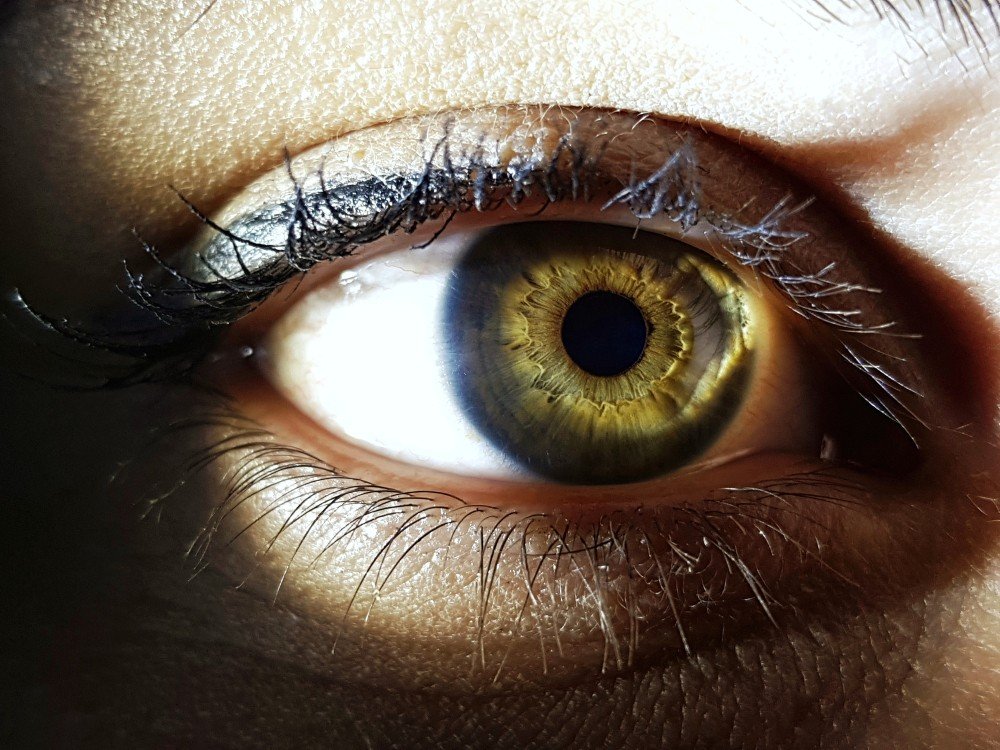
Green and hazel eyes have a quality that makes them genuinely interesting to work with. They shift in different lighting, picking up different tones depending on what they are near. The right glasses frames can lean into that quality and make the colour more vivid.
Frames that work well here:
- Warm tortoiseshell, which pulls out the gold and amber tones in hazel eyes
- Olive and earthy greens, which complement green eyes without matching them too exactly
- Purple and plum tones, which sit on the opposite side of the colour wheel from green and create a contrast that makes the eye colour appear more saturated
- Copper and rose gold metal frames, which enhance warm undertones without overpowering them
Green and hazel-eyed wearers tend to do well with amber and brown lens tints in sunglasses, which enhance the warmth in their eye colour noticeably.
Grey Eyes
Grey eyes are relatively rare and often shift between blue-grey and green-grey tones depending on lighting and surrounding colours. They are cool and subtle, and the frames that work best tend to honour that subtlety rather than trying to overpower it.
Silver and gunmetal frames look particularly natural with grey eyes. Soft blues and muted greens work well. Clear and translucent frames let the eye colour speak without interference. Very dark or very warm frames can sit awkwardly against the cool neutrality of grey eyes, though it varies considerably depending on skin tone.
What This Means for Colored Contact Lenses
Eye colour and lens choice intersect in a very specific way when it comes to colored contact lenses. Enhancement tints work by deepening or brightening the natural eye colour rather than replacing it, which means they work best when there is an existing colour worth enhancing. Blue and green eyes tend to respond well to enhancement lenses. Very dark brown eyes often need opaque tints to see any change at all.
Opaque colored contact lenses fully replace the appearance of the natural eye colour, which means the choice of lens colour is independent of what sits underneath. That said, the surrounding features of skin tone, hair colour, and facial structure still influence which lens colour looks most natural.
A few things worth knowing before buying:
- Enhancement tints are semi-transparent and work on lighter eyes only
- Opaque tints work on all eye colours including dark brown
- The lens colour you see in the box will look different on different people because the underlying eye colour still influences the result even with opaque lenses
- Always buy colored contact lenses from a registered retailer with a valid prescription or fitting, regardless of whether they carry vision correction
Choosing Glasses Online with Eye Colour in Mind
Buying glasses online has become much more straightforward over the past few years. Virtual try-on tools, home trial programmes, and detailed frame measurements have removed most of the uncertainty that used to make people reluctant to buy prescription glasses without visiting a physical shop.
The one area where online shopping still requires some self-awareness is colour. Screen calibration varies between devices, which means frame colours do not always look exactly as they appear. A few practical steps help:
- Check frame colours in customer photos rather than studio shots, which are often colour-corrected
- Cross-reference the frame colour name across multiple stockists to get a sense of the actual shade
- Use virtual try-on tools in natural daylight rather than under artificial lighting, which shifts colour perception
- Read reviewer comments about colour specifically, since people often note when a frame looks different in person
The guidance on eye colour in this article translates directly into your online search. If you have blue eyes and warm tortoiseshell frames are a strong choice, that narrows your browsing considerably and saves the kind of time that tends to get spent going in circles.
One Last Thing
Eye colour is a useful guide, not an absolute rule. Skin tone, hair colour, and personal style all interact with frame choices in ways that a single-variable guide cannot fully account for. Some of the most striking eyewear combinations break the expected pairings entirely.
What understanding eye colour does is give you a starting point that is grounded in something real rather than picking up whatever happens to be on the nearest display. From there, the mirror does the rest.