
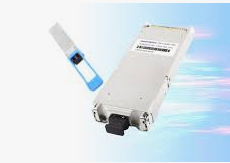
As 100G networks continue to serve as the backbone of modern data centers and enterprise infrastructures, understanding what defines the real performance of a 100GBASE-LR4 optical module becomes increasingly important. While 400G and 800G technologies are gaining attention, 100G QSFP28 modules remain widely deployed across aggregation layers, campus backbones, and data center interconnects. Among them, the 100GBASE-LR4 QSFP28 1310nm 10km LC Duplex SMF DDM Optical Transceiver Module stands out as a reliable solution for medium-reach single-mode transmission.
Although 100G QSFP28 modules may look identical in form factor, their actual performance is shaped by multiple technical factors beneath the surface. From optical wavelength stability to receiver sensitivity and digital diagnostics monitoring, each parameter contributes to link reliability, signal integrity, and long-term operational stability. Understanding these elements helps network engineers make informed deployment decisions and avoid unexpected performance bottlenecks.
Optical Architecture and Wavelength Stability
4×25G WDM Transmission Principle
The performance foundation of a 100GBASE-LR4 module lies in its optical architecture. Based on the IEEE 100GBASE-LR4 standard, the module transmits four separate 25Gbps lanes over four CWDM wavelengths around the 1310nm window. These wavelengths are multiplexed into a single fiber pair using wavelength division multiplexing, allowing 100Gbps aggregate throughput over duplex single-mode fiber.
Because the module operates in the 1310nm region, wavelength accuracy and thermal stability are critical. Even slight wavelength drift caused by temperature fluctuations can introduce crosstalk or increase insertion loss within the multiplexing components. High-quality laser sources and precise temperature control mechanisms ensure stable channel spacing and consistent optical output. This directly affects long-distance signal integrity, particularly across the full 10km transmission range.
Optical Power Budget and Link Margin
Transmit Power and Receiver Sensitivity
One of the most decisive performance indicators of a 100GBASE-LR4 module is its optical power budget. The power budget is determined by the difference between minimum transmit optical power and receiver sensitivity. A sufficient power budget ensures that the signal remains detectable even after attenuation caused by fiber loss, connector insertion loss, and potential splicing points.
For a 10km single-mode deployment, fiber attenuation at 1310nm typically ranges around 0.4 dB/km. Over 10km, this alone can introduce approximately 4 dB of loss, excluding connector and patch panel losses. If the module does not provide adequate launch power or has poor receiver sensitivity, the available link margin becomes narrow, increasing the risk of bit errors or link instability. Therefore, high-performance LR4 modules are designed with carefully calibrated optical output and highly sensitive photodetectors to maintain stable operation under real-world conditions.
Signal Integrity and Electrical Interface Quality
4×25G NRZ Signaling and Host Compatibility
Internally, the 100GBASE-LR4 QSFP28 module uses four 25Gbps NRZ electrical lanes on the host side. The quality of these electrical signals significantly influences overall module performance. Factors such as jitter, insertion loss at the electrical interface, and signal-to-noise ratio can impact how cleanly the optical signal is generated.
Advanced signal conditioning technologies, including equalization and clock data recovery circuits, help reduce jitter accumulation and maintain clean eye diagrams. If electrical performance is poorly optimized, even a strong optical subsystem cannot compensate for signal distortion introduced at the electrical level. Reliable interoperability with switches and routers depends heavily on adherence to strict QSFP28 electrical specifications.
Chromatic Dispersion and Fiber Compatibility
Performance over 10km Single-Mode Fiber
Unlike short-reach multimode modules, LR4 modules are designed specifically for single-mode fiber, typically OS2. While chromatic dispersion at 1310nm is lower than at 1550nm, it is not entirely negligible over 10km distances. The cumulative dispersion can affect pulse broadening, particularly at 25Gbps per lane.
High-quality LR4 modules incorporate dispersion tolerance margins to ensure that signal degradation remains within acceptable limits. The design of the transmitter, including modulation characteristics and spectral width, plays a role in determining how well the module tolerates fiber-induced distortion. Proper matching with compliant single-mode fiber ensures predictable performance and long-term stability.
Thermal Design and Power Consumption
Heat Dissipation and Operational Stability
Thermal management is another key determinant of module performance. Optical components such as distributed feedback lasers and photodiodes are sensitive to temperature variations. Elevated temperatures can shift wavelengths, increase noise, and shorten component lifespan.
A well-designed 100GBASE-LR4 QSFP28 module integrates efficient heat sinks and optimized internal layouts to dissipate heat effectively within the QSFP28 form factor. Lower power consumption not only reduces heat generation but also improves energy efficiency at the system level. In high-density switch deployments where dozens of modules operate simultaneously, stable thermal behavior directly influences overall network reliability.
Digital Diagnostics Monitoring (DDM)
Real-Time Performance Visibility
The inclusion of Digital Diagnostics Monitoring adds another dimension to performance management. DDM enables real-time monitoring of key operating parameters such as transmit power, receive power, temperature, supply voltage, and bias current.
This visibility allows network operators to detect abnormal conditions before they escalate into failures. For example, gradual degradation in receive power may indicate fiber contamination or connector issues. Temperature fluctuations could signal insufficient airflow within a switch chassis. By continuously tracking these parameters, DDM enhances predictive maintenance capabilities and contributes to long-term link stability.
Manufacturing Quality and Component Selection
Precision Assembly and Reliability Testing
Beyond design specifications, manufacturing quality significantly influences module performance consistency. Optical alignment precision, bonding quality, and calibration accuracy all determine how closely a module adheres to its specified parameters.
Rigorous testing procedures, including optical eye diagram validation, bit error rate testing, and environmental stress screening, ensure that each module performs reliably under varied operating conditions. Modules that undergo comprehensive validation typically exhibit lower failure rates and more stable long-term performance compared to minimally tested alternatives.
Conclusion
The performance of a 100GBASE-LR4 QSFP28 1310nm 10km LC Duplex SMF DDM Optical Transceiver Module is not defined by a single specification, but by the combined interaction of optical design, power budget, signal integrity, thermal stability, fiber compatibility, and real-time monitoring capabilities. While the external form factor may appear standardized, the internal engineering decisions determine how reliably the module delivers 100Gbps transmission across 10 kilometers of single-mode fiber.
For network architects and engineers, evaluating these technical dimensions is essential when selecting LR4 modules for data center interconnects, campus backbones, or aggregation networks. A deeper understanding of these performance determinants ultimately leads to more resilient, efficient, and future-ready 100G infrastructure deployments.