
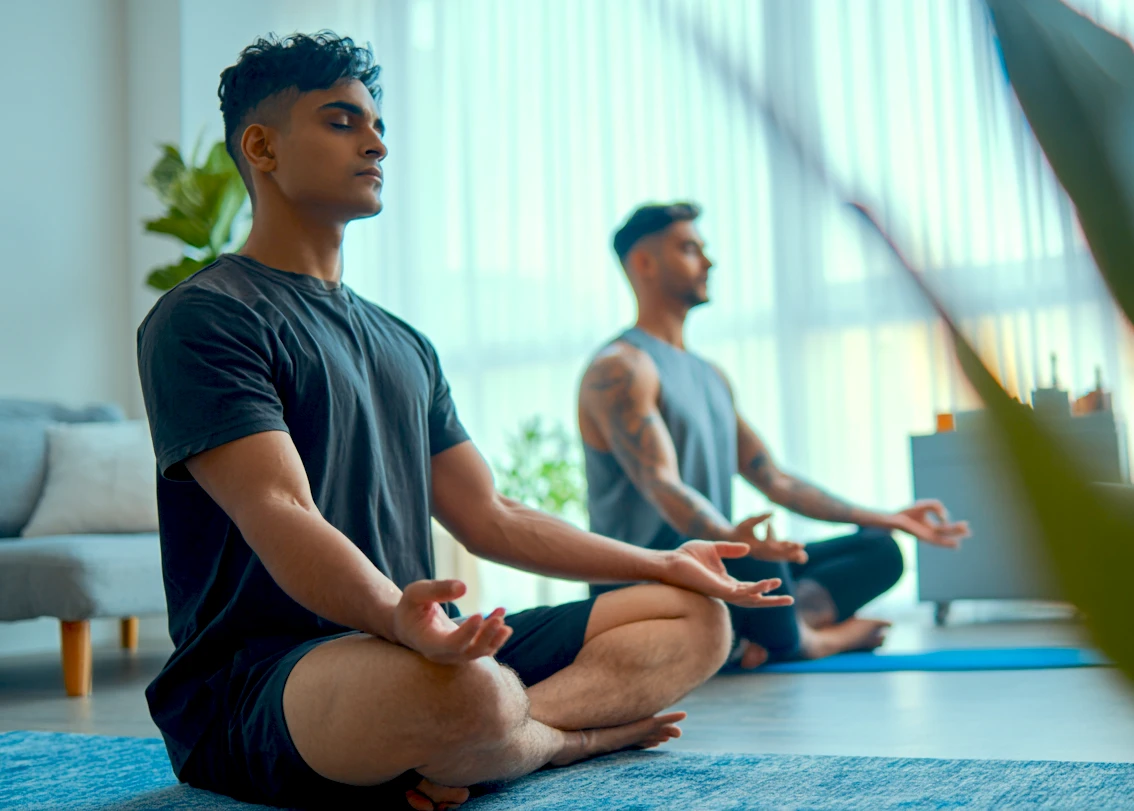
I had been practicing yoga for seven years before I went to Nepal. Seven years of studio classes, weekend workshops, online courses during lockdown, and a handful of retreats that were really more spa experiences dressed up in linen and lavender. I thought I had a meditation practice. I had a meditation habit, which turns out to be something quite different.
That distinction became very clear to me within the first twenty-four hours of arriving in Pokhara.
I want to write honestly about this experience because I think a lot of people who are curious about yoga retreats in Nepal have the same hesitation I had: is this going to be real, or is it going to be expensive wellness tourism with better scenery? I can tell you, without reservation, that what I found at Bodhidham was the most genuinely transformative week I have spent in years. But I also want to be honest about the parts that were uncomfortable, confusing, and occasionally overwhelming, because those parts mattered just as much.
Why I Almost Didn’t Go
I found Bodhidham through a combination of research and word of mouth. A colleague of mine had gone the previous year and returned visibly different. Not different in a dramatic or unsettling way. Just quieter. More grounded. Like something that had always been slightly scattered in her had settled. She described her experience plainly and said she thought I might benefit from it. She did not oversell it.
Nepal was not at the top of my travel list at the time. I had imagined it as a destination for serious trekkers and mountaineers, neither of which describes me. I was also nursing a fairly stubborn case of burnout from two years of overwork, and the idea of getting on a long-haul flight and arriving somewhere unfamiliar felt like a lot. But something in how she spoke about the place stayed with me. I booked it on a Tuesday night, almost impulsively, before I could construct a good enough reason not to.
The flight to Kathmandu, the transfer to Pokhara, and then finally arriving at the retreat itself took the better part of two days. By the time I got there, I was exhausted and slightly disoriented, and wondering what exactly I had signed up for.
First Impressions: The Silence Has Weight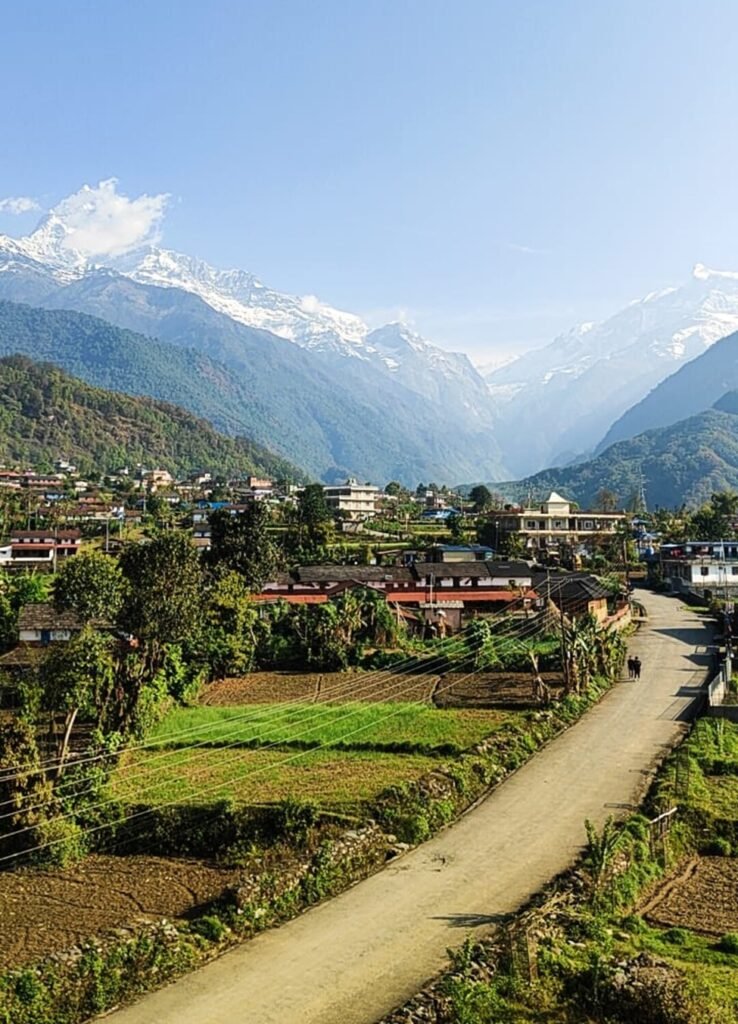
The first thing I noticed was the absence of noise. Not just traffic noise or city noise, but the ambient hum that follows you everywhere in modern life, the low-grade buzz of things demanding your attention. It was gone. I stood outside on the first evening and just listened. Birds. Wind moving through trees. The occasional sound of someone walking on gravel. That was it.
My nervous system did not know what to do with this at first. It kept reaching for stimulation the way a hand reaches for a phone that isn’t there.
Bodhidham Yoga Retreat Ashram is rooted in an ancient yogic tradition that predates the modern fitness industry by several thousand years. The teachers here are trained under masters of the Himalayan lineage, and the curriculum reflects that depth in every session. This is not a boutique wellness offering. It is something older and more serious than that, and you feel that seriousness from the first morning.
The accommodation was simple and spotless. The meals were vegetarian, nutritious, and genuinely delicious in a way that simple food often is when it is prepared with actual care. There was nothing unnecessary. That absence of excess, I came to understand, was itself part of the teaching.
The Meditation Was Nothing Like I Expected
I had been meditating in the way that a lot of modern yoga practitioners meditate: ten minutes in the morning, structured breathing, a calming app occasionally, and some guided body scan before bed. I thought this was meditation. I now think of it as the beginning of an introduction to meditation.
The instruction at Bodhidham was precise and deep in equal measure. The teachers did not just hand you a technique and wish you well. They explained the architecture beneath the technique. Why does anchoring attention to the breath work? What is actually happening in the mind when a thought arises, and you follow it, versus when you observe it and let it pass? What is the difference between relaxation and genuine stillness?
These questions have answers, and those answers are old and carefully preserved and surprisingly practical. Understanding them changed the quality of my sitting from the very first session. I was not just doing something. I was beginning to understand what I was doing and why.
The Buddha’s Teaching Meditation Retreat draws directly from some of the most foundational teachings in Buddhist philosophy, translated through the yogic tradition into lived, embodied practice. You are not studying these ideas as historical curiosities. You are applying them to your own mind, in real time, in the room you are sitting in, and the effect of that is remarkable.
The Mind Gets Louder Before It Gets Quieter
There is a moment on the second day of a serious meditation retreat when you realize that silence is not actually quiet. Your mind fills the space. It fills it aggressively, with old conversations, forgotten worries, grocery lists, arguments you rehearsed and never had, and regrets you thought you’d processed years ago.
I had been told to expect this. Knowing it intellectually and experiencing it are two very different things. By day two, I was restless and slightly irritable, and wondering if I had made a mistake. I kept mentally rehearsing conversations I needed to have when I got home. I wrote long, imaginary emails to people who had no idea I was thinking about them.
And then, somewhere in the middle of day three, something shifted.
A thought about an unfinished work project arose. Instead of following it down its spiral, I noticed it. Just noticed it. There’s that thought again. And then, slowly, it dissolved on its own. Not because I pushed it away, but because I had stopped feeding it. That experience, small and quiet and completely internal, felt like finding a door I hadn’t known existed.
What the Philosophy Actually Teaches
One of the most fascinating aspects of the week was the depth of philosophical teaching woven through the daily practice. This is not a program that asks you to simply be present and feel good. It asks you to understand the mechanics of your own mind with some rigor.
The teaching on impermanence, for instance, was not presented as a philosophical concept to accept intellectually. It was something you could feel directly in your own breath. Nothing in the breath stays the same from one moment to the next. The inhale is already changing by the time you notice it has begun. The pause between breaths exists, but you can never hold it. The mind that wants to grip experiences and make them permanent is working against the fundamental nature of reality, and that friction is where a great deal of suffering lives.
The teaching on craving and aversion was similarly practical. When you are anxious, you are craving a certainty that does not exist. When you are frustrated, you are pushing against a reality that is not going to change in this moment. When you are bored, you are demanding stimulation from a moment that is simply quiet. Once you see this pattern operating in yourself, you start to catch it in real time, mid-crave, mid-aversion, and there is a fraction of a second of space that wasn’t there before. That fraction of a second is, apparently, where a great deal of freedom lives.
The Yoga Practice Was Not What I Expected Either
The asana practice at Bodhidham is genuinely different from what most Western practitioners encounter in a studio context. The emphasis is not on achievement, or progression, or performing a more impressive version of a posture. The focus is entirely on awareness. Where is your weight right now? What is your body actually telling you in this moment? What happens when you stop trying to override what you feel?
This sounds passive, but it is one of the hardest things I have ever been asked to do in a yoga class. We are so trained to strive in movement, to push further and hold longer, and do more, that being asked to simply know what is happening takes enormous concentration. There is no performance here. Just observation. And observation, it turns out, is its own profound practice.
I cried during one session. Not dramatically, just quietly, tears running down my face during a long hip-opening hold. The teacher walked past, noticed, and simply placed a hand briefly on my shoulder. No comment, no concern, no interruption. She understood what was happening and left it alone. Something that had been stored in my body for a long time was released. These things happen. The practice creates conditions for them to happen, and the teachers know how to hold that space without making it uncomfortable.
The People You Meet
There were ten of us in my group that week. Ages ranging from mid-twenties to early sixties. Several nationalities. A variety of experience levels. A retired schoolteacher from Scotland. A software engineer from South Korea who had been dealing with chronic stress. A young woman from Brazil who had discovered yoga during illness and was exploring it with remarkable dedication.
By the end of the week, we had shared something hard to name. Some quality of having been through a real process together. Having sat in the same silence, struggled with the same restless mind, I emerged on the other side of it a little differently. We exchanged contacts, and a few of us still check in with each other.
The teachers, too, were people worth knowing. Warm without being performatively so. Precise in their instruction without being harsh. They laughed at appropriate moments and held the difficult ones steadily. They did not take themselves seriously in a way that can make spiritual environments feel rigid and alienating. But they took the work seriously, and that seriousness was contagious in the best way.
What I Brought Home
I went to Nepal thinking I would deepen my yoga practice. I did, but not in the way I imagined. I thought depth meant more poses, more skill, more time on the mat. What I found was that depth in yoga is not a physical direction at all. It goes inward. And going inward requires exactly the kind of guidance, structure, and genuine wisdom that this place provides.
My practice since returning looks different. I sit every morning for thirty to forty minutes, not ten. I no longer reach for my phone as the first thing I do when I wake up. I notice when I am performing mindfulness versus the actual thing, and that noticing alone has made a genuine difference. Small shifts, but they compound into something significant over months.
If you want to understand the full depth of what guides the experience here, the story of the people and philosophy behind Bodhidham is worth reading before you arrive. These teachers come from a lineage of serious study under Himalayan masters. This is not a wellness startup. It is a living tradition, and knowing that changes how you receive everything they offer.
Should You Go?
If yoga and meditation have been part of your life for a while and you have started to sense that you are circling the outside of something without quite getting to the center, this might be what you have been looking for. The center is quieter than you’d expect. It is also considerably more interesting.
Pack light. Leave your assumptions at home. Show up with curiosity rather than expectations. Let the mountains, the silence, and the teachers do what they are very good at doing.
The discomfort is real. So is everything that comes after it. And what comes after it is worth the flight.
