
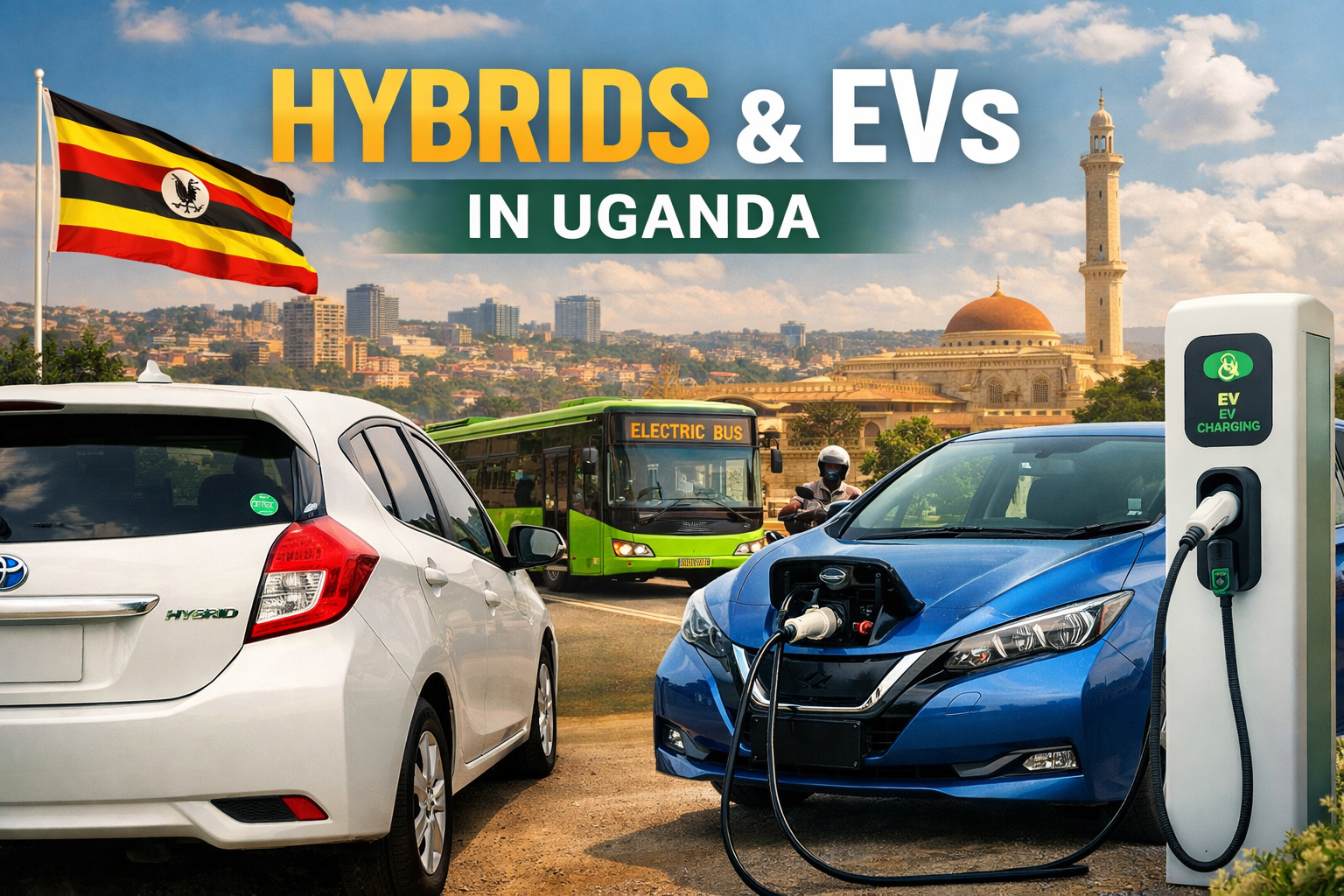
Uganda’s car market has traditionally been dominated by petrol and diesel vehicles imported from Japan, but that is now starting to shift. More buyers are paying attention to hybrids and EVs because they offer lower running costs, smoother driving, and newer technology. This change is also happening alongside Uganda’s wider e-mobility push. Uganda’s National E-Mobility Strategy was published on October 31, 2023, and its vision is a full transition to e-mobility in public transport and motorcycles by 2030 and in passenger vehicle sales by 2040.
Rising Fuel Costs Are Changing Buyer Decisions
One of the biggest reasons hybrids are becoming more attractive in Uganda is fuel cost. In Kampala traffic, a hybrid can reduce fuel use significantly compared with a normal petrol car, especially for daily commuters driving through busy urban routes. For many Ugandan buyers, that matters more than trends or image. It is simply about getting a car that is cheaper to run every month. This is why hybrids are often the first step for buyers who want better efficiency without changing how they drive.
Hybrids Make More Sense for Most Ugandan Drivers Right Now
For most drivers in Uganda today, hybrids are the more practical choice than full EVs. A hybrid gives you better fuel economy, but you still refuel normally and do not depend on public charging stations. That makes hybrids easier for people who drive both in the city and on longer regional trips. Self-charging hybrids are especially attractive because they recharge automatically during braking and coasting, so the driver does not need to plug them in.
Uganda’s EV Ecosystem Is Growing Fast
Uganda’s EV story is no longer just an idea. The Uganda E-Mobility Outlook Report says the country’s e-mobility ecosystem includes over 80 value-chain actors, and Uganda’s combined production capacity for electric vehicles grew from about 2,000 units per year in 2021 to over 10,000 in 2024. The same report says Uganda’s first electric bus mass-transit service launched in November 2024, and the country’s first public EV charging station was officially launched at Amber House in Kampala on March 12, 2025. These are clear signs that EV adoption in Uganda is becoming more real and more visible.
Government Support Is Helping the Market Grow
Government policy is also helping push e-mobility forward, but it is important to describe it correctly. Uganda’s 2024/25 Budget Speech says that under VAT, the supply of electric motorcycles, vehicles manufactured or fabricated in Uganda, and their respective charging stations, batteries, and related services are exempt from tax. The same speech also says tax holidays were provided for people who manufacture or fabricate electric motor vehicles, electric motorcycles, electric batteries, and EV charging equipment. That supports the sector, although it does not mean every imported EV automatically gets a blanket tax advantage.
EVs Still Have a Strong Advantage in Maintenance
Even though hybrids are currently more practical for many Ugandan buyers, EVs still have a strong long-term advantage in maintenance. Because electric vehicles have fewer moving parts and fewer fluids to replace, they usually cost less to maintain over time than conventional petrol or diesel vehicles. That makes them especially appealing to urban drivers who want lower workshop costs and simpler ownership in the long run.
Importing a Hybrid or EV to Uganda Is Straightforward with the Right Process
Importing a hybrid or EV from Japan to Uganda is very possible when the process is handled properly. Uganda’s Trade Portal lists the main steps for first-time motor vehicle importers, including arranging pre-export verification of conformity, obtaining the certificate of conformity, appointing a clearing agent, making a customs declaration, and paying the required taxes. That is why buyers need to pay close attention to battery condition, total landed cost, and paperwork before the vehicle is shipped.
Final Thoughts
Hybrids are gaining popularity in Uganda because they save fuel without forcing drivers to change their daily routine. EVs are growing because Uganda is steadily building the right ecosystem around them, from policy support to charging infrastructure and local e-mobility investment. Right now, hybrids remain the easier choice for most buyers, but EVs are becoming a more realistic option for urban drivers every year.
