
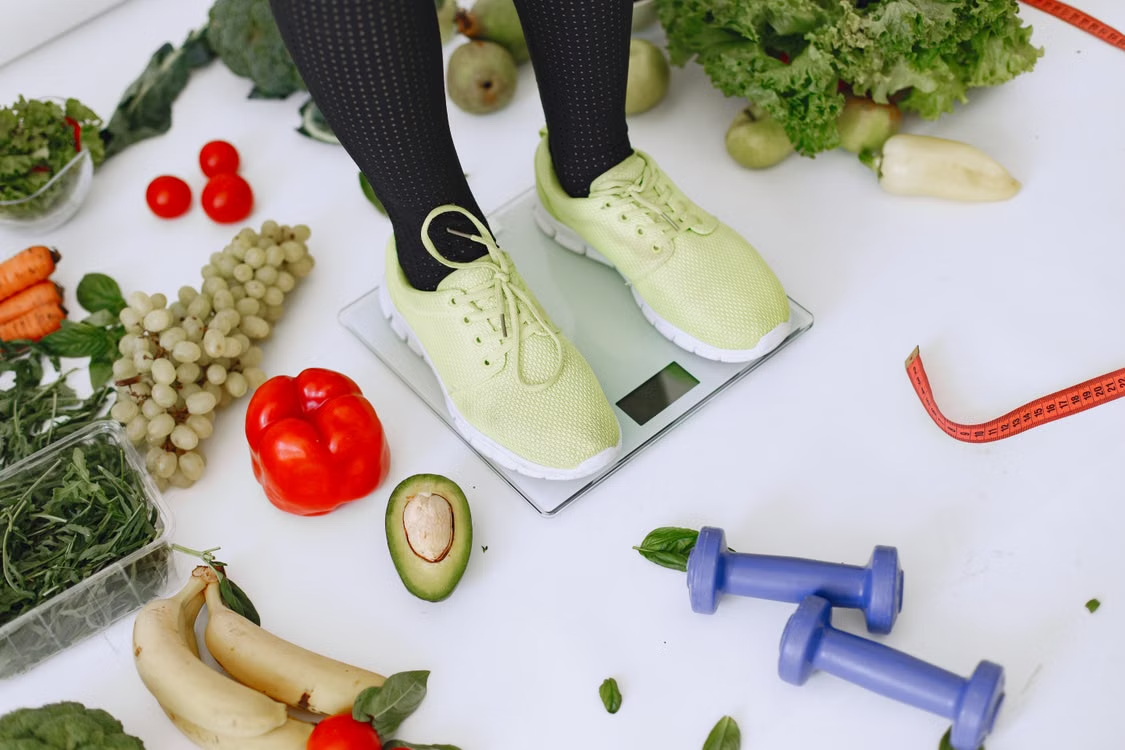
You have been logging your meals, staying below your calorie target and expecting the scale to move down. Instead, your weight has increased. It feels unfair, but it does not automatically mean that fat loss is impossible or that your metabolism is “broken”.
A sustained calorie deficit leads to fat loss over time. However, the scale also reflects water, stored carbohydrate, food in your digestive system and hormonal changes. Tracking errors can also shrink—or remove—an apparent deficit.
| A one-day increase on the scale does not necessarily mean you gained body fat. |
Quick checklist before cutting calories further
Check whether you are:
- Comparing weekly averages rather than single weigh-ins
- Logging oils, sauces, drinks and snacks
- Using the correct raw or cooked food entry
- Eating back estimated exercise calories
- Underestimating calorie-dense portions
Before making a major change, work through the nine mistakes below.
1. Treating one weigh-in as a trend
Body weight can change from one morning to the next without any meaningful change in body fat. A salty dinner, a later meal, constipation or simply drinking more fluid can move the scale upwards temporarily.
Weigh yourself under similar conditions, ideally after waking and using the bathroom but before eating.
Compare weekly averages, not isolated weigh-ins. A seven-day trend provides much more useful information than Monday’s number alone.
2. Starting with an inaccurate calorie target
Online calorie targets are estimates. Selecting an activity level that is too high can inflate your maintenance figure, making a planned “deficit” closer to maintenance.
Tools such as Coach Ivy’s daily calorie intake calculator can provide a useful starting estimate based on your body measurements, activity and goal.
If your average weight remains stable, your actual maintenance intake may be close to what you are currently eating.
3. Underestimating portion sizes
People commonly underestimate calorie-dense foods such as cereal, pasta, cheese, peanut butter and nuts. A portion that looks close enough can contain significantly more than the amount entered in an app.
You do not need to weigh every meal forever, but using a kitchen scale for a week can recalibrate your judgement. Watch foods measured by tablespoons, handfuls or vague servings.
4. Forgetting cooking oils, sauces and dressings
The visible ingredients may be logged while cooking fat is missed. Frying oil, butter, dressings, mayonnaise and creamy sauces can add hundreds of calories across a day. For context, two tablespoons of butter contain about 204 calories, before counting the food itself.
Record the amount used in the whole recipe and divide it by the number of portions. At restaurants, allow for more oil than you would normally use at home.
5. Missing drinks, snacks and small bites
Coffee additions, juice, alcohol, cooking samples and a few bites from someone else’s plate may feel too small to record. Repeated daily, they can close a modest deficit.
For one week, log everything that contains calories without judging it. The goal is not perfection; it is to identify whether an overlooked pattern exists.
6. Eating back every exercise calorie
Fitness watches and cardio machines estimate energy use with general formulas. They can compare activity, but they are not precise enough to treat as an exact food allowance.
If your calorie target already accounts for your usual activity, adding all estimated exercise calories back may count the same movement twice.
Keep exercise calories separate or eat back only a conservative portion when extra fuel is genuinely needed.
7. Mixing raw and cooked food entries
Food weight changes during cooking. Rice and pasta absorb water, while meat loses it. Logging cooked chicken with a raw entry—or the reverse—can create a substantial error.
Check whether the database entry specifies raw, cooked, drained or prepared weight. Use the same method each time so your records remain comparable.
8. Treating estimates as exact measurements
Restaurant meals, mixed dishes and food photographs cannot reveal every ingredient or cooking method.
Apps such as Coach Ivy use AI-assisted photo analysis to estimate calories and macros, but users should still review portions, hidden oils, sauces and missing ingredients.
Accuracy improves when you correct detected foods, add missing ingredients and choose a realistic serving size.
| Consistent approximate tracking is useful. False precision is not. |
9. Expecting the scale to fall every week
Starting a new workout can cause temporary water retention as muscles recover. Higher carbohydrate or sodium intake can also increase stored water.
Menstrual-cycle changes can mask fat loss, while food moving through the digestive system adds scale weight.
Review two to four weeks of weigh-ins, waist measurements and how your clothes fit before making a major adjustment.
What might be causing the scale increase?
| Possible cause | What to check |
| Water retention | Sodium, carbohydrate intake, workouts and menstrual-cycle changes |
| Food and digestive weight | Late meals, constipation and unusually large portions |
| Tracking error | Oils, drinks, sauces, snacks and inaccurate serving sizes |
| Incorrect calorie target | Activity level and estimated maintenance calories |
| Exercise estimates | Calories added back from watches or gym machines |
What should you do next?
Use this simple action plan:
- Track consistently for seven days.
- Measure the easiest-to-miss calorie-dense foods.
- Standardise your weigh-in routine.
- Compare weekly average weight rather than daily changes.
- Review the trend for two to four weeks.
- Make only a small adjustment if the trend remains unchanged.
Audit your records before choosing a more aggressive diet. If intake is consistent and the trend still does not change, slightly reduce calories, increase everyday movement or combine both.
As weight falls, calorie needs may decline, so an earlier deficit can gradually become maintenance.
Persistent or unexplained gain can also relate to medication, fluid retention or a health condition. Speak with a doctor or registered dietitian if it is rapid, continues despite reliable tracking, or comes with swelling, unusual fatigue or shortness of breath.
The scale is useful, but it is noisy. Look for patterns, not punishment—and use the data to make calm, gradual decisions.
