
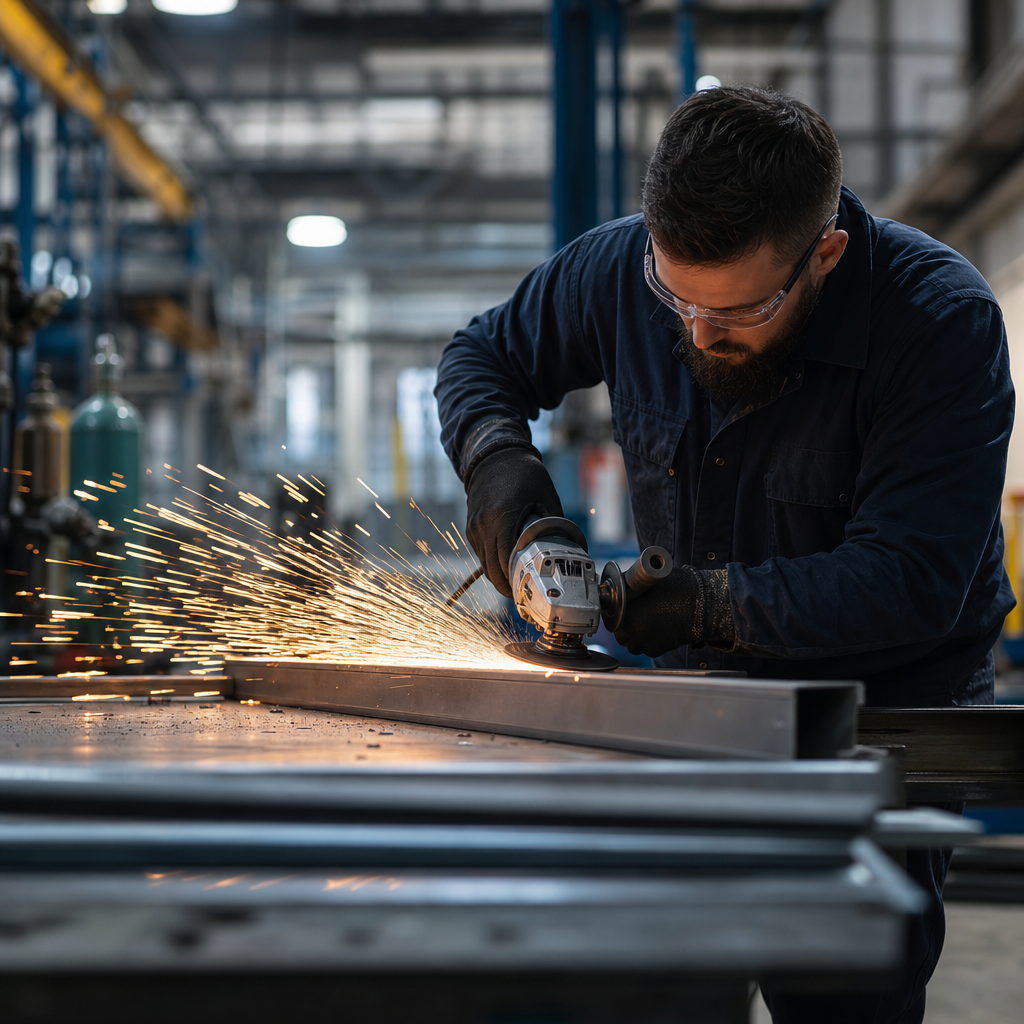
Industrial manufacturing and custom fabrication have long operated in the shadows of flashier consumer-facing industries. Trade shows, cold calls, and word-of-mouth referrals were the backbone of business development for decades. But something has shifted. Companies that build specialty vehicles, branded trailers, and large-scale custom structures are now discovering that bold, strategic marketing is not just a luxury — it is a competitive necessity. The brands that embrace this shift are not only winning more contracts; they are defining what modern industrial marketing looks like.
The Quiet Revolution in Industrial Brand Building
For most of the twentieth century, industrial companies competed almost entirely on technical capability and price. A fabricator that could weld cleaner, deliver faster, or cut costs more aggressively held the advantage. Marketing was an afterthought — a brochure here, a trade publication ad there. The idea that a company building custom trailers or mobile command units might invest in storytelling, visual identity, or digital content would have seemed almost absurd to the previous generation of shop floor managers.
That era is over. Today’s procurement officers, fleet managers, and brand directors are conducting research online long before they ever pick up a phone. They are watching video walkthroughs of fabrication facilities, reading case studies about completed projects, and evaluating a company’s visual presentation as a proxy for the quality of its physical work. In this environment, the industrial brand that invests in how it presents itself gains a measurable edge over competitors who still rely solely on reputation and referrals.
Why Presentation Signals Quality
There is a psychological principle at work here that marketers have understood for years: the way a company presents itself signals the care and precision it brings to everything else it does. A fabrication company with a polished website, high-quality photography of its builds, and clear articulation of its capabilities is communicating something important — that it pays attention to detail. For buyers making six- or seven-figure purchasing decisions, that signal matters enormously. The presentation is not separate from the product; it is part of the product experience.
Craftsmen Industries: A Case Study in Strategic Positioning
Craftsmen Industries exemplifies the kind of forward-thinking approach that is reshaping how custom fabrication companies position themselves in the marketplace. With a portfolio spanning specialty vehicles, branded marketing trailers, and mobile experiential units, the company has built a reputation not just for the quality of its physical builds, but for understanding what clients actually need: a finished product that performs in the field and represents their brand with precision. This dual focus — engineering excellence paired with brand awareness — is exactly what separates leading fabricators from commodity shops.
The Experiential Angle
One of the most interesting dimensions of modern industrial marketing is the rise of experiential assets. Companies are no longer just buying vehicles or trailers — they are buying mobile brand experiences. A custom-built promotional trailer that travels to events across the country is simultaneously a piece of engineering and a piece of marketing infrastructure. The fabricator that understands this dual purpose, and builds accordingly, is delivering far more value than one that simply fulfills a specification sheet. This convergence of manufacturing and marketing is one of the defining trends of the current decade.
Lessons from Adjacent Industries
Industrial fabricators can learn a great deal by looking at how other sectors have navigated the transition from product-focused to brand-focused competition. The mining and resources sector, for instance, has undergone its own reckoning with brand identity and stakeholder communication. A recent profile on AVA Nickel illustrates how even resource extraction companies are now investing in narrative, transparency, and strategic positioning to differentiate themselves in competitive capital markets. The parallel to industrial fabrication is direct: in any industry where the underlying product is technically complex and difficult for outsiders to evaluate, brand storytelling becomes the primary differentiator.
Authenticity Over Advertising
What works in industrial marketing today is not the same as what worked in consumer advertising twenty years ago. Buyers are sophisticated, research-driven, and deeply skeptical of promotional language. What resonates is authenticity — real project documentation, honest capability statements, and transparent communication about process and timelines. Companies that lead with genuine expertise rather than marketing gloss consistently outperform those that invest in surface-level branding without the substance to back it up. The fabrication industry, with its inherently tangible and demonstrable output, is actually well-positioned to excel at this kind of authentic marketing.
Breaking the Mold: New Marketing Techniques for Industrial Brands
The challenge for many industrial companies is not recognizing the need to evolve their marketing — it is knowing where to start. The instinct is often to replicate what competitors are doing, which typically means a modest website refresh and a LinkedIn presence. But the brands that are genuinely breaking through are doing something more ambitious. They are experimenting with formats and channels that feel unconventional for their sector: documentary-style video content, behind-the-scenes fabrication footage, thought leadership articles from engineers and project managers, and immersive digital experiences that let prospects explore completed builds virtually.
For companies willing to take calculated risks with their marketing approach, the rewards can be significant. As explored in this guide to trying new marketing techniques, the key is not to abandon what works but to layer in fresh approaches that expand reach and deepen engagement. Industrial brands that treat marketing as an experiment — testing, measuring, and iterating — will consistently outpace those that treat it as a fixed cost with a predictable return.
Content as a Long-Term Asset
One of the most underutilized opportunities in industrial marketing is the creation of durable content assets. A well-produced case study documenting a complex custom build — complete with engineering challenges, client requirements, and final outcomes — has a shelf life measured in years, not weeks. It can be repurposed across sales presentations, website pages, trade publications, and social media. For fabricators whose work is inherently visual and technically impressive, this kind of content practically creates itself. The investment is in the documentation and presentation, not in manufacturing something artificial.
The Road Ahead for Custom Fabricators
The industrial fabrication sector is entering a period of genuine marketing maturity. The companies that will lead the next decade are those that understand their work is not just a product — it is a story. Every custom build represents a client’s vision brought to life through engineering, craftsmanship, and collaboration. That story, told well, is one of the most compelling pieces of marketing content any company could possess.
The shift is already underway. Forward-thinking fabricators are investing in their digital presence, their visual identity, and their ability to communicate value in terms that resonate with modern buyers. They are learning from adjacent industries, experimenting with new formats, and treating marketing as a core business function rather than a peripheral expense. For those willing to make that investment, the competitive landscape has never offered more opportunity.
Custom fabrication has always been about building something exceptional. The next frontier is making sure the world knows it.
