
It’s 2 a.m., and you’ve been awake for what feels like the third time this hour. You’ve fed, rocked, and whispered every soothing word you know, yet your newborn still won’t settle. If this sounds familiar, you’re not alone—countless new parents find themselves in this exact exhausted haze, desperately searching for anything that will help their baby sleep longer.
The root of the struggle is biology. Newborns have short, erratic sleep cycles, and their immature nervous systems are easily overwhelmed by the unpredictable sounds of the outside world. A sudden knock at the door or a barking dog can undo twenty minutes of careful settling in an instant.
So, could a simple device actually be the key to better sleep for your baby—and for you? An infant noise machine offers a scientifically-backed answer. By recreating the constant, whooshing environment of the womb, these devices provide newborns with a familiar, deeply comforting auditory backdrop. The steady sound doesn’t just soothe—it shields, masking the unpredictable household noises that disrupt fragile sleep cycles.
This guide breaks down exactly how infant noise machines work, why they’re effective, and—most importantly—how to use them safely and strategically to genuinely transform your baby’s sleep from the very first night.
What is an Infant Noise Machine and How Does It Work?
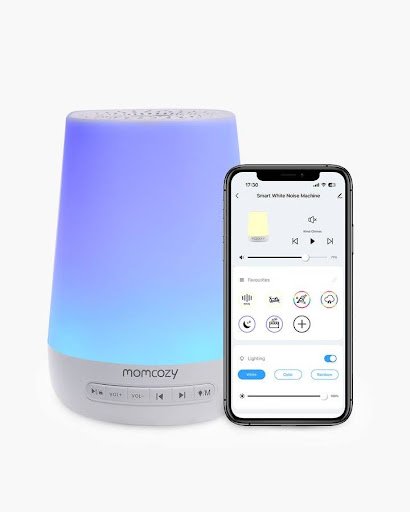
An infant noise machine—also called a baby sound machine or white noise machine—is a device designed to produce continuous, soothing audio that helps newborns fall and stay asleep. While the term “white noise” is most commonly used, modern machines typically offer a range of sounds, including pink noise (a softer, deeper variant that many babies respond to even more readily), recorded heartbeat rhythms, gentle rain, ocean waves, and simple lullabies. Each targets the same fundamental goal: replacing unpredictable silence with something steady and reassuring.
To understand why these sounds work so powerfully on newborns, consider where your baby just came from. Inside the womb, the auditory environment is anything but quiet. The constant rush of blood through the placenta, muffled external voices, and the rhythmic thud of a heartbeat create a continuous whooshing soundscape that registers at roughly 70–80 decibels—about as loud as a running vacuum cleaner. When a newborn suddenly enters the relative silence of a bedroom, that absence can feel disorienting rather than calming. A white noise machine effectively bridges that sensory gap, recreating the familiar, constant sound environment the baby knew for nine months.
Beyond comfort, these machines also work through a phenomenon called auditory masking. Continuous sound fills the frequency range that sudden disruptive noises—a slamming door, a barking dog, a ringing phone—would otherwise occupy. By smoothing over these jarring spikes in ambient noise, the machine prevents the startle response that pulls babies out of their lightest sleep stages. Research supports this: consistent background sound has been linked to longer consolidated sleep stretches in infants, making it a practical, evidence-informed tool for sleep-deprived families.
Key Benefits of Using a Baby Sound Machine for Infant Sleep
Understanding why so many pediatric sleep experts recommend sound machines comes down to four concrete, practical advantages that directly address the most common frustrations new parents face.
Promotes Self-Soothing and Longer Sleep Stretches. Babies naturally cycle through light and deep sleep every 45–50 minutes. During those lighter phases, even minor sensory input can fully wake them—requiring another round of feeding or rocking to resettle. A consistent sound backdrop gives your baby an auditory anchor, something familiar to “return to” as they drift between cycles. Over time, many infants learn to transition between sleep stages independently, resulting in noticeably longer, more consolidated stretches for the whole family.
Creates a Consistent Sleep Cue and Portable Environment. Babies are conditioned by routine faster than most parents expect. When a sound machine is switched on at the start of every sleep—nap or nighttime—it becomes a powerful signal that rest is coming. This association is especially valuable for travel. Bringing the same device to a grandparent’s house or a hotel room instantly recreates a familiar sleep environment, dramatically reducing the “strange place” disruptions that derail routines on the road. Compact, travel-friendly sound machines from infant-focused brands like Momcozy are designed with exactly this portability need in mind, making sleep consistency away from home considerably more achievable.
Shields Nap Times from Household Noise. Daytime naps are notoriously fragile. The sound machine’s masking effect gives siblings, pets, and everyday household activity much less power to interrupt a sleeping baby, reducing the anxiety parents feel about tiptoeing around their own home.
Helps Soothe Fussiness and Colic. For babies experiencing colic or general irritability, the continuous whooshing of white or pink noise provides a steady, overwhelm-reducing focal point. Rather than scrambling through trial and error when a baby is inconsolable, having a reliable auditory tool ready offers parents a calm, evidence-supported first response. Finding safe and effective white noise options early means you always have a practical strategy within reach.
How to Choose and Use a White Noise Machine Safely for Newborns
Step 1: Selecting the Right Machine and Sound
Not all sound machines are created equal, and the differences matter more than the marketing suggests. The single most important feature to look for is a seamless, looping audio track—any audible gap or restart click in the sound file can be enough to rouse a light sleeper. Adjustable volume control is equally non-negotiable, since you need the flexibility to keep levels genuinely low rather than relying on a fixed preset. Other features worth prioritizing include a timer function (useful for gradually phasing out overnight use), a secure AC power option to avoid mid-night battery failures, and a compact, portable design for travel consistency. Momcozy’s infant sleep line, for instance, incorporates several of these practical design elements, reflecting the kind of parent-informed thinking worth looking for when comparing options.
On sound type, simpler tends to work better for sleep. Steady white or pink noise outperforms nature soundscapes or lullabies for most newborns because it lacks the variation and melodic peaks that can stimulate rather than settle an already-tired brain. Pink noise—which emphasizes lower frequencies—is worth trying if your baby seems resistant to the sharper quality of standard white noise. Reserve lullabies for the wind-down phase of your routine rather than continuous overnight play.
Step 2: Critical Safety Guidelines for Newborn Sleep
Volume is where parents most commonly go wrong. The American Academy of Pediatrics recommends keeping infant sleep environments below 50 decibels—roughly the level of a quiet conversation. A practical test: if you need to raise your voice to be heard over the machine from across the room, it’s too loud. Download a free decibel meter app on your phone and measure from crib level to confirm a safe setting before your baby sleeps in the room.
Placement is the other critical variable. The machine should sit at least seven feet from the crib and never be placed inside or attached directly to it. Proximity concentrates sound intensity dramatically, and an infant’s developing auditory system needs adequate distance as a buffer. Avoid pointing speakers directly toward the sleeping area—angling the device toward a wall diffuses the sound more evenly throughout the room.
Finally, resist the temptation to run the machine around the clock. Continuous 24/7 exposure gives your baby’s auditory system no quiet periods for natural development. Using a built-in timer to shut the machine off after 60–90 minutes of sleep onset strikes the right balance between support and healthy auditory stimulation during waking hours.
Step 3: Implementing Your Baby Sound Machine Effectively
Timing and consistency determine whether the machine becomes a genuine sleep tool or just background noise. Turn it on before your baby shows overtired cues—the eye-rubbing, fussing stage is already too late for a smooth transition. Activating it during the calm, pre-sleep phase of your routine allows the sound to function as a cue rather than a crisis response.
Use it for every sleep without exception—naps and nighttime alike. Consistency is what builds the conditioned association; sporadic use prevents the sound from ever becoming a reliable sleep trigger. Start at a comfortably low volume during relaxed periods, and pair the machine with your existing routine elements—dimmed lights, a swaddle, a final feed—so that the full sequence signals rest. The sound machine anchors the routine, but it works best as one deliberate piece of a structured wind-down, not as a standalone fix.
Integrating a Sound Machine into Your Newborn Sleep Routines
A sound machine delivers its greatest results not as a standalone fix but as a deliberate layer within a broader sleep routine. Think of it as the final environmental signal at the end of a sequence your baby learns to recognize: a warm bath, a feed, a short book or song, followed by the machine switching on as you settle your baby into the crib. Each step narrows the gap between wakefulness and sleep, and the sound machine closes it. This kind of predictable sequence—repeated identically for both naps and bedtime—is what transforms the device from a helpful gadget into a genuine sleep trigger.
For naps, the same principle applies. A shortened version of the routine—a quick feed, a dim room, the machine on—signals rest time without requiring the full bedtime sequence. This consistency also makes the machine your most effective travel tool; pack it alongside diapers as a non-negotiable, and your baby’s sleep cues travel with you.
If your baby seems overly reliant on the machine to fall asleep at all, gradually lower the volume over two to three weeks rather than stopping abruptly. As babies move past six months and sleep architecture matures, many naturally need less auditory support. Adapt the routine accordingly—keeping the sound machine as a quiet background option rather than the loudest element of the wind-down. The goal is a sleep environment your child can eventually thrive in with or without it.
Your Path to Better Baby Sleep Starts Tonight
Better sleep for your baby is genuinely within reach, and an infant noise machine is one of the most practical, well-supported tools available to help you get there. By mimicking the continuous whooshing environment of the womb and smoothing over the jarring household sounds that disrupt fragile sleep cycles, these devices address the root causes of newborn sleep struggles rather than simply masking the symptoms.
The key takeaways are straightforward: place the machine at least seven feet from the crib, keep volume below 50 decibels, use a timer to avoid continuous overnight play, and—most importantly—build it into a consistent routine for every sleep, not just the desperate moments. When the sound machine becomes a reliable cue rather than a last resort, it stops being a gadget and starts being a genuine part of your family’s sleep strategy.
You don’t have to resign yourself to months of fragmented nights. With the right device, the right placement, and a structured wind-down routine that your baby can learn to trust, you’re actively shaping a sleep environment that works. More rest for your baby means more rest for you—and that changes everything about early parenthood. Start tonight, stay consistent, and let the results speak for themselves.