
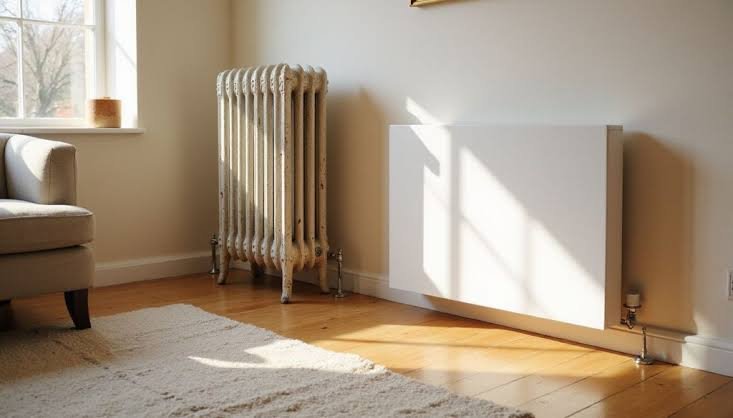
Column radiators genuinely are worth the investment for most UK homes, largely because they work efficiently with low-flow heating systems while still delivering the classic aesthetic homeowners increasingly want. At Planet Radiators, we’ve watched this trend accelerate as heat pumps and low-temperature systems become more common, and we’re breaking down exactly why column radiators fit this new heating landscape so well.
What Is The Low-Water Heating Trend?
Low-water heating refers to systems that run at reduced flow temperatures, typically between 40°C and 50°C, compared to the 70°C to 80°C that traditional gas boilers often demand. This shift matters because heat pumps, which are increasingly common across British households, perform best at these lower temperatures, meaning your radiator choice directly affects how efficiently your whole heating system operates. Since column radiators have a naturally large surface area, they distribute heat effectively even at these lower flow temperatures, making them a practical match for this broader move towards low-temperature heating.
Consequently, homeowners upgrading their boiler or considering a heat pump installation are increasingly asking whether their existing radiators can keep up, and in many cases, older single-panel convector radiators simply can’t. This is precisely where column radiators step in as a genuinely worthwhile upgrade rather than just a stylistic preference.
Why Column Radiators Perform So Well At Low Temperatures?
The core reason column radiators suit low-water systems comes down to surface area and section design. A five-column steel radiator measuring roughly 600mm by 1000mm can deliver between 4,500 and 5,000 BTUs, whereas a single-panel convector radiator of the same footprint manages only around 3,200 BTUs. Therefore, column radiators heat a room more effectively even when the water running through them is cooler, which directly addresses the main limitation homeowners worry about when switching to low-temperature systems.
Additionally, cast iron column radiators retain heat roughly twice as long as steel equivalents, making them particularly suitable for older, draughtier period properties where heat retention matters as much as heat output. A University of Salford study even found that cast iron radiators reduced boiler cycling by 30%, translating into savings of around £150 per year for the average household. Meanwhile, steel column radiators heat up roughly 50% faster, which suits modern, well-insulated homes where quick warm-up matters more than prolonged retention.
Breaking Down The Real Cost Savings
Switching to column radiators alongside a low-temperature heating system isn’t just about comfort; it translates into measurable financial benefits over time. Households pairing column radiators with air-source heat pumps can cut CO2 emissions by roughly 2.5 tonnes per year, while also reducing energy bills by an estimated £260 to £500 annually compared to conventional high-temperature setups.
Although premium column radiators cost more upfront, typically between £400 and £1,200 compared to £150 to £400 for standard panel radiators, their extended lifespan changes the value equation significantly. Because column radiators can last up to 50 years versus just 15 to 20 years for standard models, the long-term cost per year of ownership often works out considerably lower. The table below breaks this comparison down clearly.
| Factor | Standard Panel Radiator | Column Radiator |
|---|---|---|
| Typical upfront cost | £150–£400 | £400–£1,200 |
| Average lifespan | 15–20 years | Up to 50 years |
| BTU output (comparable size) | ~3,200 BTU | 4,500–5,000 BTU |
| Performance at low flow temp | Moderate | Excellent |
| Recyclability | Varies | Up to 98% (steel) |
This is exactly why Planet Radiators encourages customers to think beyond sticker price and consider column radiators as a long-term heating investment rather than a simple furniture swap.
Choosing The Right Column Radiator Colour For Your Room
Once you’ve decided that column radiators suit your low-water heating setup, the next consideration becomes style, and thankfully, Planet Radiators offers colour options for every type of interior. A white column radiator for living room spaces remains the most versatile choice, since it complements almost any wall colour while still delivering the efficient, large-surface-area heating that low-temperature systems need. White also works particularly well in period properties, where a classic column shape enhances the room’s traditional character without clashing with existing decor.
For homeowners after a bolder statement, a black column radiator creates striking contrast against pale walls, making it ideal for contemporary living rooms, hallways, or studies where you want the heating unit itself to double as a design feature. Alternatively, an anthracite column radiator offers a softer, more adaptable dark tone that blends naturally into warm greige or taupe colour schemes without feeling as stark as pure black. Because column radiators now come in such a wide colour range, choosing between white column radiator, black column radiator, and anthracite column radiator options has genuinely become a design decision rather than a purely practical one.
Are Column Radiators Worth It For Every Budget?
One common misconception is that column radiators only suit larger renovation budgets, but this simply isn’t accurate anymore. Many homeowners specifically search for traditional radiators in my budget because they want the classic ribbed column look without paying premium designer prices, and Planet Radiators’ traditional range is built to meet exactly that need. Since traditional-style column radiators still deliver strong BTU output and heat retention, you don’t have to sacrifice performance to stay within a realistic spending limit.
Similarly, cheap designer radiators have become increasingly available as manufacturers respond to growing demand for stylish, efficient heating at accessible prices. Whether you’re furnishing a rental property, a first home, or simply refreshing a single room, Planet Radiators’ cheap designer radiators section offers column-style units that balance affordability with the low-temperature performance benefits discussed above. Consequently, budget constraints no longer need to stand between you and a genuinely efficient, good-looking radiator.
Environmental Benefits Worth Considering
Beyond cost and comfort, column radiators also align closely with the UK’s broader sustainability goals. Steel column radiators are up to 98% recyclable, which supports the country’s 2050 net-zero target, while replacing older gas boiler setups with heat pumps and efficient radiators could collectively cut UK household emissions by an estimated 23 million tonnes per year. Therefore, choosing a column radiator isn’t just a personal financial decision; it’s a small but meaningful contribution to reducing your household’s overall carbon footprint.
Because modern homeowners increasingly factor sustainability into major purchases, this environmental angle has become a genuine selling point for column radiators, not just an afterthought. Planet Radiators sources steel column radiators specifically with this recyclability in mind, ensuring customers can make an efficient choice without compromising on their environmental values.
Making The Right Choice For Your Home
Ultimately, whether column radiators are worth it depends on your specific heating setup, budget, and design goals, though the evidence strongly favours making the switch for most UK households. If you’re running a low-temperature system or considering a heat pump, a column radiator’s large surface area and strong heat retention make it a genuinely smart upgrade rather than a purely cosmetic one. Planet Radiators’ full range, spanning white column radiator, black column radiator, and anthracite column radiator finishes, alongside our traditional radiators in my budget and cheap designer radiators collections, ensures you can find the right fit regardless of your property type or spending limit.
Frequently Asked Questions
Do column radiators really work better with heat pumps than standard radiators?
Yes, because column radiators have a larger surface area, they distribute heat effectively even at the lower flow temperatures that heat pumps typically require, unlike many standard panel radiators.
Are column radiators more expensive to buy than standard radiators?
Generally yes upfront, though options like traditional radiators in my budget and cheap designer radiators from Planet Radiators help narrow that price gap significantly.
Which is better for a period property, cast iron or steel column radiators?
Cast iron typically retains heat roughly twice as long as steel, making it particularly well-suited to older, draughtier period homes, while steel heats up faster for modern, well-insulated properties.
What colour column radiator suits a modern living room best?
A white column radiator for living room spaces offers timeless versatility, while a black column radiator or anthracite column radiator adds a bolder, more contemporary contrast against lighter walls.
How long do column radiators typically last compared to standard models?
Quality column radiators can last up to 50 years, compared to just 15 to 20 years for standard panel radiators, which significantly improves their long-term value.
Can column radiators genuinely reduce my energy bills?
Yes, households pairing column radiators with efficient low-temperature systems have reported savings of roughly £260 to £500 per year compared to conventional high-temperature heating setups.
