
In the rapidly evolving world of electronics, the demand for higher frequency, smaller footprints, and superior reliability has driven significant innovation in printed circuit board (PCB) design. Modern communication systems, satellite technologies, and advanced radar equipment heavily rely on specialized solutions such as the RF microwave PCB to manage high-speed signals with minimal signal loss or electromagnetic interference. However, as consumer and industrial devices become increasingly compact and complex, traditional flat layouts are no longer sufficient to meet spatial restrictions. This is where advanced manufacturing technologies merge, paving the way for hybrid board designs that adapt to sophisticated structural and electrical requirements simultaneously.
To address these multi-dimensional design challenges, modern hardware engineering frequently relies on the integration of flexible circuits and rigid platforms. By bridging the gap between high-frequency transmission capabilities and spatial optimization, manufacturers have unlocked new possibilities in complex hardware architecture. Among these engineering breakthroughs, Rigid-Flex circuit technology stands out as a revolutionary approach to solving modern packaging constraints, combining robust structural integrity with dynamic physical agility.
What Is A Rigid-Flex PCB?
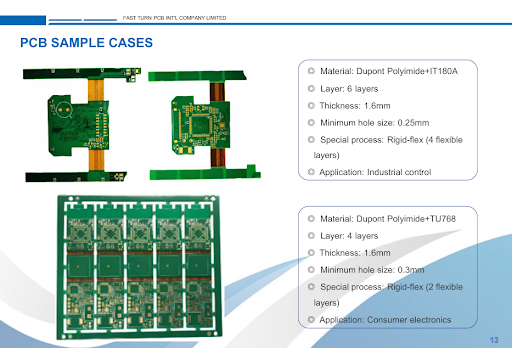
At its core, a Rigid-Flex PCB combines the best of both rigid and flexible circuit technologies into a single, unified board. This hybrid structure consists of multiple inner layers of flexible circuits, typically made of polyimide, which are selectively attached to one or more rigid boards using an epoxy pre-preg bonding film. Unlike traditional designs where separate boards are linked by external wires, a Rigid-Flex circuit is integrated internally during the fabrication process.
This unique hybrid structure allows for complex three-dimensional designs, enabling electronic components to be securely mounted on both rigid sections while flexible layers provide seamless interconnectivity across dynamic or confined spaces. Because the flexible zones can be bent, folded, or curved, engineers can design circuits that fit into uniquely shaped enclosures, allowing electronics to wrap around internal structures or flex repeatedly during operation without degrading the electrical paths.
Key Differences: Rigid-Flex vs. Traditional Interconnects
To truly appreciate the value of Rigid-Flex fabrication, it is essential to understand how it differs from traditional electronics manufacturing. In a conventional system, multiple rigid PCBs are interconnected using wires, ribbon cables, pins, or sub-miniature connectors. While this method works for spacious enclosures, it introduces several mechanical and electrical vulnerabilities.
Unlike traditional rigid boards that require connectors or cables for interconnection, Rigid-Flex PCBs streamline the overall design by eliminating these components. Removing mechanical connectors yields three major advantages:
- Improved Reliability: Connectors and solder joints are the most common points of failure in electronic systems due to thermal expansion, shock, and vibration. By replacing these joints with continuous copper traces running through the flexible layers, the risk of connection failure is dramatically reduced.
- Reduced Weight and Space: Eliminating bulky connectors, terminal blocks, and heavy wire harnesses dramatically reduces the weight and overall volume of the assembly, making it ideal for compact designs.
- Enhanced Signal Integrity: Every connector transition introduces impedance discontinuities, which can degrade high-speed signals. Rigid-Flex boards provide uninterrupted conductive paths, resulting in significantly enhanced signal integrity and reduced electromagnetic interference (EMI).
Materials and Mission-Critical Applications
The selection of materials for Rigid-Flex PCBs is critical to ensuring they can withstand harsh operating environments. High-grade polyimide is generally chosen for the flexible substrate due to its exceptional thermal stability and flexibility, while standard FR4 or high-Tg materials compose the rigid sections. Advanced adhesive-less acrylic or epoxy layers are utilized to maintain flexibility and prevent delamination over time.
Because of these robust material characteristics, these boards are widely used in mission-critical and compact applications such as medical devices, aerospace systems, military equipment, cameras, and wearables. In the medical field, they power compact pacemakers, surgical tools, and patient monitoring systems that require absolute reliability. In aerospace and military systems, they are integrated into guidance computers, radar modules, and avionics where high mechanical reliability, space savings, and resistance to extreme vibration and continuous bending are essential. Similarly, in high-end consumer electronics like foldable smartphones and action cameras, they enable complex, space-efficient hinges and moving parts.
Custom Rigid-Flex PCB Fabrication & Supply
To bring these sophisticated three-dimensional designs to life, working with an experienced manufacturing partner is paramount. As a leading China flex PCB supplier, we specialize in high-quality flex circuit manufacturing—from rapid-turn prototyping to full-volume flexible PCB fabrication. Our advanced facilities utilize precision laser drilling, automated optical inspection (AOI), and state-of-the-art lamination technology to guarantee tight tolerances and uncompromised circuit execution.
We understand that time-to-market is vital in today’s competitive landscape. Whether you are engineering a medical implant, a ruggedized military module, or the next breakthrough wearable tech, our streamlined production workflow ensures that your custom specifications are met with precision. Upload your Gerber files now for a fast, reliable quote, and let our engineering team optimize your stack-up for seamless production.
By choosing an integrated manufacturing model, you reduce supply chain complexity and eliminate the risks associated with multi-vendor sourcing. From initial prototype validation to high-volume production, our comprehensive quality control ensures your electronics perform flawlessly under the most demanding conditions. When your project demands the highest level of agility, precision engineering, and delivery speed, partnering with a dedicated FastTurn PCB fabrication service guarantees that your cutting-edge innovations transition seamlessly from the design blueprint directly to the production line without delay.
