
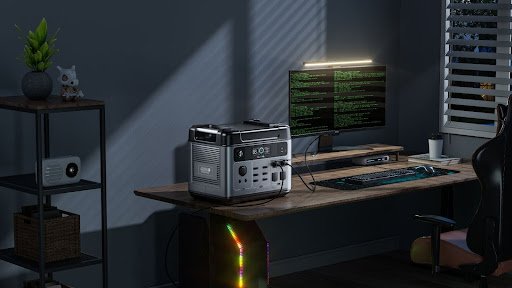
Portable power stations have evolved from simple lithium battery packs into integrated energy management platforms. Modern units combine battery chemistry, inverter technology, smart charging algorithms, and grid-backup capabilities into a single device.
This evolution is driven by three major demands:
- Grid instability and backup requirements
- Off-grid computing and mobile work environments
- High-power portable electronics and tools
A current example of this trend is the Oukitel P2001 Plus, a 2400W portable power station built around high-capacity LiFePO4 batteries and an advanced power conversion system. Rather than functioning solely as a mobile battery, it operates as a multi-source energy hub capable of managing AC, DC, and solar inputs.
Understanding its architecture provides a useful overview of where portable energy technology is heading in 2026.
Battery Technology: LiFePO4 and Long-Cycle Energy Storage
At the core of modern power stations is battery chemistry. The P2001 Plus uses Lithium Iron Phosphate (LiFePO4) cells, a technology increasingly adopted in both electric vehicles and stationary energy storage systems.
Key advantages of LiFePO4 include:
Extended Lifecycle
LiFePO4 batteries typically support 3,500+ charge cycles before dropping to 80% capacity. Compared with traditional lithium-ion cells (around 500 cycles), this significantly extends operational lifespan.
Thermal Stability
The iron-phosphate cathode structure offers improved thermal and chemical stability, reducing risks of overheating or thermal runaway.
Consistent Discharge Characteristics
LiFePO4 batteries maintain stable voltage output across most of their discharge curve, which improves inverter efficiency and reduces power fluctuations.
With a 2048Wh capacity, the system provides a substantial energy buffer capable of running computing equipment, networking hardware, or workshop tools for extended periods.
Why the Oukitel P2001 Plus?
When searching for the portable power station best buy. savvy consumers look for three things: longevity, charging speed, and port versatility. The P2001 Plus hits the trifecta.
Durable LiFePO4 Chemistry
At the heart of the P2001 Plus is the Lithium Iron Phosphate (LiFePO4) battery. Unlike traditional lithium-ion batteries that degrade after 500 cycles, the P2001 Plus is rated for 3,500+ lifecycles. If you used this station every single day, it would still retain 80% of its original capacity after nearly 10 years.
Unmatched Charging Speed
Time is the most valuable resource during an emergency or a quick transition between campsites. The P2001 Plus features an 1800W AC input, allowing it to charge to 80% in just 1 hour. You can plug it in, pack your gear, and by the time you’re ready to leave, your power station is virtually full.
Revolutionary Control: The Charging Adjustment Knob
One of the most unique features of the OUKITEL P2001 Plus is the physical Charging Adjustment Knob.
Why does this matter? Most power stations force a “fast charge” that can stress older electrical circuits or a “slow charge” that takes all night. With the P2001 Plus, you choose the speed: 400W. 800W. 1200W. or 1800W.
- Use 400W: To maximize battery lifespan when you aren’t in a rush.
- Use 1800W: When you have a one-hour window before heading off-grid.
The Ultimate Portable Power Station for Camping
For outdoor enthusiasts, the P2001 Plus isn’t just a battery; it’s a campsite upgrade.
Silent Operation (<50dB)
Traditional gas generators are loud and intrusive. The P2001 Plus operates at a whisper-quiet noise level of less than 50dB. You can run a portable heater or a CPAP machine inside your tent and sleep peacefully without the drone of a motor.
Splash-Proof and Dust-Proof
Outdoor life is messy. Oukitel upgraded the P2001 Plus with a comprehensive protective structure. It is designed to resist dust and moisture, making it a reliable companion for beach trips, muddy trails, or humid forest environments.
Solar Ready
With a 500W Max Solar Input, you can pair the P2001 Plus with Oukitel’s PV200 or PV400 solar panels. Under peak sun, you can achieve a full solar charge in under 3 hours, creating a truly sustainable off-grid ecosystem.
EPS Functionality: Instant Power Switching
Another key technological feature is EPS (Emergency Power Supply) mode.
In this configuration, the power station functions similarly to a mini uninterruptible power supply (UPS).
When connected between the grid and connected devices, the system monitors incoming power. If the grid fails, it automatically switches to battery output.
The P2001 Plus performs this switchover in under 10 milliseconds.
This response time is fast enough to keep many electronics running without interruption, including:
- Desktop computers
- Routers and network switches
- Refrigerators
- Smart home systems
While not a full enterprise-grade UPS, it provides practical protection for many home or mobile systems.
Energy Management and Smart Monitoring
Modern power stations increasingly incorporate software-driven energy management systems.
The P2001 Plus includes WiFi and Bluetooth connectivity, allowing users to monitor and control the device through a mobile application.
Typical app features include:
- Battery level monitoring
- Real-time power consumption data
- Port control for AC and DC outputs
- Charging status and configuration
This type of monitoring is useful in off-grid environments, where energy must be carefully managed to avoid unexpected outages.
Smart App Control: Power in Your Pocket
The P2001 Plus features Smart App Control via Bluetooth and WiFi. This allows you to monitor your energy usage, check remaining battery life, and even toggle ports on and off from your phone. Whether you are tucked in your sleeping bag or sitting in your living room, you are always in control of your energy.
Technical Specifications at a Glance
| Feature | Specification |
| Rated Power | 2400W (Pure Sine Wave) |
| Surge Power | 4800W |
| Capacity | 2048Wh |
| Battery Type | LiFePO4 (3500+ Cycles) |
| AC Charging | 1800W Max (0-80% in 1 Hour) |
| Solar Input | 500W Max (MPPT 12-60V) |
| Weight | 48.5 lbs (22 kg) |
| EPS Mode | < 10ms Switchover |
Summary
The P2001 Plus represents a critical shift in how we approach decentralized power. It remains compact enough for rapid field deployment, yet robust enough to sustain critical IT infrastructure and smart home networks. By moving away from raw battery metrics and focusing on algorithmic efficiency, the hardware offers a highly viable asset for tech professionals navigating an unpredictable grid.
Whether you are hardening a local server rack against power volatility or setting up a remote communications hub, relying on software-driven hardware is no longer optional. For developers and teams looking to scale their off-grid capabilities, exploring intelligent energy ecosystems provides a solid foundation for building resilient, uninterrupted workspaces.