
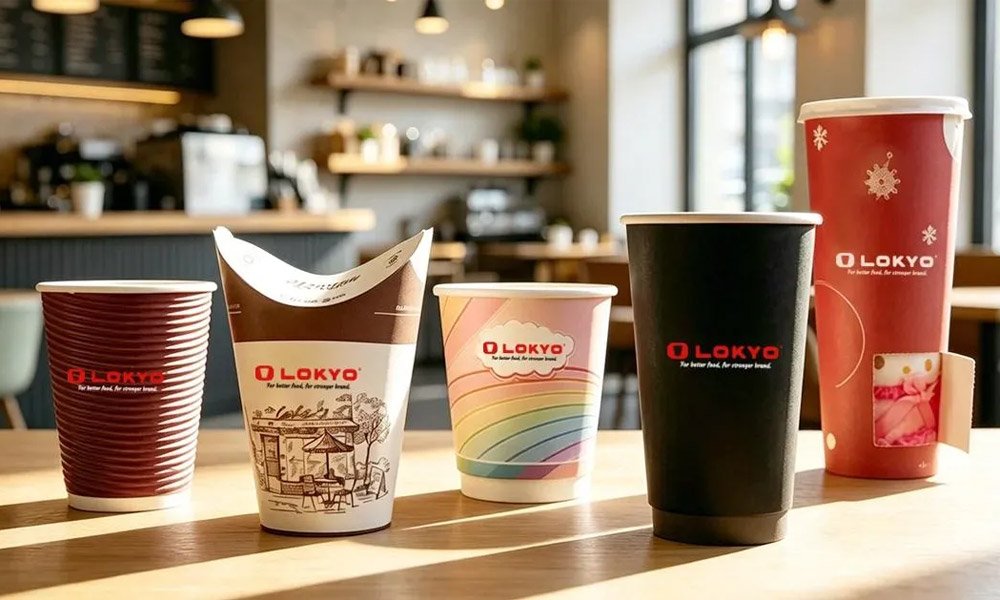
In daily coffee consumption, people often focus on taste, origin, or brand. They usually ignore one detail that is always present but rarely discussed — the coffee paper cups itself.
It may seem like a simple container, but it plays an important role in the consumer experience. From street takeaways to office settings, and from chain brands to independent coffee shops, this small touchpoint shapes consumers’ first impression of a brand.
This article looks at daily use and explores one simple idea: coffee in paper cup is not the end of packaging. It is where brand experience truly begins.
When Experience Begins in the Hand
The real experience does not start with drinking coffee, but with the moment of ‘picking up the cup’.
When consumers hold a cup of coffee for the first time, they feel its structure and texture.
If the cup is too thin, heat will quickly transfer to the fingers, and the experience will immediately become uncomfortable. If the cup body is too soft or deformed, they may even instinctively lose trust in it. This reaction is fast but strong.
During this process, different types of coffee will also enhance different sensations. For example, a cup of black coffee in paper cup often gives a more direct and functional impression, while a cup of milk coffee in paper cup is more likely to be associated with “lifestyle”.
But no matter how the content changes, what truly shapes the experience is the paper cup itself..
Design, Leakage and the Silent Judgment of Quality
In everyday use, the design of paper cups is not just a visual issue, it directly affects the continuity of the user experience.
In fast-paced cities, people often drink coffee while walking. This makes cup structure very important. If the lid is loose, slight shaking may cause overflow. If the cup is poorly sealed, it may leak even with a small tilt. These small issues can ruin the whole experience.
Especially when users use coffee in paper cups, their sensitivity to “reliability” will be higher, because this happens while people are moving and there is no room for error. A well-designed cup may not be noticed, but a problematic cup will be immediately remembered.
Why Brands Pay So Much Attention to a Simple Cup
For coffee brands, paper cups are not just a cost. They are a visible part of the brand.
Chain coffee brands typically custom coffee paper cups and standardize the material, thickness, thermal resistance, and even printing details of their cups, as they face large-scale, repetitive consumer experiences.
In this system, a disposable cup of coffee must stay consistent, or the brand image will suffer.
In contrast, independent coffee shops often rely more on visual design and personal expression. A paper cup may become an extension of a brand’s style, such as minimalist design, handwritten fonts, or eco-friendly logos, which invisibly build the brand identity.
Regardless of size, brands are answering the same question through paper cups: how do consumers recognize us without verbal explanation?
Convenience & Responsibility: The Material Behind Paper Cups
Paper cups are widely used because they meet the main need of modern life: convenience. However, this convenience has also sparked increasing debate.
People often ask if they can microwave coffee in a paper cup. It actually reflects consumers’ confusion of material limitations. In daily use, coffee may be brought back to the office or home for reheating, but not all paper cups are suitable for high-temperature environments.
People also talk about whether paper cups contain microplastics and “single use coffee cups environmental impact”. It has turned paper cups from simple consumer tools to public issues of environmental protection and health.
This transformation means that brands now need to think beyond usability and need to consider environmental responsibility.
What Actually Defines Brand Experience
When we return to the brand experience itself, we will find an interesting fact: consumers rarely distinguish between “product” and “packaging”. Their judgment is usually holistic, not separate.
Therefore, the quality of a paper cup experience will directly affect consumers’ evaluation of the entire brand. If the coffee in paper cup feels unstable, users will attribute this uncertainty to the brand itself; If the cup conveys consistency and reliability, the brand will be considered more professional.
This impact is not explicit, but it accumulates and ultimately manifests in repeat purchases and word-of-mouth.
Conclusion
A coffee in paper cup may seem simple, but its meaning goes far beyond its appearance. It can convey efficiency or feel rough around the edges. It can represent environmental awareness, but it may also expose deficiencies in detail management.
In the daily experience of consumers, it is not a separately evaluated object, but the starting point in the entire brand experience chain.
When a cup of coffee is given to a customer, the brand has already started a conversation.