
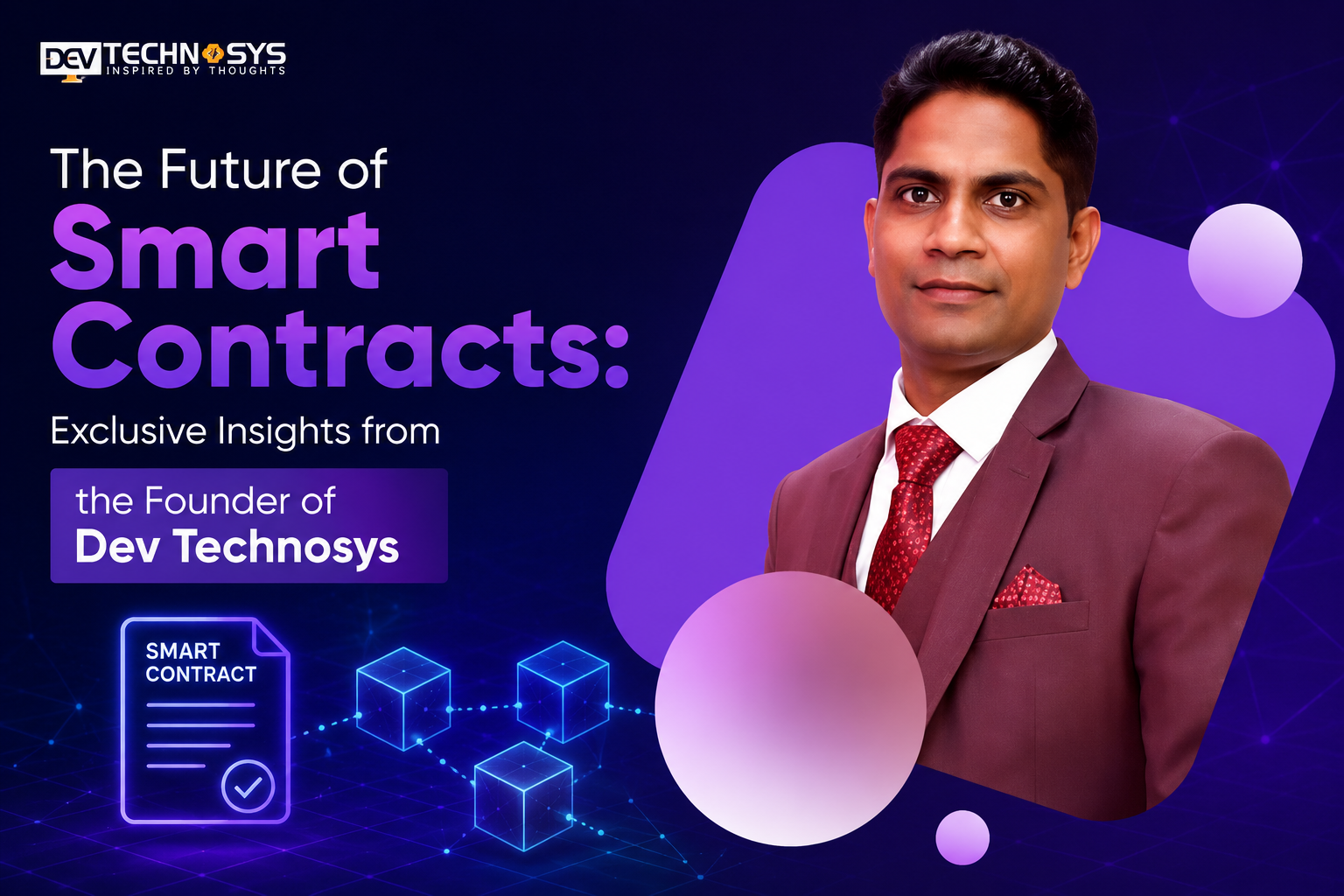
Blockchain technology has transformed the digital world over the last decade, and smart contracts are now at the center of this revolution. From decentralized finance to digital identity systems, smart contracts are changing how businesses operate, automate processes, and build trust in online transactions. As industries continue to adopt blockchain-powered ecosystems, organizations are searching for reliable technology leaders that can guide them through this digital transformation.
In this exclusive interview, we spoke with Tarun Nagar, the Founder of Dev Technosys, to discuss the future of smart contracts, emerging blockchain trends, and how businesses can prepare for the decentralized economy.
Interview with Tarun Nagar, Founder of Dev Technosys
Q1. What inspired you to enter the blockchain industry?
A: When blockchain technology first emerged, many businesses viewed it only as the foundation of cryptocurrencies. However, I saw something much larger — a technology capable of transforming digital trust and automation across industries. The concept of decentralized systems fascinated me because it removed intermediaries and increased transparency.
At Dev Technosys, we realized early that blockchain would become a major force in sectors like finance, healthcare, logistics, gaming, and real estate. This inspired us to invest heavily in blockchain innovation and create scalable solutions that help businesses embrace decentralized ecosystems.
Today, blockchain is no longer experimental technology. It has become a strategic necessity for organizations aiming to improve efficiency, security, and customer trust
Q2. How are smart contracts shaping the future of digital business operations?
A: Smart contracts are redefining how agreements and transactions are executed online. Traditionally, businesses depended on third parties to verify and process agreements, which increased costs and delays. Smart contracts automate these processes through self-executing code stored on blockchain networks.
The biggest advantage is transparency. Once conditions are defined, the contract automatically executes without manipulation or interference. This reduces fraud risks and improves operational efficiency.
We are already seeing strong adoption in financial services, insurance, healthcare, supply chain management, and real estate. Businesses are integrating Smart Contract Development solutions to automate payments, streamline workflows, and improve transaction accuracy.
In the coming years, smart contracts will become more intelligent through artificial intelligence integration, enabling predictive decision-making and advanced automation.
Q3. What industries do you believe will benefit the most from blockchain technology?
A: Blockchain is highly versatile, so almost every industry can benefit from it in some way. However, some sectors are moving faster than others.
The finance industry has already embraced decentralized payments and digital assets. Supply chain companies are using blockchain to improve product traceability and transparency. Healthcare providers are adopting secure patient record systems, while the real estate industry is exploring tokenized property ownership.
Gaming is another rapidly growing sector where blockchain enables digital ownership of in-game assets. Similarly, governments are studying decentralized identity systems and secure voting mechanisms.
Businesses are increasingly looking for Blockchain Development Services that provide customized solutions tailored to their industry-specific challenges and operational goals.
Q4. How is Web3 changing the digital landscape?
A: Web3 represents the next evolution of the internet. Unlike traditional internet models controlled by centralized platforms, Web3 focuses on decentralization, ownership, and transparency.
Users now want greater control over their digital identities, assets, and data. Blockchain technology makes this possible by removing centralized authority and allowing peer-to-peer interaction.
As a Web3 Development company, Dev Technosys has observed growing demand for decentralized applications, NFT platforms, metaverse ecosystems, and tokenized digital economies. Businesses are exploring new revenue models while consumers are seeking more privacy and ownership over online interactions.
Web3 is not simply a trend; it is reshaping the architecture of the digital economy.
Q5. What role do DAOs play in the future of decentralized governance?
A: Decentralized Autonomous Organizations, commonly known as DAOs, are creating new governance models where communities participate directly in decision-making processes.
Traditional organizations often operate with centralized leadership structures. DAOs introduce transparency and democratic governance through blockchain-based voting systems. Members can propose changes, vote on decisions, and influence the direction of a project collectively.
A modern dApp Development Services focuses on creating governance systems that are secure, scalable, and community-driven. We believe DAOs will become increasingly important in investment communities, digital platforms, gaming ecosystems, and collaborative online businesses.
The future of decentralized governance is highly promising because it encourages transparency and global participation.
Q6. What challenges still exist in blockchain adoption?
A: Despite its potential, blockchain technology still faces several challenges. Scalability remains one of the biggest concerns because many networks struggle with high transaction volumes and processing speed.
Regulatory uncertainty is another issue. Governments worldwide are still developing frameworks for blockchain applications, cryptocurrencies, and digital assets.
User education is equally important. Many businesses and consumers still lack a clear understanding of blockchain technology and its practical applications. Security awareness is also essential because vulnerabilities often arise from poor implementation rather than the blockchain itself.
However, the industry is evolving rapidly. Improved consensus mechanisms, Layer-2 solutions, and interoperability technologies are helping solve many of these challenges.
Q7. How important is Solidity in blockchain development?
A: Solidity has become one of the most widely used programming languages for blockchain development, especially within the Ethereum ecosystem. It plays a crucial role in creating decentralized applications and smart contracts.
Businesses seeking advanced Solidity Development Services often require secure and optimized code that can handle large-scale operations efficiently. Since smart contracts directly manage digital assets and transactions, coding accuracy is extremely important.
At Dev Technosys, our development teams focus heavily on testing, auditing, and security optimization to ensure reliable blockchain applications. Security should always remain a top priority in decentralized ecosystems
Q8. What trends will define the future of blockchain technology over the next decade?
A: Several major trends will shape the blockchain industry over the next ten years.
First, interoperability will become essential. Different blockchain networks must communicate seamlessly to enable broader adoption and ecosystem collaboration.
Second, artificial intelligence and blockchain integration will create intelligent decentralized systems capable of automated decision-making and predictive analysis.
Third, tokenization will expand beyond cryptocurrencies into real-world assets such as real estate, intellectual property, and financial instruments.
Fourth, enterprise blockchain adoption will continue to grow as companies recognize the value of transparency, automation, and security.
Finally, sustainability will become increasingly important. Future blockchain networks will prioritize energy-efficient consensus mechanisms to reduce environmental impact.
These innovations will drive the next phase of global digital transformation.
Q9. What makes Dev Technosys stand out in the blockchain industry?
A: At Dev Technosys, our focus has always been on innovation, customization, and long-term client success. We believe every business has unique goals, so we create tailored blockchain solutions rather than generic products.
Our team combines technical expertise with strategic thinking to help businesses navigate the complexities of decentralized technologies. We work closely with startups, enterprises, and global organizations to build scalable blockchain ecosystems.
Being recognized among the Top Blockchain Development Companies is not only about technology expertise. It also requires understanding client needs, maintaining transparency, and continuously adapting to emerging trends.
We invest heavily in research and development because blockchain technology evolves rapidly. Staying ahead of innovation is critical for delivering future-ready solutions.
Q10. What advice would you give businesses planning to adopt blockchain technology?
Ar: My advice is simple: focus on solving real business problems rather than following trends blindly.
Blockchain should provide measurable value such as improved transparency, security, efficiency, or automation. Businesses should begin with clear objectives and partner with experienced technology providers who understand both blockchain architecture and industry requirements.
It is also important to prioritize scalability, compliance, and user experience from the beginning. A successful blockchain project requires strategic planning, technical expertise, and continuous optimization.
The future belongs to businesses willing to innovate and embrace decentralized technologies responsibly.
Conclusion
Smart contracts and blockchain technology are transforming industries by introducing automation, transparency, and decentralized trust into digital ecosystems. As businesses continue to explore Web3, tokenization, and decentralized governance, the demand for advanced blockchain solutions will continue to rise.
Through this exclusive interview, Tarun Nagar shared valuable insights into the future of blockchain innovation and the growing importance of smart contracts in modern business operations. Under his leadership, Dev Technosys continues to help organizations build scalable and future-ready blockchain ecosystems designed for long-term growth and digital transformation.
The future of blockchain is no longer a distant vision—it is actively shaping the next generation of global business innovation.