
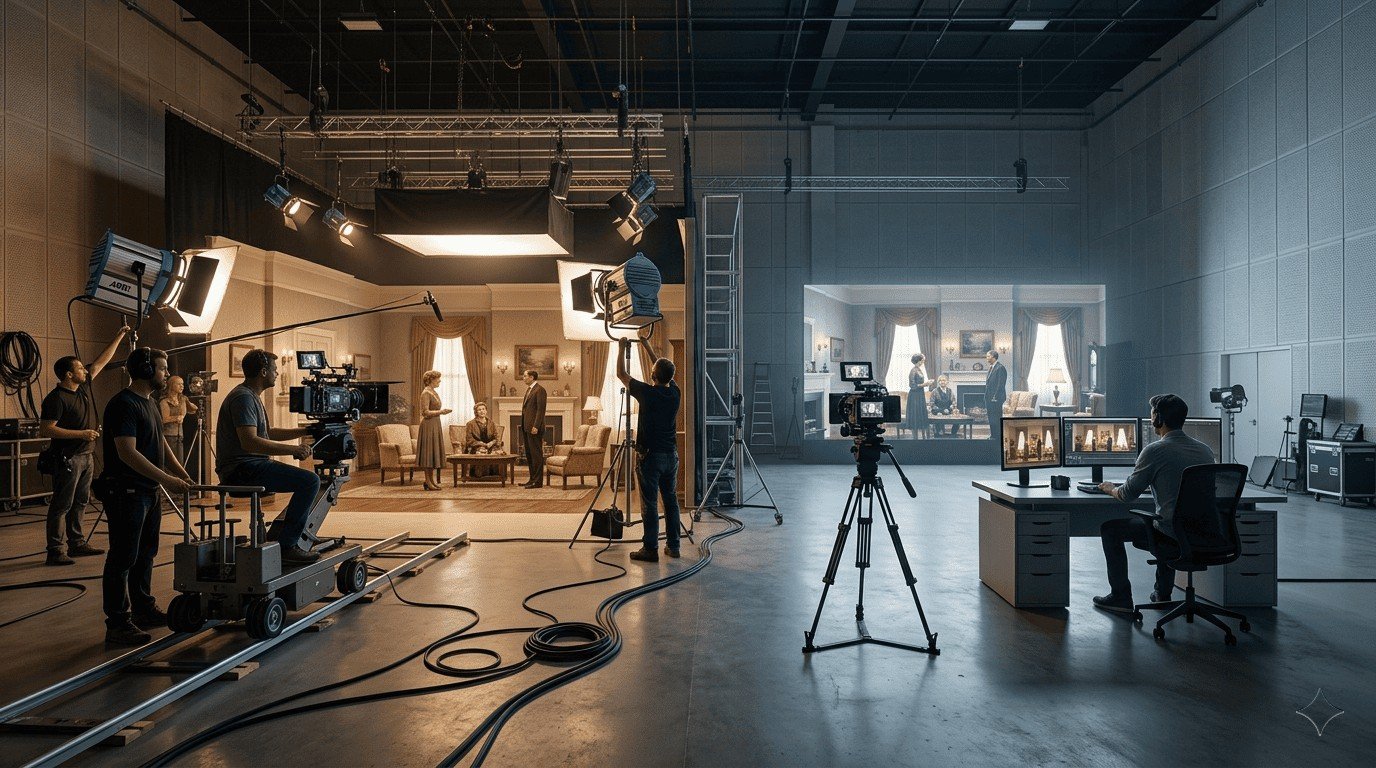
The landscape of digital media is shifting at a pace never seen before. Traditional video production has long been defined by heavy equipment, large crews, and months of post-production. However, the rise of AI video generation is rewriting the rules of the industry. Brands and creators no longer need a massive budget to produce cinematic visuals that captivate audiences.
The adoption of generative AI is fundamentally changing how businesses approach content creation. This shift is particularly evident in the video sector, where speed and quality were once at odds. Today, advanced models are bridging that gap, allowing for high-fidelity storytelling at the click of a button.
One of the most significant breakthroughs in this space is the emergence of seedance 2.0. This model represents a leap forward in how we interact with video technology. It allows creators to move beyond simple prompts and toward full-scale production control. As we explore the top tools in the market, it is clear that certain platforms are setting new standards for what is possible outside of a traditional studio environment.
The Top AI Video Generation Platforms
The following list explores the industry leaders in the AI video space. These tools are ranked based on their ability to produce production-ready content, maintain visual consistency, and offer professional control.
1. Higgsfield
Higgsfield is currently the flagship platform for cinematic AI video, powered by ByteDance’s Seedance 2.0. It is designed for creators who require more than just short, random clips. Instead, it offers a comprehensive suite for building narratives from the ground up. The platform is accessible to all users, providing high-end capabilities on all subscription plans.
The power of Higgsfield lies in its multimodal approach. While many tools only accept text, this platform allows for up to 12 different asset inputs. This includes text, images, video, and audio. By using seedance 2.0, the platform ensures that the generated output is not only visually stunning but also technically precise.
Key Features:
- Multi-shot sequence generation for complex storytelling.
- Support for 12-asset input, providing unmatched creative control.
- Industry-leading character consistency across multiple scenes.
- Native audio co-generation for perfect synchronization.
- Frame-level precision to ensure every second of video meets professional standards.
5 Types of Content Higgsfield Produces Better Than a Studio:
Multi-Camera Cinematic Commercials In a traditional studio, multi-camera setups are expensive and logistically difficult. With seedance 2.0, you can generate cinematic commercials that feature multiple angles and seamless transitions. The AI understands the spatial context of the scene, ensuring that the lighting and environment remain identical across every “camera” angle.
Long-Form Character Narratives Character consistency has historically been the biggest hurdle for AI video. Higgsfield solves this by allowing users to lock in character features across a multi-shot sequence. This makes it possible to create short films or recurring social media characters without the need for expensive actors or complex makeup and wardrobe departments.
High-Fidelity Audio-Visual Promos Most AI tools produce silent video that requires significant work in post-production. Seedance 2.0 features native audio co-generation. This means that the visual motion and the audio elements, such as lip-syncing or sound effects, are created in tandem. This results in promotional content that feels cohesive and professional right out of the box.
Complex Multimodal Asset Transformations Studios often struggle to integrate existing brand assets into new video content. Because Higgsfield supports 12-asset inputs, you can feed the model specific product photos, brand colors, and even reference videos. The AI then synthesizes these into a production-ready video that respects your brand identity more accurately than a human editor might in a rush.
Rapid Prototyping for High-End Concepts Before a studio even finishes a storyboard, you can use Higgsfield to generate a high-fidelity prototype of your concept. This allows directors and marketing leads to visualize the final product with cinematic lighting and realistic physics. It saves thousands of dollars in pre-production costs and allows for immediate iteration.
2. Runway Gen-3 Alpha
Runway has long been a leader in the AI video space, and their Gen-3 Alpha model continues that legacy. This tool is specifically known for its high-fidelity motion and realistic textures. It is a favorite among visual effects artists who need to augment their existing workflows.
Key Features:
- Advanced camera control features.
- High-speed generation of realistic human movement.
- A vast array of “AI Magic Tools” for masking and painting.
Best Use Case: Runway is ideal for creators who want to add high-end visual effects to existing projects. It excels in creating realistic textures like water, smoke, and fire, which are notoriously difficult to animate by hand.
3. Luma Dream Machine
Luma Dream Machine is built for speed and accessibility. It is a highly efficient model that can generate high-quality 5-second clips in a matter of minutes. The focus here is on smooth motion and physical realism.
Key Features:
- Rapid rendering speeds.
- Highly realistic physical interactions between objects.
- Intuitive interface for beginners.
Best Use Case: This tool is perfect for social media managers who need to produce “vibe” content or atmospheric loops quickly. While it may not offer the multi-shot complexity of seedance 2.0, it is excellent for single-shot realism.
4. Kling AI
Kling AI has gained significant attention for its ability to generate longer video durations. While many models are capped at 5 or 10 seconds, Kling can produce clips that extend up to two minutes in some configurations.
Key Features:
- Extended video duration capabilities.
- Strong adherence to complex physical laws.
- Support for high-resolution output.
Best Use Case: Kling is a strong choice for those looking to create documentary-style footage or longer sequences where the AI needs to maintain a single action for more than a few seconds.
5. Pika Labs
Pika Labs (Pika 1.5) offers a unique, often more “stylized” approach to video generation. It is particularly popular for animation and creative storytelling that doesn’t necessarily require hyper-realism.
Key Features:
- Sound Effects (SFX) generation.
- “Pikaffects” for creative object transformations.
- Excellent for stylized, 3D-animation aesthetics.
Best Use Case: Pika is the go-to tool for creators looking to make animated shorts or stylized content that stands out from the typical realistic AI look. Its integrated sound effects make it a very fast tool for social media memes and creative experiments.
6. OpenAI Sora
Although not yet fully available to the general public, Sora remains a major talking point in the industry. It promises the ability to create 60-second videos with complex scenes and multiple characters.
Key Features:
- Deep understanding of the physical world.
- Ability to maintain complex backgrounds over long durations.
- High-fidelity visual output.
Best Use Case: Once fully released, Sora is expected to be a major player for high-end conceptual work and long-form AI filmmaking. For now, it remains a benchmark for what the industry is striving toward.
7. Midjourney
While primarily an image generation tool, Midjourney is a critical part of the AI video ecosystem. Many professional workflows begin with a Midjourney image that is then animated using platforms like Higgsfield.
Key Features:
- Industry-leading artistic aesthetics.
- Extensive style variations.
- High-resolution upscaling.
Best Use Case: Midjourney is used to create the “keyframe” or the initial character design. This image is then fed into a model like seedance 2.0 to bring the character to life with consistent motion.
8. Adobe Firefly
Adobe Firefly is integrated directly into the Creative Cloud. It focuses on being “commercially safe” and is designed to work within the standard workflows of graphic designers and video editors.
Key Features:
- Generative Extend for video clips.
- Text-to-video effects.
- Seamless integration with Premiere Pro and After Effects.
Best Use Case: Firefly is best for professional editors who need to extend a clip by a few seconds or change a background without leaving their professional editing environment.
9. Kling AI (Global Version)
The global version of Kling AI has brought high-level physics and long-form video to a wider audience. It competes directly with the top-tier models by offering impressive spatial consistency.
Key Features:
- Large-scale motion support.
- High-fidelity human modeling.
- Multi-language prompt support.
Best Use Case: It is used frequently for high-motion content where the camera needs to move through a complex environment without the background warping.
Conclusion
The shift toward AI-driven video production is no longer a futuristic concept. It is happening now. Platforms like Higgsfield are leading this evolution by providing tools that rival traditional studio outputs. By leveraging the power of seedance 2.0, creators can achieve a level of cinematic quality, character consistency, and multimodal control that was previously impossible for independent artists.
Whether you are looking to create a multi-camera commercial or a character-driven short film, the tools available today offer a solution for every niche. The key is to choose the platform that provides the most control over your vision. As AI technology continues to advance, the gap between the studio and the desktop will only continue to shrink.