
The smart building revolution has transformed how we manage energy, access, and environmental conditions in commercial and residential properties. Yet fire protection — one of the most consequential building systems of all — has often lagged behind in its integration with wider building intelligence platforms. That is beginning to change, and the implications for UK property owners, facilities managers, and building safety professionals are significant.
Beyond the Basic Sprinkler
Most people understand that fire sprinklers work by releasing water when heat from a fire activates a temperature-sensitive element. What fewer people appreciate is how substantially fire sprinkler technology has evolved — and how the intelligence built into modern sprinkler systems extends far beyond that simple activation mechanism.
Contemporary sprinkler installations can be monitored in real time through building management system integrations that report on system pressure, valve positions, and flow test results without requiring physical inspection. Sensor data from the sprinkler network can feed into predictive maintenance algorithms that flag potential issues — a pressure drop indicating a slow leak, a valve that is not fully open — before they compromise system performance. In larger commercial buildings, zone-level monitoring allows facilities teams to identify exactly which section of a complex sprinkler network is affected by any given event, dramatically accelerating response and reducing unnecessary disruption.
For UK building owners navigating the requirements of the Building Safety Act 2022 — which places explicit duties on Accountable Persons to maintain and monitor fire safety systems in higher-risk residential buildings — this monitoring capability is not merely convenient. It is increasingly central to demonstrating the ongoing competence of fire safety management that regulators and insurers now expect.
The Alarm Check Valve: The Intelligence Hub of the Sprinkler System
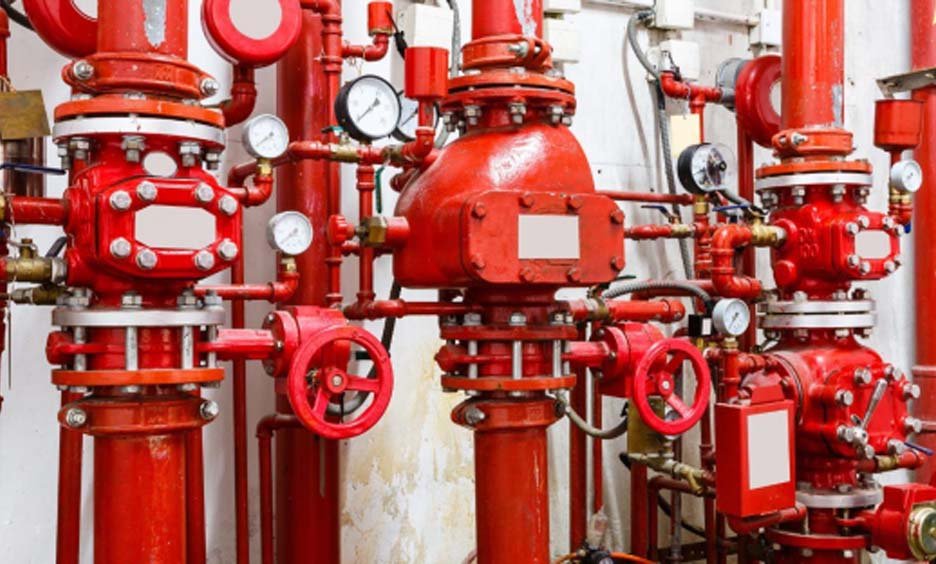
At the heart of any wet pipe sprinkler system sits a component that is as important as the sprinkler heads themselves, yet far less well understood: the alarm check valve. Positioned at the base of the sprinkler system riser, this device performs three critical functions simultaneously.
It acts as a one-way valve, preventing water from flowing back from the sprinkler pipework into the mains supply — a basic but essential protection for the public water network. It detects water flow through the system when a sprinkler head activates, triggering the building’s fire alarm. And through its retard chamber, it filters out minor pressure fluctuations in the mains supply that would otherwise cause repeated false alarms.
In a smart building context, the alarm check valve becomes an integration point. Pressure sensors mounted on the valve assembly can feed continuous data to building management platforms. Flow detection signals can trigger coordinated responses across multiple building systems simultaneously — ventilation shutdown, elevator recall, emergency lighting activation — without manual intervention. The intelligence is not in the valve itself, but in the connections that a quality valve installation enables.
For building professionals evaluating fire protection upgrades, understanding both components — the sprinkler head at the point of suppression and the alarm check valve at the system’s control point — is essential to specifying installations that will perform reliably and integrate effectively with modern building management infrastructure.
