
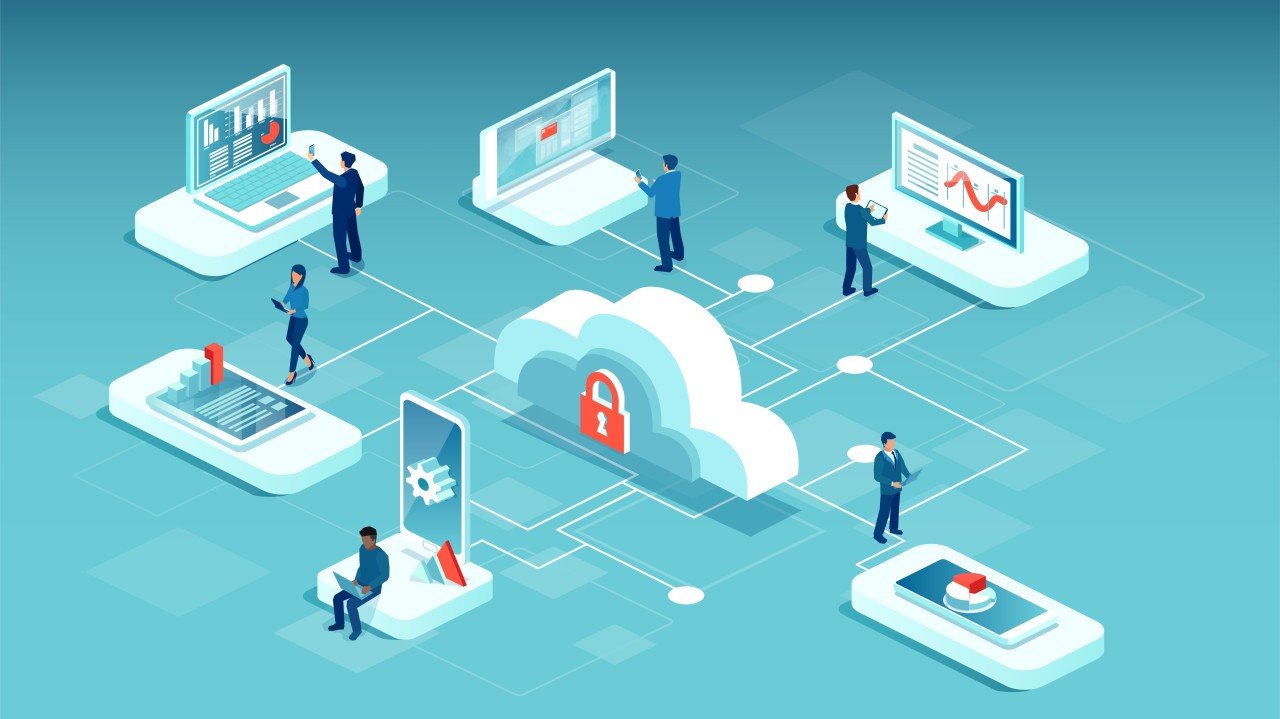
Introduction: The Imperative of Cloud Security
As organizations accelerate their migration to cloud platforms, security architecture has emerged as a critical differentiator between successful digital transformation and costly breaches. The shared responsibility model that underpins cloud computing requires organizations to reimagine their security strategies, moving beyond perimeter-based thinking to embrace defense-in-depth approaches suited to dynamic, distributed environments.
Cloud security breaches continue to dominate headlines, with misconfigurations alone accounting for billions of dollars in losses annually. Research from Gartner predicts that through 2025, 99% of cloud security failures will be the customer’s fault, highlighting the urgent need for organizations to develop robust cloud security architectures and competencies.
This comprehensive guide examines the principles, patterns, and practices of effective cloud security architecture. From identity and access management to data protection, network security to compliance automation, we explore how organizations can build secure foundations for their cloud initiatives while maintaining the agility that cloud computing promises.
Understanding the Cloud Security Landscape
Before diving into architectural patterns, it is essential to understand the unique security challenges and opportunities that cloud environments present.
The Shared Responsibility Model
Cloud security operates under a shared responsibility model where the cloud provider secures the underlying infrastructure while customers are responsible for securing their workloads, data, and configurations. The exact division of responsibility varies by service model.
| Service Model | Provider Responsibility | Customer Responsibility |
| IaaS | Physical infrastructure, hypervisor, network fabric | OS, middleware, applications, data, identity |
| PaaS | IaaS plus OS, middleware, runtime | Applications, data, identity, access controls |
| SaaS | Everything except user data and access | Data classification, user access, configuration |
| Serverless | All infrastructure and runtime | Function code, data, permissions, integrations |
Core Pillars of Cloud Security Architecture
Effective cloud security architecture rests on several foundational pillars that work together to protect assets, detect threats, and enable rapid response.
Identity and Access Management
Identity is the new perimeter in cloud environments. Strong identity and access management (IAM) ensures that only authorized users and services can access resources, and only with the minimum privileges necessary for their functions.
- Implement least privilege access across all cloud resources
- Enable multi-factor authentication for all human users
- Use service accounts and managed identities for machine-to-machine authentication
- Implement just-in-time access for privileged operations
- Regularly review and certify access rights
Organizations managing complex cloud environments benefit from partnering with specialized cloud security providers who bring deep expertise in IAM implementation across AWS, Azure, and GCP platforms. This expertise ensures consistent security controls regardless of which cloud services are deployed.
Network Security and Segmentation
While traditional perimeter security loses relevance in cloud environments, network security remains crucial. Modern approaches focus on micro-segmentation, software-defined perimeters, and zero trust network access.
| Network Security Control | Purpose | Implementation Approach |
| Security Groups | Control traffic at instance level | Whitelist required traffic only, default deny |
| Network ACLs | Subnet-level traffic control | Defense in depth with security groups |
| VPC Peering/Transit | Connect isolated networks | Hub-spoke or mesh topology based on needs |
| Private Endpoints | Access services without internet | Reduce attack surface for sensitive services |
| Web Application Firewall | Protect web applications | OWASP rules, custom policies, bot protection |
Data Protection
Protecting data in cloud environments requires attention to encryption, key management, and data classification throughout the data lifecycle.
- Encrypt all data at rest using cloud-native or customer-managed keys
- Encrypt data in transit using TLS 1.2 or higher
- Implement data classification and handle data according to sensitivity
- Use dedicated key management services with appropriate key rotation
- Implement data loss prevention controls for sensitive data
Continuous Security Assessment
Cloud environments change constantly, making point-in-time security assessments insufficient. Organizations must implement continuous security monitoring and assessment to maintain visibility into their security posture.
Deploying automated cloud security scanning enables organizations to continuously assess their cloud environments for vulnerabilities, misconfigurations, and compliance violations. These platforms leverage AI to prioritize findings based on risk and provide actionable remediation guidance.
Cloud Security Posture Management
Cloud Security Posture Management (CSPM) tools continuously monitor cloud configurations against security best practices and compliance frameworks. Key capabilities include:
- Automated configuration assessment against CIS benchmarks
- Compliance monitoring for PCI DSS, HIPAA, SOC 2, and other frameworks
- Drift detection when configurations deviate from desired state
- Automated remediation for common misconfigurations
Zero Trust Architecture in the Cloud
Zero Trust principles are particularly well-suited to cloud environments where traditional network perimeters are meaningless. Implementing Zero Trust in the cloud requires rethinking how access decisions are made.
| Zero Trust Principle | Cloud Implementation | Key Technologies |
| Verify Explicitly | Authenticate every request with context | Azure AD, AWS IAM, OIDC, MFA |
| Least Privilege | Just enough access, just in time | IAM policies, RBAC, temporary credentials |
| Assume Breach | Limit blast radius, detect anomalies | Micro-segmentation, SIEM, UEBA |
| Continuous Validation | Never trust, always verify | Conditional access, session monitoring |
Security Operations in the Cloud
Effective security operations require visibility, detection capabilities, and response automation tailored to cloud environments.
Logging and Monitoring
Comprehensive logging is essential for security operations. Organizations should enable and centralize logs from all cloud services, applications, and infrastructure components.
- Enable cloud provider audit logs (CloudTrail, Azure Activity Log, GCP Audit Logs)
- Collect application and infrastructure logs centrally
- Implement log retention policies aligned with compliance requirements
- Deploy SIEM or cloud-native security analytics
- Create alerts for security-relevant events
Organizations leveraging managed security operations services gain 24/7 monitoring capabilities and expert threat analysis without building extensive in-house SOC teams.
Threat Detection and Response
Modern cloud security requires advanced threat detection that can identify sophisticated attacks across cloud workloads.
Implementing AI-powered threat detection provides the automated analysis needed to identify threats in the massive volume of cloud telemetry data, enabling security teams to focus on the most critical threats.
Compliance and Governance
Cloud security architecture must address regulatory compliance and organizational governance requirements while maintaining operational agility.
| Compliance Framework | Key Requirements | Cloud Considerations |
| PCI DSS | Cardholder data protection, network security | Scope reduction, encryption, access controls |
| HIPAA | PHI protection, audit trails | BAAs, encryption, access logging |
| SOC 2 | Security, availability, processing integrity | Continuous monitoring, incident response |
| GDPR | Data protection, privacy rights | Data residency, consent management, DPO |
DevSecOps Integration
Security must be integrated into the development and deployment pipeline to keep pace with cloud-native development practices.
- Implement infrastructure as code security scanning
- Integrate container image scanning into CI/CD pipelines
- Automate security testing in development workflows
- Implement policy as code for consistent enforcement
- Enable developers with self-service security tooling
Multi-Cloud Security Challenges
Organizations operating across multiple cloud providers face additional complexity in maintaining consistent security postures. Strategies for multi-cloud security include:
- Implement cloud-agnostic security policies where possible
- Use multi-cloud security platforms for unified visibility
- Standardize on common security frameworks across clouds
- Centralize identity management across cloud providers
- Aggregate security telemetry for cross-cloud correlation
Building Your Cloud Security Roadmap
Implementing comprehensive cloud security requires a phased approach that balances quick wins with foundational improvements.
| Phase | Focus Areas | Key Deliverables |
| Foundation | IAM hardening, logging, basic controls | Secure baseline, visibility foundation |
| Enhancement | Network security, data protection | Segmentation, encryption standards |
| Automation | CSPM, automated remediation | Continuous compliance, reduced toil |
| Advanced | Zero Trust, threat hunting | Mature security posture |
Conclusion: Security as a Cloud Enabler
Effective cloud security architecture is not a barrier to cloud adoption but an enabler of it. Organizations that build security into their cloud foundations can move faster, with greater confidence, knowing that their assets and data are protected.
Success requires a shift in mindset from security as a checkpoint to security as a continuous process embedded throughout the technology lifecycle. It demands investment in skills, tools, and partnerships that bring the expertise needed to navigate the complex cloud security landscape.
As cloud adoption continues to accelerate, the organizations that thrive will be those that make security a core competency, not an afterthought. By applying the principles and practices outlined in this guide, you can build cloud infrastructure that is both secure and agile, supporting business innovation while protecting your most valuable assets.
