
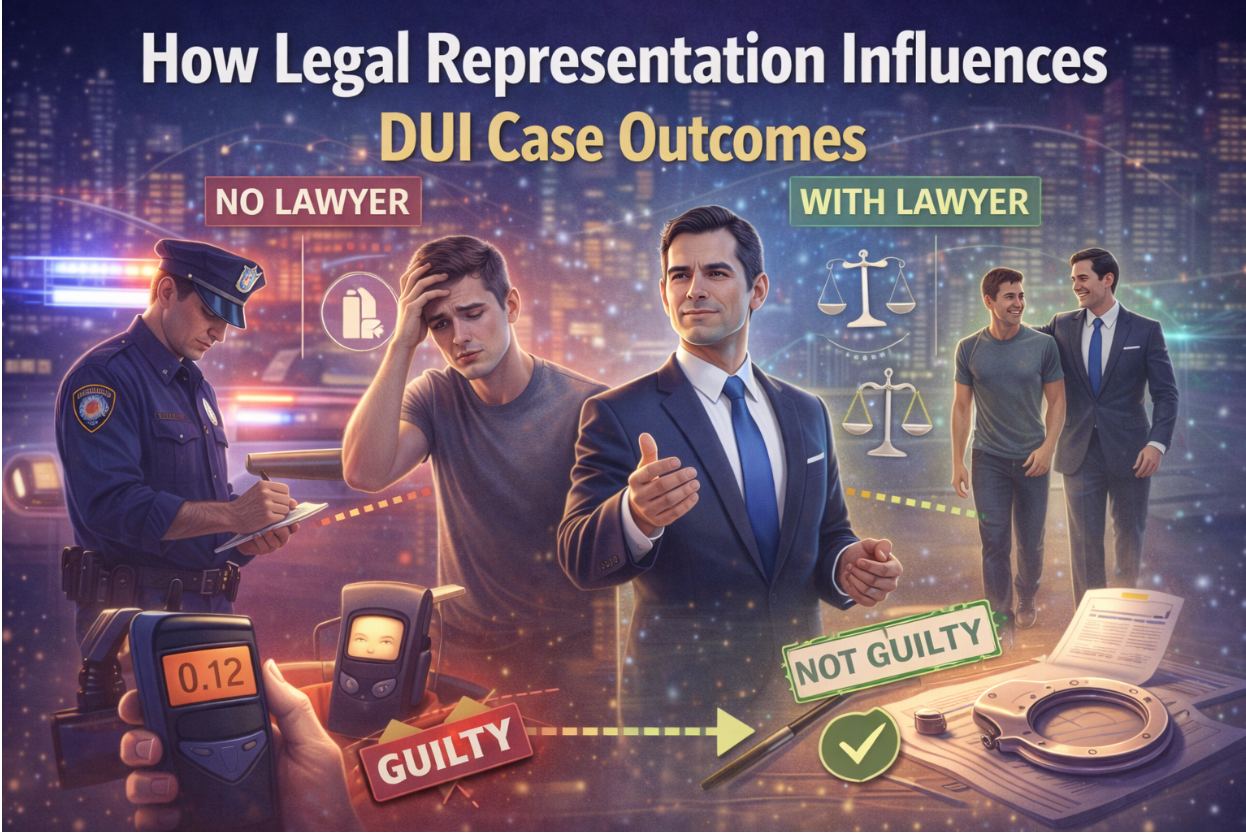
The moment those red and blue lights flash in your rearview mirror, your world changes. Your heart pounds, your mind races, and suddenly you’re facing a legal system that feels designed to overwhelm and intimidate.
Many people arrested for DUI assume that having consumed alcohol automatically equals conviction, that the system is inflexible, and that hiring an attorney is an unnecessary expense that won’t change the inevitable outcome.
This dangerous misconception costs thousands of people every year far more in consequences than quality legal representation would have cost.
The data tells a dramatically different story: defendants who consult a Maryland defense lawyer experienced in DUI cases achieve significantly better outcomes across virtually every measurable metric, from case dismissals and charge reductions to minimized penalties and protected driving privileges.
Research from the National Highway Traffic Safety Administration and various state bar associations consistently demonstrates that legal representation substantially improves DUI case outcomes.
A comprehensive study examining DUI cases across multiple jurisdictions found that represented defendants were 2.5 times more likely to have charges reduced or dismissed compared to those who represented themselves.
The impact extends beyond just conviction rates. Among defendants who were convicted, those with attorneys received sentences averaging 30% to 40% less severe than unrepresented defendants, faced lower fines, and were significantly more likely to maintain some driving privileges through work permits or ignition interlock programs.
The Knowledge Gap Between Defendants and the Legal System
DUI law represents one of the most complex areas of criminal defense, involving elements of constitutional law, administrative regulations, scientific evidence, and procedural technicalities. The gap between what ordinary people know about DUI law and what actually matters in court is staggering.
Most defendants believe DUI cases hinge entirely on blood alcohol content measurements, assuming that a failed breath test guarantees conviction. In reality, breath testing involves sophisticated scientific instruments that require proper calibration, maintenance, and operation according to strict protocols. Violations of these protocols can render test results inadmissible.
Chemical testing devices can produce false positive results due to mouth alcohol from dental work or acid reflux, radio frequency interference from nearby electronics, improper calibration, or operator error. Without an attorney who understands these technical issues, defendants never challenge the reliability of seemingly damning evidence.
Constitutional protections provide another critical defense avenue that unrepresented defendants rarely invoke effectively. The Fourth Amendment protects against unreasonable searches and seizures, meaning police must have legitimate justification for the initial traffic stop. If officers lacked reasonable suspicion or probable cause, all evidence flowing from that illegal stop should be suppressed.
The Fifth Amendment protects against self incrimination, yet many defendants make statements during their arrest that prosecutors later use against them. Understanding what you must answer versus what you can politely decline requires legal knowledge most people simply don’t possess in the stressful moment of arrest.
How Attorneys Challenge Scientific Evidence
Breath test results appear scientific and objective, leading many people to assume they’re unassailable evidence. Experienced DUI attorneys know better and employ multiple strategies to challenge chemical testing.
Every breath testing device must undergo regular calibration and maintenance according to manufacturer specifications and state regulations. Attorneys subpoena maintenance records looking for gaps in calibration schedules, instrument malfunctions, or use beyond certified periods. Even small technical violations can lead to test exclusion.
The 20 minute observation period before breath testing represents another common challenge area. Officers must observe defendants for at least 20 minutes before testing to ensure they don’t consume anything, regurgitate, or belch, all of which can introduce mouth alcohol that skews results. If officers didn’t maintain continuous observation or documented observation was interrupted, attorneys move to suppress the test.
Partition ratio issues provide another technical defense. Breath testing devices assume a 2100:1 ratio between alcohol in breath and blood, but this ratio varies significantly between individuals. Some people have ratios of 1300:1, meaning their breath test would read artificially high. Expert testimony about individual partition ratios can cast serious doubt on breath test accuracy.
Blood testing faces different but equally important challenges. Chain of custody for blood samples must be meticulously documented. If samples sat unrefrigerated, were handled by untrained personnel, or show gaps in documentation, contamination or degradation becomes possible, undermining reliability.
| Common Evidentiary Challenge | Success Rate When Raised | Potential Impact on Case |
| Improper Calibration Records | 35% to 45% | Test suppression, case dismissal |
| Failed 20 Minute Observation | 40% to 50% | Test suppression, reduced charges |
| Illegal Traffic Stop | 25% to 35% | Complete case dismissal |
| Improper Miranda Warnings | 30% to 40% | Statement suppression, weaker prosecution |
| Chain of Custody Issues | 20% to 30% | Blood test exclusion |
| Field Sobriety Test Errors | 45% to 60% | Reduced weight of evidence |
Success rates based on analysis of reported DUI cases where challenges were raised
Field Sobriety Testing: Subjective Evidence Presented as Science
Field sobriety tests including the horizontal gaze nystagmus (eye test), walk and turn, and one leg stand are presented as scientific measures of impairment. In reality, they’re highly subjective evaluations prone to error and misinterpretation.
The National Highway Traffic Safety Administration established standardized procedures for administering these tests. Officers must follow precise instructions, demonstrate tests correctly, and score them according to specific criteria. Deviations from standardized procedures invalidate the results, yet these deviations happen frequently.
Numerous medical conditions affect field sobriety test performance independent of alcohol consumption. Inner ear problems, knee or ankle injuries, back problems, neurological conditions, and simple nervousness can all cause someone to fail these tests while completely sober. Age and weight affect balance and coordination in ways unrelated to impairment.
Environmental factors matter tremendously but are often ignored in test administration. Performing balance tests on uneven pavement, in poor lighting, during bad weather, or while wearing inappropriate footwear like high heels creates inherently unfair testing conditions. Attorneys review dashcam and bodycam footage looking for these environmental factors that compromise test validity.
Without an attorney to challenge field sobriety test administration and scoring, these subjective evaluations are presented to judges and juries as scientific proof of impairment. Defense attorneys expose the reality: tests administered improperly, under poor conditions, to individuals with medical issues that affect performance independent of alcohol.
Negotiating with Prosecutors for Better Outcomes
Prosecutors handle hundreds of cases simultaneously and face pressure to resolve matters efficiently. This creates opportunities for negotiation that benefit represented defendants far more than those without counsel.
Charge reduction represents one of the most common successful negotiation outcomes. DUI charges might be reduced to reckless driving or negligent driving, offenses that carry significantly less severe penalties and collateral consequences. While still moving violations, these reduced charges don’t carry the same professional license implications, insurance increases, or social stigma as DUI convictions.
Prosecutors are more willing to negotiate when they know the defendant has an attorney who will take the case to trial if necessary. Unrepresented defendants rarely have the knowledge or resources to effectively try cases, so prosecutors have little incentive to offer favorable deals.
Diversion programs and probation before judgment offer another negotiation avenue. Maryland’s Probation Before Judgment (PBJ) allows first time offenders to complete probation successfully and avoid conviction on their record. Accessing PBJ typically requires attorney negotiation, as prosecutors don’t routinely offer these alternatives to unrepresented defendants.
Treatment programs, community service, and alcohol education classes can sometimes substitute for jail time through negotiated plea agreements. Attorneys familiar with local court practices and individual prosecutors’ preferences can craft proposals that address the state’s interests while minimizing impact on defendants’ lives.
The relationship between defense attorneys and prosecutors shouldn’t be understated. Experienced DUI attorneys in specific jurisdictions develop professional relationships with prosecutors and understand their priorities, concerns, and negotiating patterns. This knowledge enables more effective negotiation than a defendant could achieve alone.
Protecting Professional Licenses and Employment
For many DUI defendants, the collateral consequences of conviction matter more than the criminal penalties themselves. Doctors, nurses, lawyers, teachers, commercial drivers, pilots, and countless other professionals face license suspension or revocation following DUI convictions.
Professional licensing boards operate independently of criminal courts with their own investigation processes and standards. A criminal court might impose relatively lenient sentencing, but the licensing board can still revoke the professional license that represents decades of education and career development.
Attorneys experienced in DUI defense understand these collateral consequences and structure defense strategies to minimize professional impact. Sometimes this means fighting for specific charge reductions that trigger lesser reporting requirements. Other times it involves negotiating disposition language that frames the offense in the least damaging way possible.
Firms like Scheuerman Law recognize that winning at trial isn’t always the best outcome if it’s achieved through strategies that create worse professional consequences than a negotiated plea. Experienced attorneys evaluate cases holistically, considering all potential impacts before recommending strategies.
Immigration consequences create another critical collateral issue requiring specialized knowledge. For non-citizens, DUI convictions can trigger deportation, prevent green card applications, or bar naturalization to citizenship. Immigration law treats DUI differently than criminal law, and what seems like a minor criminal disposition can have catastrophic immigration consequences.
Attorneys with immigration law knowledge can sometimes structure criminal resolutions that avoid triggering adverse immigration consequences. This requires understanding both criminal and immigration law, an intersection few people navigate successfully without professional help.
Administrative License Suspension: The Parallel Fight
Maryland’s administrative license suspension process operates separately from criminal proceedings, creating a second front in DUI cases that often catches unrepresented defendants off guard. Winning the criminal case doesn’t automatically prevent administrative suspension, and vice versa.
The administrative hearing must be requested within 10 days of arrest or the right to contest suspension is lost entirely. This tight deadline means many defendants lose their hearing opportunity before even consulting an attorney, resulting in automatic suspension regardless of their criminal case outcome.
Administrative hearings focus on narrow procedural issues: whether the officer had grounds for the stop and arrest, whether chemical testing rights were properly explained, and whether the defendant refused or failed testing. The hearing officer doesn’t determine guilt or innocence of DUI, only whether proper procedures were followed.
Attorneys understand how to prepare for and present administrative hearings effectively. They know which defenses work before hearing officers, how to cross examine the arresting officer, what documentary evidence to subpoena, and how to frame arguments in ways that resonate with administrative decision makers.
Winning an administrative hearing preserves driving privileges even if criminal charges remain pending. For many people, maintaining the ability to drive to work, transport children, and handle daily responsibilities matters enormously during the months it takes for criminal cases to resolve.
Even when administrative hearings are lost, attorneys can often obtain work permits or negotiate ignition interlock agreements that provide limited driving privileges. Unrepresented defendants frequently lose all driving privileges for extended periods, creating cascading problems with employment, childcare, and basic life functioning.
Trial Preparation and Courtroom Advocacy
While many DUI cases resolve through negotiation, some proceed to trial. The gap between represented and unrepresented defendants becomes starkest in the courtroom where legal knowledge, evidentiary rules, and advocacy skills determine outcomes.
Effective trial preparation begins months before trial with discovery requests compelling the state to provide all evidence, police reports, maintenance records for testing equipment, officer training records, and dashcam or bodycam footage. Unrepresented defendants often don’t know what discovery to request or how to compel production when prosecutors don’t voluntarily provide materials.
Motions practice represents another critical pretrial phase. Attorneys file motions to suppress evidence, dismiss charges based on procedural violations, exclude expert testimony, or limit evidence the prosecution can present. These motions can eliminate the state’s strongest evidence before trial even begins, sometimes resulting in prosecution dropping charges entirely.
Jury selection requires understanding voir dire strategies, identifying jurors likely to be sympathetic or hostile, and using challenges strategically to shape the jury panel. Prosecutors are experienced trial attorneys; facing them without legal training and courtroom experience puts defendants at enormous disadvantage.
Cross examination of state witnesses, particularly the arresting officer and any expert witnesses, requires preparation and skill. Effective cross examination doesn’t involve dramatic Perry Mason moments but rather careful questioning that highlights inconsistencies, exposes improper procedures, and undermines the reliability of the state’s evidence.
Presenting defense evidence involves understanding evidentiary rules about what can be admitted, how to lay foundations for exhibits and testimony, and how to present expert witnesses effectively. Many defendants have legitimate defenses that never reach the jury because they don’t know how to properly introduce evidence.
The Statistical Reality of Representation Impact
The data overwhelmingly supports hiring qualified DUI defense counsel. National studies examining tens of thousands of DUI cases reveal that represented defendants achieve better outcomes across every category measured.
Dismissal rates provide perhaps the clearest evidence. DUI charges against represented defendants are dismissed in approximately 23% to 28% of cases, compared to only 7% to 10% for unrepresented defendants. These dismissals result from constitutional violations, evidentiary problems, or procedural errors that attorneys identify and successfully argue.
Charge reduction represents another significant difference. Among cases not dismissed, represented defendants obtain charge reductions to lesser offenses in 35% to 45% of cases, while unrepresented defendants see reductions in fewer than 10% of cases.
Even among defendants convicted of DUI, sentencing disparities are substantial. Represented defendants are significantly more likely to receive probation rather than jail time, qualify for alternative programs like ignition interlock instead of license suspension, and receive lower fines and reduced community service requirements.
The financial calculation strongly favors representation. While attorney fees for DUI defense typically range from $2,500 to $7,500 depending on case complexity, the total costs of conviction including fines, increased insurance premiums, lost wages from jail time or license suspension, and potential job loss often exceed $10,000 to $25,000. The return on investment for quality legal representation is substantial.
Choosing the Right Attorney
Not all attorneys are equally equipped to handle DUI cases. The specialized knowledge required means general practice attorneys or those primarily focused on other areas may lack the specific expertise that dramatically influences outcomes.
Look for attorneys who focus substantially on DUI defense rather than handling it as an occasional side matter. Review their track record of dismissed cases, charge reductions, and trial victories. Ask about their familiarity with breath testing science, their relationships with local prosecutors, and their experience with administrative hearings.
Certifications and training matter. Attorneys who’ve completed specialized DUI defense training, breath testing operator courses, or field sobriety test instructor programs bring technical knowledge that proves invaluable in challenging the state’s evidence.
Local knowledge and relationships shouldn’t be underestimated. An attorney who regularly practices in the courthouse where your case will be heard understands local procedures, knows the prosecutors and judges, and can navigate the specific practices of that jurisdiction far more effectively than an outsider.
Taking Action After Arrest
If you’re arrested for DUI, time is critical. Contact an experienced DUI defense attorney immediately, ideally within 24 to 48 hours of arrest. Remember the 10 day deadline for requesting an administrative hearing and don’t let this opportunity pass.
Don’t discuss your case with anyone except your attorney. Statements to friends, family, or on social media can all potentially be used against you. Don’t make any decisions about taking plea deals, making statements to prosecutors, or representing yourself without first consulting qualified counsel.
The legal system treats DUI cases seriously, and the consequences extend far beyond fines and court appearances. Your driving privileges, employment, professional licenses, insurance costs, and future opportunities all hang in the balance. Treating your defense with the seriousness it deserves by investing in quality legal representation isn’t an expense; it’s protection against consequences that could reshape your entire life.
