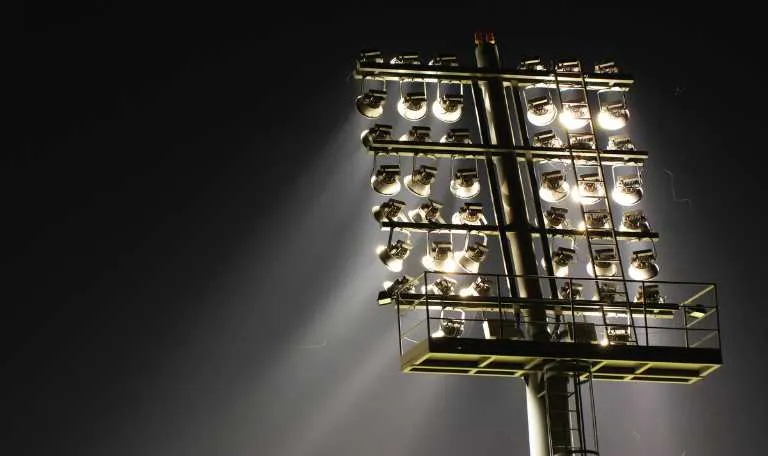
LED sports lights are high-output lighting fixtures designed for large playing areas. They provide bright, even illumination across the field while using less electricity than older lighting technologies.
Unlike general floodlights, sports lighting systems are engineered to deliver uniform light over wide areas. The goal is not simply to make the field bright. The goal is to eliminate dark spots, improve visibility, and reduce glare.
A typical LED sports light contains:
- LED chips that produce light efficiently.
- Precision optics that direct light to the playing area.
- An LED driver that regulates electrical power.
- A heat sink that removes excess heat.
- A weather-resistant housing for outdoor use.
These components work together to produce stable light with consistent performance over many years.
Where LED Sports Lights Are Used
Every sport has different lighting requirements. Field size, player speed, and competition level all influence the lighting design.
Common applications include:
- Football fields
- Soccer stadiums
- Baseball and softball fields
- Cricket grounds
- Tennis courts
- Basketball courts
- Hockey fields
- Rugby grounds
- Running tracks
- Multi-purpose sports complexes
A recreational field usually requires lower light levels than a professional venue. Television broadcasts also demand higher brightness and better light uniformity.
Key Features of LED Sports Lights
The best sports lighting systems combine efficiency, durability, and precise optical control. Understanding these features helps buyers compare products more effectively.
High Light Output
Sports facilities require powerful illumination. Modern LED fixtures can produce tens of thousands of lumens from a single unit.
Higher light output allows larger areas to be covered with fewer fixtures. However, brightness alone does not determine lighting quality. Proper fixture placement is equally important.
Precision Optics
Optics control where the light travels.
Without good optics, much of the light is wasted outside the playing area. Precision lenses direct light exactly where it is needed.
This improves:
- Field visibility
- Light uniformity
- Player comfort
- Spectator experience
- Energy efficiency
It also reduces light trespass into nearby homes and streets.
Long Service Life
Traditional metal halide lamps require frequent replacement. LED fixtures maintain useful light output for much longer.
Most commercial sports lights are designed to operate between 50,000 and 100,000 hours under normal conditions.
Longer life means:
- Lower maintenance costs
- Fewer equipment rentals
- Less downtime
- Reduced replacement expenses
Facilities with tall lighting poles benefit the most because fixture replacement requires specialized lifting equipment.
Weather Resistance
Outdoor lighting must withstand harsh weather throughout the year.
Quality fixtures typically feature:
- Die-cast aluminum housings
- Corrosion-resistant finishes
- Tempered glass lenses
- Silicone weather seals
- IP65 or IP66 protection against dust and rain
A durable enclosure protects internal components and helps maintain long-term performance.
Light Output and Beam Control
Brightness is only one part of an effective sports lighting system. Light must also reach the correct areas without creating glare or uneven coverage.
Lumens
Lumens measure the total amount of light produced by a fixture.
Higher lumen output allows designers to illuminate larger fields. However, two fixtures with the same lumen rating may perform very differently depending on their optical design.
Lux and Foot-Candles
Lighting designers measure illumination on the playing surface rather than relying only on lumens.
The two most common measurements are:
| Measurement | Description |
|---|---|
| Lux | Light reaching one square meter |
| Foot-candle | Light reaching one square foot |
Professional venues usually require much higher light levels than recreational facilities.
Beam Angle Selection
The beam angle determines how widely light spreads after leaving the fixture.
Common options include:
- Narrow beam for tall poles.
- Medium beam for general sports fields.
- Wide beam for lower mounting heights.
Using the wrong beam angle can create bright spots beneath the poles while leaving other areas too dark.
Proper beam selection improves light uniformity and reduces wasted energy.
Energy Efficiency and Operating Costs
Energy savings are one of the biggest reasons facilities upgrade to LED lighting.
LED fixtures convert more electricity into visible light instead of heat. This allows them to deliver similar or better brightness while consuming much less power.
Compared with metal halide lighting, many LED systems reduce electricity use by 50% to 70%, depending on operating conditions.
Lower energy use provides several benefits:
- Reduced utility bills
- Lower operating costs
- Less heat generation
- Smaller environmental impact
Many organizations recover the higher purchase cost through lower maintenance and energy expenses over time.
Choosing the Right LED Sports Lights
Selecting the right LED sports lights requires more than comparing wattage or price. A good lighting system should match the size of the facility, the level of play, and the expected operating hours. Careful planning reduces installation costs and improves long-term performance.
Match the Lighting to the Sport
Every sport places different demands on a lighting system. Fast-moving games need higher visibility than casual recreational activities. Large fields also require different optics than small courts.
Consider these factors before selecting fixtures:
- Type of sport
- Playing area dimensions
- Indoor or outdoor use
- Training or competitive play
- Broadcast requirements
Choosing fixtures designed for sports applications produces better results than using standard floodlights.
Determine the Required Light Level
Brightness should match the purpose of the facility. Too little light affects player performance. Too much light wastes energy and increases operating costs.
Typical recommendations include:
| Facility Type | Recommended Light Level |
|---|---|
| Community courts | 200–300 lux |
| School fields | 300–500 lux |
| Amateur competition | 500–750 lux |
| Professional venues | 750–1,500 lux |
| Television broadcast | 1,500+ lux |
A professional lighting design should verify these values before installation.
Select the Correct Beam Angle
Beam angle determines how light spreads across the playing surface.
General guidelines include:
- Narrow beam: Best for tall poles and long-distance lighting.
- Medium beam: Suitable for most sports fields.
- Wide beam: Ideal for lower mounting heights and smaller courts.
The correct beam angle improves uniformity while reducing glare and light spill.
Installation Considerations
A quality fixture cannot perform well without proper installation. Pole placement, mounting height, and aiming angles all affect the final lighting result.
Before installation, evaluate:
- Field dimensions
- Pole locations
- Electrical capacity
- Wind load
- Nearby buildings
- Trees and other obstacles
- Local lighting regulations
Many manufacturers provide photometric layouts that predict light distribution before installation begins. This helps avoid costly adjustments later.
Pole Height
Pole height directly affects coverage.
Lower poles require wider beam angles, while taller poles often use narrower optics to project light over longer distances.
Typical mounting heights include:
- 20–30 feet for small courts
- 40–60 feet for community fields
- 70–100 feet or more for large stadiums
Pole height should always be planned together with fixture output and beam angle.
Maintenance Tips
One advantage of LED sports lights is their low maintenance requirement. Even so, routine inspections help maintain consistent performance.
Good maintenance practices include:
- Clean fixture lenses twice each year.
- Inspect mounting brackets and fasteners.
- Check wiring and electrical connections.
- Remove dirt and debris from heat sinks.
- Verify fixture alignment after severe weather.
- Replace damaged seals if moisture enters the housing.
Regular inspections reduce unexpected failures and help maintain consistent illumination.
LED Sports Lights vs. Metal Halide
Many sports facilities continue replacing older metal halide systems with LED technology because of lower operating costs and improved performance.
| Feature | LED Sports Lights | Metal Halide |
|---|---|---|
| Energy Efficiency | High | Moderate |
| Start Time | Instant | 10–20 minutes |
| Lifespan | 50,000–100,000 hours | 10,000–20,000 hours |
| Maintenance | Low | High |
| Light Quality | Consistent | Declines over time |
| Color Accuracy | Excellent | Moderate |
| Mercury Content | None | Yes |
| Operating Costs | Lower | Higher |
Although LED fixtures typically cost more initially, lower maintenance and energy savings often reduce the total cost of ownership over their service life.
Conclusion
LED sports lights provide reliable illumination for athletic facilities of every size. They improve visibility, reduce maintenance, and lower electricity costs compared with traditional lighting systems. The best results come from selecting fixtures that match the sport, field size, pole height, and required light level. Proper optics, accurate installation, and routine maintenance help create consistent lighting that supports player safety and spectator comfort. Investing in a well-designed LED lighting system delivers long-term value through lower operating costs, better performance, and dependable operation for years to come.