
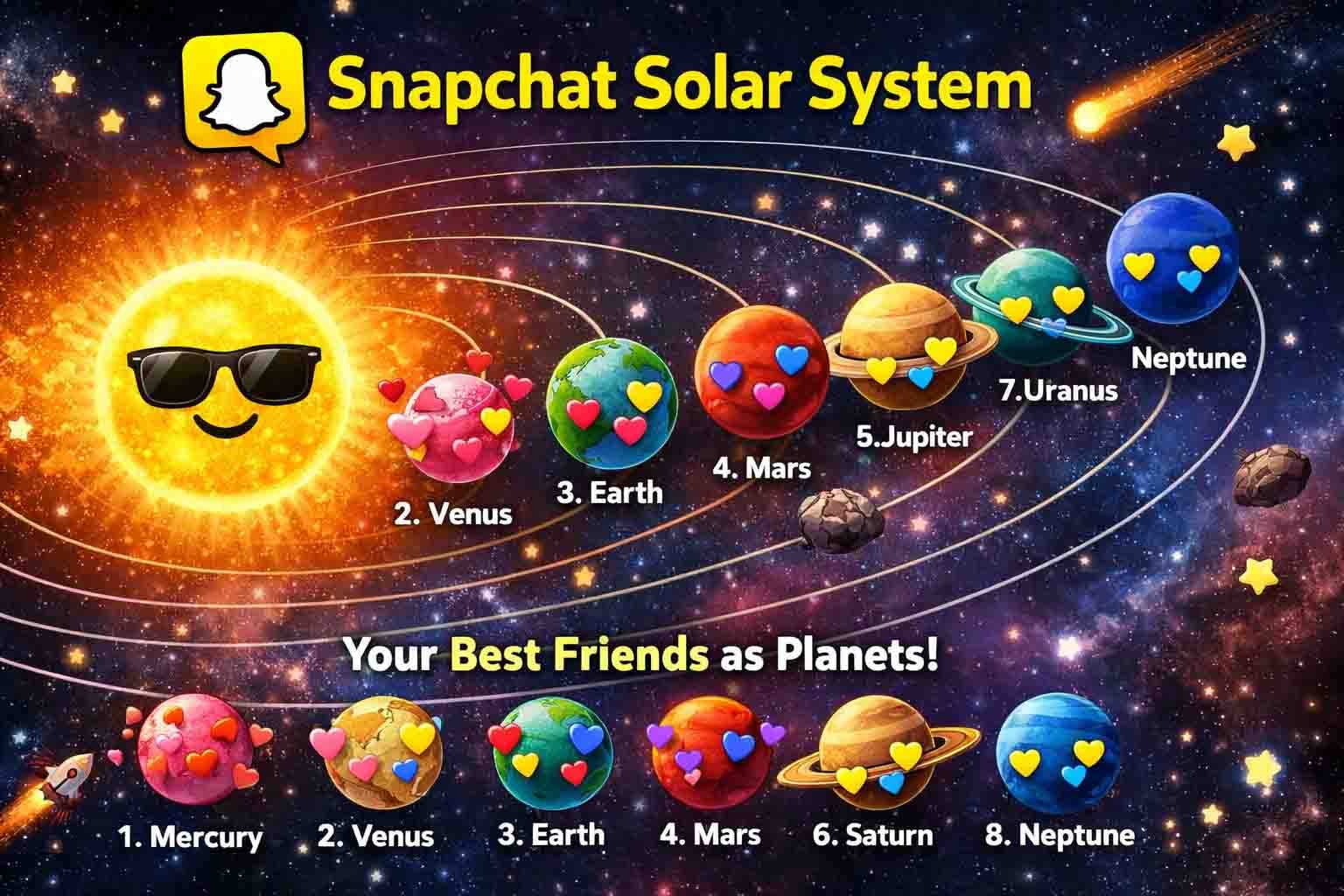
The Snapchat Solar System is one of the most talked-about features on Snapchat+ today. People love it because it shows friendships in a fun and creative way. It turns your best friends into planets, and you become the Sun in your own small galaxy.
Many users are curious about why they get a certain planet and what it really means. Some even feel confused when their planet moves or changes.
This article will help you learn why Snapchat gives your friends different planets, how these planets are chosen, and what each planet says about your connection. We will also explain what makes a planet move up or down and what makes friendships look closer or farther inside the app.
The goal is to make the Snapchat Solar System easy to understand, fun to explore, and stress-free to use. So read with a light heart, because this feature is made to help you enjoy your friendships — not worry about them.
What Is the Snapchat Solar System?
The Snapchat Solar System is a special feature inside Snapchat Plus. It shows your top eight friends as planets that move around you. You appear as the Sun, and your friends become planets based on how much you talk, snap, or keep streaks with each other.
This feature helps you see your digital closeness in a simple way. The closer the planet is to the Sun, the closer that friend is to you on Snapchat. The farther the planet, the less often you both talk inside the app. It’s a fun way to see who you interact with the most.
It’s important to know that the Snapchat Solar System is private. Only you can see your planets. Other people cannot see their rank unless they check it on their own phone. This makes the feature feel safe and personal.
To use this feature, both you and your friend must have Snapchat Plus turned on. If one person doesn’t have Snapchat Plus, the planets will not appear. Once both people have it enabled, you can tap a badge on the friend’s profile to see which planet they are in your Solar System.
Features of the Snapchat Solar System
1. Planet-Based Ranking
The first big feature of the Snapchat Solar System is its planet system. Each of your top eight friends becomes a planet. The closest friend becomes Mercury, and the least active friend becomes Neptune. This setup makes it easy to understand which friends are the most active with you.
2. Shows Interaction Strength
The Snapchat Solar System uses your snaps, chats, replies, and streaks to decide which friend gets which planet. The more you talk to someone, the closer their planet moves to your Sun. This helps you see how often you connect with each friend inside Snapchat.
3. Color and Heart Symbols
Every planet in the Snapchat Solar System has its own color and heart symbols. These small details help you understand the meaning of each rank. For example, pink colors and red hearts show a very close connection, while blue hearts show lower interaction levels.
4. Dynamic and Always Changing
One important feature is that the Snapchat Solar System keeps changing. Your planet can move up or down depending on how you talk to friends. If you stop snapping someone, they may move to a farther planet. If you talk more, they may move closer.
5. Visible Through Special Badges
You can see the Snapchat Solar System through small gold badges on a friend’s profile. When you tap these badges, you see their planet. If the badge says “Best Friends,” it means you are in each other’s top eight. If it says “Friends,” you are in their top eight, but they are not in yours.
6. Exclusive to Snapchat Plus
This feature is only available for Snapchat Plus users. If you have the subscription, you can use all Solar System features. In some countries, Snapchat Plus may be free, so users can enjoy this feature without paying anything.
How Snapchat Picks Your Planet
Snapchat uses simple rules to pick your planet. It looks at how much you snap, chat, and keep streaks with a friend. If you talk a lot every day, Snapchat places that friend closer to you. If you talk less, the friend moves to a planet farther away.
The Snapchat Solar System also watches how consistent you are. Sending many snaps in one day does not make a strong rank. Talking regularly over many days is more powerful. This is why steady chats help you or your friend stay on a closer planet.
Snapchat also focuses on recent activity. This means what you did last week matters more than what you did last month. If you were very active a month ago but stopped talking recently, your planet may move to a farther place.
Your planet can also change even if you do nothing. This happens when your friend starts snapping someone else more often. The ranking is based on their behavior too, not just yours. So your planet may move because their activity changed.
The Full Snapchat Planet Order Explained
1. Mercury
Mercury is the closest planet to the Sun. In the Snapchat Solar System, Mercury shows your closest and most active friend. This friend talks to you the most, and you talk to them the most too. The planet is pink with red hearts.
2. Venus
Venus represents your second closest friend in the Snapchat Solar System. This friend is still very active with you, but not as much as Mercury. The planet is sandy in color and shows pink, yellow, and blue hearts.
3. Earth
Earth is your third closest friend. This friend sends you chats often, shares streaks with you, and stays connected. The planet is blue with green continents and red hearts. It shows a strong and steady connection.
4. Mars
Mars is your fourth closest friend. This friend talks to you often, but not as much as the top three. The planet is red with blue and purple hearts. It shows a good connection that is still active.
5. Jupiter
Jupiter is your fifth closest friend in the Snapchat Solar System. This friend talks to you sometimes but not very often. You still connect with them, but your chats are not as strong as the top four. The planet is brown with rings and blue and yellow hearts.
This planet shows a friendly bond that is active but not daily. You may share snaps once in a while, or talk only on certain days. Many people see their schoolmates, coworkers, or cousins on Jupiter because the interaction is regular but not constant.
6. Saturn
Saturn is the sixth planet in the Snapchat Solar System. This friend interacts with you, but only once in a while. The planet is yellow with rings and has yellow and blue hearts. It shows a light, relaxed level of connection.
You may not talk every day, but you still enjoy chatting when you do. These could be friends you meet rarely, or people you message only when something important happens. Saturn usually feels steady but not strong.
7. Uranus
Uranus is the seventh planet in the Snapchat Solar System. This friend talks to you rarely. The planet has a green-blue color with rings and yellow and blue hearts. It shows very low activity between you and the friend.
You may speak only once in a long time, or maybe you just send a snap during a special moment. Uranus is normal for friends who live far away or people who are not active on Snapchat.
8. Neptune
Neptune is the last planet in the Snapchat Solar System. It represents the eighth friend on your list. This friend hardly ever sends snaps or chats with you. The planet is dark blue with yellow and blue hearts.
This does not mean the friendship is weak in real life. It only means the digital connection is low. Many people see old friends, classmates, or busy people on Neptune because they use Snapchat less than others.
Why Your Planet Moves Up or Down
Your planet position in the Snapchat Solar System can change very fast. This happens because the app watches your recent actions. If you talk more to someone, that friend may move closer. If you stop talking, the friend may move outward.
Even small changes can affect your rank. For example, replying late or skipping a day of chatting may push your planet back. Talking more with someone else may also bring them closer in your Solar System.
Your friend’s behavior matters too. If they start snapping others more, your planet may move without you doing anything. This is why the Snapchat Solar System feels alive. It reflects daily habits and not old patterns.
The system also cares a lot about balance. If the friendship becomes one-sided, the planet may change position. This helps keep the ranking fair based on both sides of the interaction.
How Streaks and Chats Affect Your Planet
Streaks play a big role in your Snapchat Solar System ranking. A long streak shows strong and steady activity. This helps your friend stay closer to the Sun. Breaking a streak, however, can quickly push the planet farther away.
Chats also matter a lot. Fast replies show strong interest. Smooth and active conversations help planets move inward. Unread chats or slow replies may weaken the digital connection, even if the friendship is strong in real life.
Snapchat looks at all these small details. It studies how often you talk, how long you talk, and how steady your chats are. This helps the app decide which friend belongs on which planet.
How to See Your Planet in Someone’s Solar System
It is very easy to check your planet in someone’s Snapchat Solar System. First, both you and your friend must have Snapchat Plus turned on. Without this, the feature will not appear on either side.
To see your planet, open Snapchat and go to your Friends list. Tap on your friend’s profile. Look for a small golden badge that says “Best Friends” or “Friends.” Tap this badge, and Snapchat will show the planet that represents your place in their Solar System.
If the badge says “Best Friends,” you are in each other’s top eight. If it says “Friends,” you are in their top eight, but they are not in yours. This helps you understand how both of you interact inside the app.
If you do not see any badge, it may mean that one person does not have Snapchat Plus, or the feature is turned off. You can check your settings to make sure the Solar System feature is enabled.
Common Myths People Believe
Many people believe the Snapchat Solar System shows real friendship levels. This is not true. It only shows how often you talk on Snapchat. Real feelings or real closeness are not measured by planets.
Another myth is that being Mercury means you are someone’s “forever best friend.” This is false. The planet can change at any moment based on recent activity. If you stop chatting, your rank can move.
Some users think being Neptune is bad. But Neptune only shows that the person is not active on Snapchat. It does not mean they like you less. It simply means they use the app less often or talk to others more.
People also believe they should compare their planet with others. This is not helpful. Every friendship is unique. Your digital closeness may not match someone else’s digital pattern. Comparing planets can cause confusion or stress.
Why the Snapchat Solar System Feels Emotional
The Snapchat Solar System can feel emotional because planets look like closeness. When you see yourself moving outward, it may feel like the friendship is getting weak. But the app is only showing activity, not feelings.
The colorful planets and heart symbols make the feature feel personal. It feels like a story about your friendship. This is why many people overthink small changes. But the system is not trying to judge anyone.
It is normal to feel surprised when your planet changes. But remember, digital habits change all the time. People get busy. People forget to reply. This does not mean anything is wrong in real life.
Understanding how the system works can help you relax. The Snapchat Solar System is meant to be fun. It is not meant to create stress or doubt.
Is the Snapchat Solar System Good or Bad?
The Snapchat Solar System has both good and bad sides. The good side is that it makes friendships fun. It shows your closest digital connections in a creative way. It also helps you understand who you talk to the most on Snapchat.
Another good thing is that it encourages people to stay active. By snapping more, replying faster, or keeping streaks strong, you stay connected in a smooth and easy way. This can keep friendships lively.
But the Snapchat Solar System can also bring stress. Some people overthink their planet. They worry when their planet moves or when a friend becomes a different planet. This can make simple digital habits feel emotional.
The feature can also confuse people who do not know how it works. They may think the planets show real friendship value. If someone is on Neptune, they might feel sad even though the connection is fine in real life.
Simple Tips to Use the Feature the Right Way
Enjoy the Snapchat Solar System as a fun tool. Use it to see your activity, not your real friendship level. Remember that planets change all the time. If your planet moves, it is simply showing digital habits, not personal feelings.
Do not compare your planet with others. Each friendship has its own flow. Some people talk every day. Some talk once a week. Both are normal. Your planet only shows what happens inside Snapchat.
Focus on real conversations. Snap when you want to. Chat when you feel like it. Do not let the planets control how you see your friendships. Use the feature as something light and entertaining.
If the feature stresses you, you can turn it off. Snapchat allows you to disable the Solar System anytime. You can enjoy Snapchat without thinking about planets at all.
Pros and Cons
Pros
-
Fun and creative way to view friendships
-
Helps you see your most active friends
-
Encourages better communication
-
Only you can see your Solar System
-
Easy to use inside Snapchat Plus
Cons
-
Can cause stress or confusion
-
Does not show real friendship value
-
Requires Snapchat Plus
-
Ranks may feel unpredictable
-
Can lead to overthinking
Final Thoughts
The Snapchat Solar System is a fun, colorful way to see how you connect with friends on Snapchat. It shows your top eight friends in a simple and creative style. But remember, it only reflects digital activity, not real emotions.
Use the feature with a relaxed mind. Enjoy the planets. Enjoy the colors. Enjoy the small surprises. And always remember that true friendship lives outside the app — not inside the ranking.
FAQs
Why did my planet change on Snapchat?
Your planet changes when your snap and chat activity changes. If you talk more to someone, they move closer. If you talk less, they move farther away. Even small changes can shift your rank.
Does my planet show real friendship?
No. Your planet only shows Snapchat activity. It does not show real-life feelings, closeness, or friendship value. It only measures snaps, chats, and streaks inside the app.
Do both people need Snapchat Plus to see the planets?
Yes. You and your friend must both have Snapchat Plus turned on. If one person does not have it, the Solar System will not appear.
Can I see someone else’s full Solar System?
No. You can only see your own Solar System and your own planet in someone else’s system. You cannot see all their planets or their full list.
Why am I on Neptune in someone’s Solar System?
Neptune simply means you talk the least with that friend on Snapchat. It does not mean they dislike you. It only shows low app activity, not real-life closeness.
You may also read:
Core App Dashboard: The Smart Way to See All Your Data in One Place
FintechZoom.io Explained: The Financial Tool Everyone’s Talking About
Coyyn.com Business Review: Easy Global Payments for Today’s Digital World