
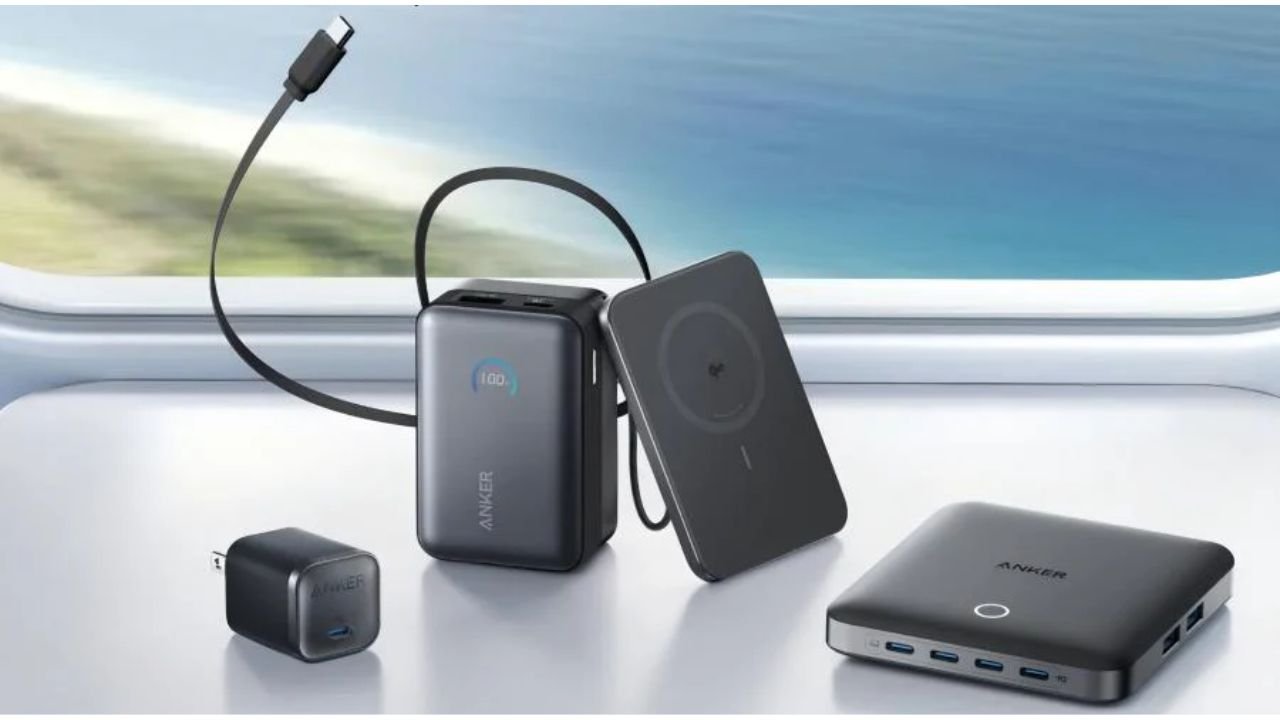
In our fast-paced digital world, staying connected isn’t just convenient — it’s essential. Whether you’re a student, traveler, professional, or everyday smartphone user, running out of battery can disrupt your day at the worst possible moment. That’s where a portable charger comes in. But with countless options available, from budget models to high-capacity power stations, how do you choose the right one?
This guide will walk you through everything you need to know to find the best portable charger and power bank in 2026. We’ll cover key features, what to look out for, real use cases, and common mistakes to avoid — helping you invest in a device that fits your lifestyle and keeps your gadgets powered reliably.
What Exactly Is a Portable Charger & Power Bank?
A portable charger is a compact battery pack that stores electrical energy and delivers it to your devices via USB or wireless charging, functioning as a portable power bank when you’re on the move. These devices are especially useful when you’re on the go—commuting, traveling, or spending time outdoors—and cannot plug into a wall outlet.
While some chargers provide a small boost for low battery emergencies, others act as mobile power stations capable of charging multiple devices multiple times.
Important Factors to Consider Before Buying
Before you click “buy,” it’s important to understand the key specifications and features that determine performance and value. Below are the most impactful criteria:
1. Battery Capacity (mAh)
Battery capacity, measured in milliamp-hours (mAh), determines how much energy the unit can store. Higher numbers mean more stored power, but also usually larger size and weight.
- 5,000–10,000 mAh: Great for smartphones and light use.
- 10,000–20,000 mAh: Excellent for multiple charges and phones plus small tablets.
- 20,000 mAh and above: Best for travelers, heavy users, and power-hungry devices.
Tip: Estimate the size by knowing your device’s battery. For example, a phone with a 4,000 mAh battery will typically get about two full charges from a 10,000 mAh power bank, considering some energy loss during conversion.
2. Charging Speed & Technology
Fast charging technology has improved significantly in recent years. When choosing a portable power supply, look for:
- Quick Charge (QC) for faster charging of compatible devices
- Power Delivery (PD) for high-speed charging on phones, tablets, and even laptops
- Multiple ports for charging more than one device simultaneously
Having the right charging tech ensures your device gets the fastest, most efficient charge possible, especially for newer models.
3. Portability & Build Quality
Portable charger range from compact pocket-sized devices to thicker, heavier units with advanced capabilities. Consider where you’ll use your charger most often:
- Pocket-friendly for daily carry
- Rugged and weather-resistant for travel
- Higher capacity but heavier for long trips
Materials and build quality also impact longevity. Metal casings and reinforced edges often survive drops and long-term wear better than cheaper plastics.
4. Extra Features to Consider
Many advanced units now include extra functions:
- Digital displays to show remaining charge
- Wireless charging to eliminate cables
- Pass-through charging to charge the power bank while powering devices
- Solar panels for camping and outdoor trips
Consider your daily and occasional needs to pick the features that make life easier.
Real Use Cases: Matching Power Banks to Your Lifestyle
For Students & Professionals
If you’re always on campus or in meetings, a portable charger with a capacity of 10,000–15,000 mAh and fast charging support is usually enough. Look for one with at least two USB ports to charge a phone and tablet simultaneously.
Charging your phone during the morning commute, topping up before lunch, and still having juice for evening work is a common scenario.
For Frequent Travelers
Travelers often spend long hours without access to power. A 20,000 mAh or greater unit with multiple fast charging standards and USB-C PD support is ideal. You’ll appreciate quality build and universal compatibility for phones, tablets, and even small laptops.
For Outdoor & Adventure
Whether you’re camping or on a road trip, choose a rugged power bank with high capacity and durability. Optional features like solar charging or built-in flashlights add real utility.
Safety Tips Every Buyer Should Know
Investing in a high-quality power bank means also prioritizing safety:
- Overcharge protection prevents damage when charging devices
- Short-circuit protection avoids electrical faults
- Temperature control ensures the device doesn’t overheat
Avoid ultra-cheap models with no brand reputation or safety certifications. Good chargers not only protect your devices but last longer and deliver consistent performance.
Final Thoughts
Choosing the best portable charger and power bank in 2026 means thinking beyond just capacity. You need to balance size, speed, compatibility, durability, and long-term value. By understanding key features and matching them with your daily usage, you can avoid impulse purchases and invest in a power solution that truly works for you.