
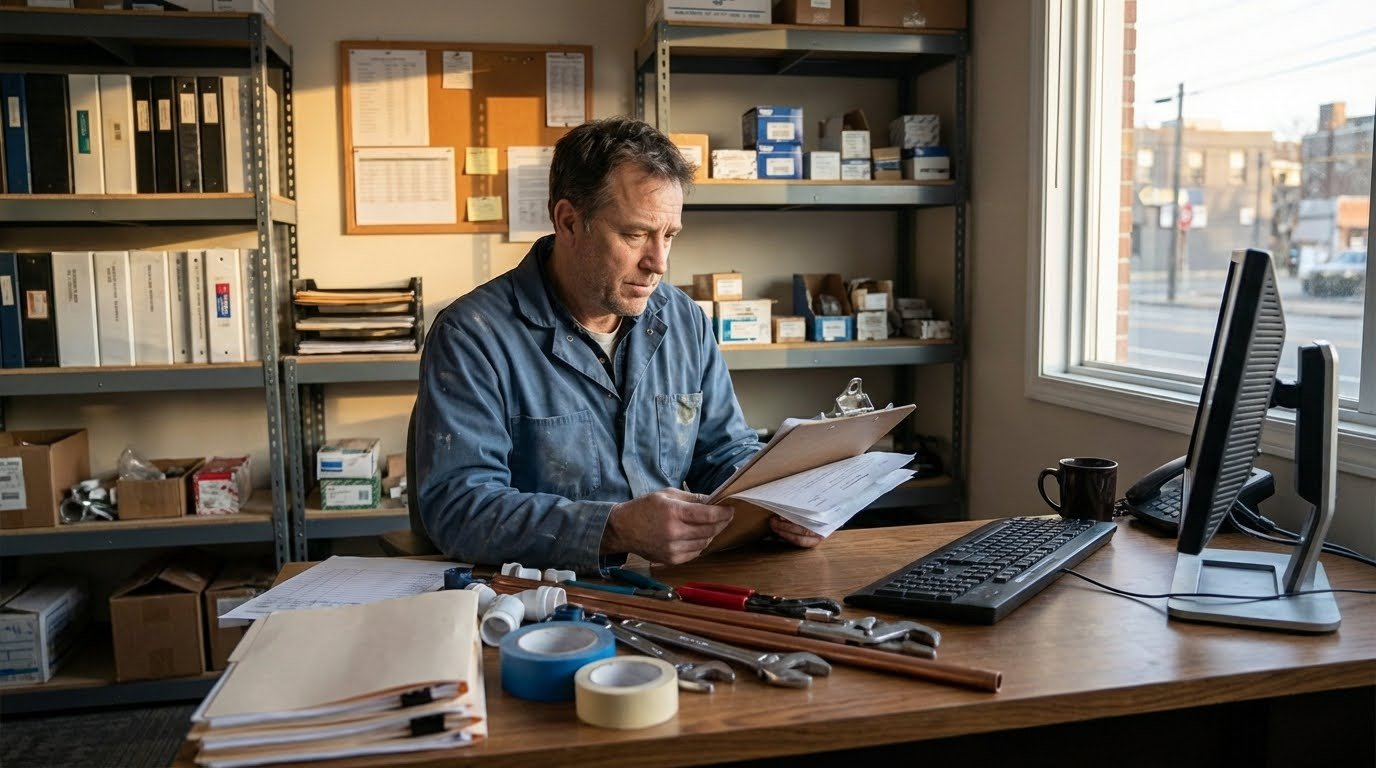
If you run a plumbing business, you already know the feeling.
The phone rings nonstop. Trucks are out all day. Your team is moving. Customers are being served. On paper, you are busy.
But when you sit down to look at your numbers, something feels off. Revenue looks decent. Cash flow feels tight. Profit is hard to pin down. And you cannot clearly explain where the money is actually going.
You are not alone. Many U.S. and Canadian plumbing contractors hit this stage. The business grows in activity, but clarity does not grow with it.
Let’s break down why that happens and what to do about it.
1. Revenue Is Not the Same as Profit
The first trap is simple but powerful.
You might be doing $120,000 a month in revenue. That sounds strong. But if labor, fuel, call-backs, software, insurance, and overhead quietly eat up most of that, your net margin may be thinner than you think.
A busy schedule can hide weak margins.
Common signs include:
- High sales but inconsistent cash in the bank
- Overtime hours that feel out of control
- Jobs that “should have been profitable” but were not
Profit clarity starts with job-level visibility. If you cannot quickly see what each job actually earned after labor and expenses, you are guessing.
2. Underpriced Work Adds Volume but Not Margin
Many plumbing businesses compete on speed and availability. Fewer compete on pricing discipline.
When pricing is based on instinct instead of data, two things happen:
- You undercharge for complex jobs.
- You absorb small scope increases without billing for them.
It feels like customer service. It is actually margin erosion.
For example, a water heater replacement quoted quickly over the phone might not account for disposal, permit time, or helper labor. Multiply that small miss across 40 jobs a month and the impact becomes serious.
Flat-rate pricing works only when it reflects your actual cost structure. Otherwise, you are scaling inefficiency.
3. Labor Efficiency Is Hard to See in Real Time
Labor is your biggest cost. Yet many plumbing owners cannot clearly answer:
- How many hours did this job actually take?
- How much travel time was involved?
- How much non-billable time happened today?
When technicians close out paperwork late or details are scattered between texts, calls, and invoices, you lose operational clarity.
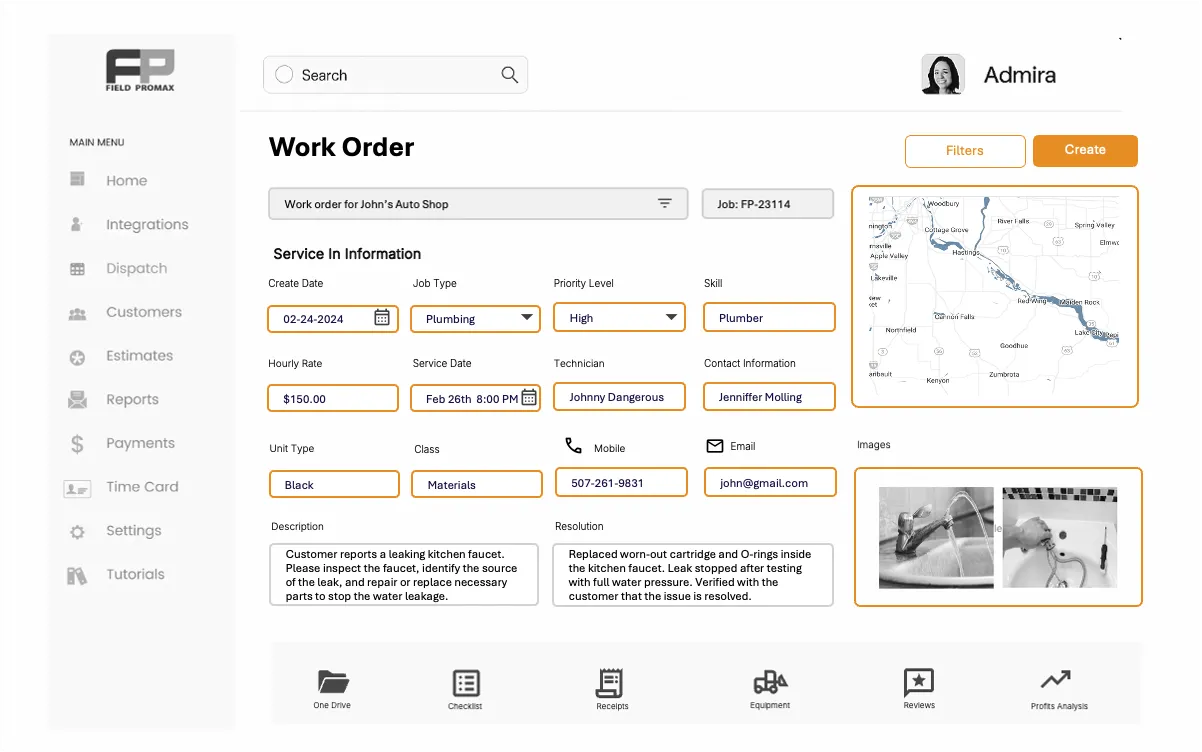
Modern field service platforms help here. With tools like digital work orders, teams can capture time, notes, and job completion details in one place. That visibility alone often reveals where margins are leaking.
This is not about micromanaging your team. It is about understanding patterns. If one technician consistently runs longer on certain job types, that is coaching data. If certain service areas create more drive time than revenue justifies, that is a routing insight.
Without structured data, busy just feels busy.
4. Call-Backs Quietly Drain Profit
Call-backs rarely show up clearly on a profit and loss statement.
They show up as:
- Extra labor hours
- Extra fuel
- Lost availability for new jobs
- Frustrated customers
A single unpaid return visit may wipe out the profit from two or three smaller service calls.
If quality control processes are informal, or if job documentation is inconsistent, you increase the odds of repeat visits.
Clear documentation and standardized workflows reduce this risk. When job notes, photos, and approvals are attached to each work order, everyone knows exactly what was done. Platforms like Field Promax are often used by contractors to centralize those records so office staff and techs stay aligned.
Better documentation equals fewer costly surprises.
5. Cash Flow Timing Creates Stress Even When Sales Look Strong
Another reason plumbing jobs feel busy but profits feel unclear is timing.
You may complete $30,000 worth of work this week. But if invoices go out late or payments take weeks to collect, payroll still arrives on Friday.
That gap creates pressure.
Delayed invoicing, missed follow-ups, or unclear payment terms all compound the problem. In many cases, owners discover they are working hard to fund yesterday’s jobs.
When invoices are generated promptly and tracked consistently through job management systems, the financial picture becomes more predictable. Even something as simple as automating invoice creation at job completion can tighten cash cycles significantly.
Busy operations need tight financial processes to match.
6. Growth Adds Complexity Faster Than Systems Evolve
Going from two trucks to six feels exciting. But complexity grows fast.
More technicians mean:
- More scheduling coordination
- More communication
- More payroll variables
- More performance variation
If your systems still rely heavily on memory, spreadsheets, or manual follow-up, the cracks widen quickly.
This is where many plumbing owners say, “We are doing more work than ever, but I have less visibility than before.”
Scalable systems matter. With field service management software like Field Promax, owners often describe finally seeing their entire operation in one dashboard instead of across five different tools. That unified view reduces guesswork and improves decision speed.
Clarity does not happen automatically with growth. It must be built.
7. Owner Involvement Masks Structural Problems
When you personally review estimates, resolve disputes, and step into tough jobs, you keep the business moving.
But you also mask inefficiencies.
Your direct involvement may cover pricing gaps, technician training gaps, or scheduling flaws. The business feels stable because you are compensating for weak systems.
Then burnout hits.
A healthier model is one where performance data and clear workflows guide decisions, not constant firefighting.
Ask yourself:
- Could I step away for two weeks and still understand our job profitability?
- Would I know which service categories drive the highest margins?
- Could my team see their performance metrics clearly?
If the answer is no, the issue is not workload. It is visibility.
A Quick Self-Check for Plumbing Owners
If plumbing jobs feel busy but profits feel unclear, review these five areas:
- Do you know your true job-level margins?
- Are prices based on real cost data?
- Is technician time tracked accurately and consistently?
- Are call-backs measured and analyzed?
- Is invoicing happening immediately at job completion?
You do not need perfection. You need clarity.
What Clear Profit Visibility Actually Changes
When plumbing contractors gain real financial visibility, three shifts usually happen:
- Pricing confidence increases: You stop guessing and start charging based on data.
- Scheduling improves: High-margin work gets prioritized intentionally.
- Stress decreases: Because you understand the numbers behind the activity.
One contractor described it this way: “We were always busy, but now we actually know which jobs are worth being busy for.”
That mindset shift is powerful.
Final Thoughts
Being busy is not the goal. Being profitable and predictable is.
If your plumbing business feels constantly active but financially unclear, the issue is rarely an effort. It is usually systems, visibility, and structured data.
When you can see job costs, technician performance, and invoice timing clearly, profit stops feeling mysterious. With platforms like Field Promax, many contractors finally gain that real-time visibility without adding more manual tracking.
Busy will always be part of the trade. But unclear profits do not have to be.
FAQ
- Why does my plumbing business show good revenue but low profit?
Revenue only shows how much work you completed, not how efficiently you completed it. Labor overruns, underpriced jobs, unpaid call-backs, and delayed invoicing quietly reduce margins. Without job-level cost tracking, it is easy to mistake activity for profitability. - How can I tell which plumbing jobs are actually profitable?
Start by reviewing each job’s total revenue against labor hours, payroll cost, fuel, and any return visits. When those numbers are tracked consistently through structured job management systems, patterns become visible. You will quickly see which job types and service areas produce the strongest margins. - What is the biggest hidden cost in a plumbing company?
For most plumbing businesses, it is inefficient labor time. Travel gaps, extended job durations, and non-billable time add up quickly. Even small daily inefficiencies multiplied across several technicians can reduce annual profit significantly. - How do I improve profit clarity without adding more administrative work?
The key is centralized data. When scheduling, time tracking, job documentation, and invoicing live in one system, reporting becomes automatic instead of manual. With structured tools like digital work orders inside a field service platform, visibility improves without increasing paperwork.
