
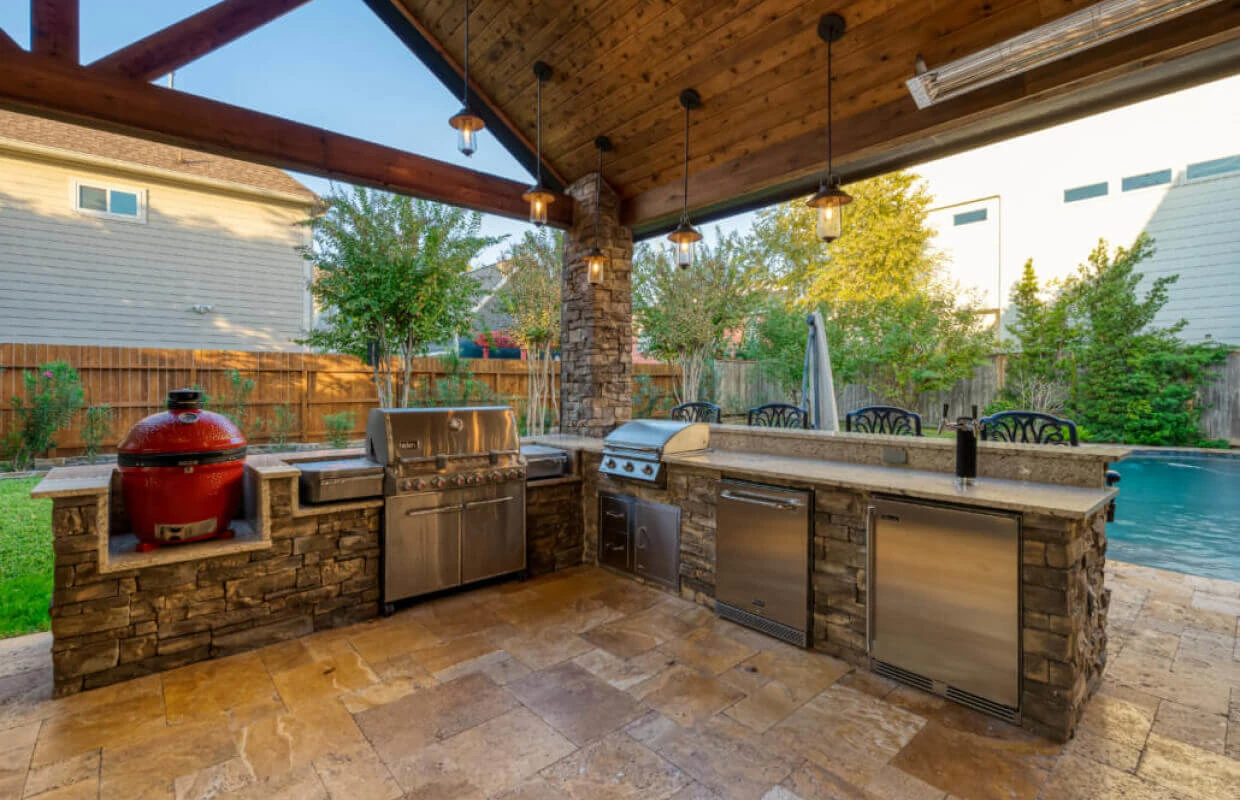
Outdoor kitchens are one of the most rewarding projects we build. When they are done right, they become the most-used space on the property and the center of how a family entertains and lives outdoors. When they are done wrong, or done without adequate planning, they become expensive spaces with drainage problems, appliances that do not work correctly, and a layout that makes cooking uncomfortable.
The homeowners who love their outdoor kitchens almost universally spent real time planning before anything was built. The ones who wish they had done things differently almost always skipped one or more of the planning steps I am going to walk through here. After building dozens of outdoor kitchens across the DFW Metroplex, these are the decisions that determine whether the project is a success.
Location and Sun Exposure
Where you place an outdoor kitchen on your property in North Texas matters more than in most other regions. DFW summers are long and intense. Afternoon temperatures regularly exceed 100 degrees Fahrenheit from June through September, and a kitchen placed in direct afternoon sun will be genuinely difficult to use during the core outdoor cooking season.
Before choosing a location, spend a few days observing sun patterns on your property at different times of day. A west-facing kitchen receives full afternoon sun from early afternoon through sunset, which means cooking in direct heat during the peak hours when most outdoor entertaining actually happens. An east-facing kitchen gets morning sun and afternoon shade, which is a much more comfortable working environment. South-facing locations get moderate sun throughout the day. Locations shaded by a pergola, covered patio, or mature tree canopy can be placed in almost any orientation and will perform well.
The other location consideration is proximity to the house. Placing the kitchen close to the home’s gas line, electrical panel, and water supply reduces utility connection costs significantly. Distance matters because every additional foot of gas line run, electrical conduit, or water pipe adds cost and complexity. Planning the location with utility access in mind before finalizing the design can save thousands in infrastructure costs.
Gas, Electrical, and Water Planning
These three utilities need to be planned before the kitchen is designed, not after. The location and scope of utility connections affects the layout, the appliance choices, and the project budget significantly. Trying to retrofit utilities into a design that did not account for them creates expensive problems.
Gas is required for any built-in grill, which is the centerpiece of most outdoor kitchens, as well as for outdoor burners, pizza ovens, and fire features. A licensed plumber needs to run a gas line from the home’s service. The cost depends on the distance of the run and the number of appliances being served. Get a gas quote early in the design process and factor it into your total project budget.
Electrical is necessary for lighting, a refrigerator, outlets, fans, audio systems, and any other powered components. Outdoor electrical installations must use outdoor-rated wiring and GFCI-protected outlets, which are required by code for any exterior electrical installation near water. An electrician needs to be involved from the start. Trying to add electrical capability to a kitchen that was not designed with conduit access and load planning is difficult and expensive.
Water access is optional in terms of function but transformative in terms of usability. A prep sink with running water eliminates the constant back-and-forth to the indoor kitchen for rinsing and cleaning. If running a water line to the kitchen location is not practical, a nearby garden hose connection handles most needs adequately. If the kitchen includes an ice maker, a water connection is required.
Countertop Material Selection for Texas Conditions
Some countertop materials that look beautiful in showroom displays perform poorly in an outdoor environment, and DFW’s conditions are particularly demanding. Extreme heat, UV exposure, freeze-thaw cycles in winter, and contact with rain, grease, and outdoor elements eliminate several popular interior countertop options from consideration.
Granite is an excellent outdoor countertop choice. It is dense, heat-resistant, UV-stable, and durable in all weather conditions. Lighter-colored granites are preferable for DFW applications because they stay cooler in direct sun. Dark granite surfaces in the afternoon sun can reach temperatures that are uncomfortable to touch.
Concrete countertops, when properly sealed, perform very well outdoors. They can be cast in custom shapes, finished in a wide range of colors and textures, and are highly heat-resistant. Sealing is important and needs to be maintained periodically, but a well-maintained concrete countertop is a durable and visually distinctive choice.
Porcelain tile is another durable outdoor option. Large-format tiles in contemporary designs look excellent and handle UV exposure and temperature variation well. Grout lines require more maintenance than solid surface options, but the material itself is highly durable.
Materials to avoid in DFW outdoor environments include unsealed natural stones like limestone that are prone to staining and moisture absorption, laminate surfaces that delaminate under heat and humidity, and wood countertops that deteriorate with weather exposure.
Drainage and Base Grading
This is the planning step that gets skipped most frequently, and it is the one that causes the most problems after the kitchen is built. An outdoor kitchen structure sits on a hardscape base, typically a concrete pad or paver installation, that needs to be sloped correctly to drain water away from the structure and away from the home’s foundation.
If water collects beneath or around the kitchen cabinetry after rain, it creates moisture problems in the concrete masonry unit construction or stucco that most outdoor kitchens are built with. It promotes mold and mildew on any wood or composite components. And over time, if the water drains toward the house rather than away from it, it contributes to the foundation moisture problems that are already a significant concern in DFW’s clay soil environment.
The base for the outdoor kitchen area needs to be graded with drainage as a primary consideration before any structure is built. If you are building on an existing patio that drains poorly, address the drainage before building the kitchen on top of it. Retrofitting drainage after the kitchen is in place is far more disruptive and expensive than getting it right during the initial build.
Permits and Code Compliance
Most outdoor kitchens in DFW municipalities require permits, particularly when gas and electrical work are involved. Requirements vary by city, but the general rule is that any installation involving a gas appliance requires a gas permit, and any electrical work beyond a plug-in connection requires an electrical permit and inspection. Some cities also require building permits for structures above a certain size.
Working with a contractor who proactively pulls permits and schedules the required inspections protects you in two important ways. It ensures the work is done to code and is safe to operate. And it ensures there are no unpermitted improvements that surface as problems during a future sale. Unpermitted gas and electrical work is a liability issue at resale and can complicate or derail a transaction.
Setting a Realistic Budget
Outdoor kitchens span an enormous range of cost depending on scope, material quality, and utility complexity. A basic grilling station with a built-in grill, concrete block base, and concrete countertop runs approximately $8,000 to $15,000. A mid-range outdoor kitchen with a grill, side burner, refrigerator, and sink on a well-built masonry base runs approximately $20,000 to $35,000. A fully equipped outdoor kitchen with multiple appliances, premium materials, a pergola overhead, and all utilities runs $40,000 to $60,000 or more.
The most effective way to set a budget is to make a clear list of must-haves and wish list items before talking to any contractor. That way you get accurate pricing on what actually matters to your vision rather than receiving a proposal that has grown beyond what you intended to spend.
Frequently Asked Questions
How long does an outdoor kitchen installation take?
A basic grilling station typically takes one to two weeks. A full outdoor kitchen with utility connections, masonry construction, and a pergola typically takes three to five weeks from groundbreaking to completion.
What appliances perform best outdoors in DFW?
For grills, built-in gas grills from brands like Blaze, Coyote, and DCS are designed specifically for outdoor use and perform well in Texas conditions. For refrigeration, units designed for outdoor use with sealed compressors that handle temperature extremes are essential. Standard indoor refrigerators will fail quickly in an outdoor environment.
Can an outdoor kitchen be added to an existing patio?
Yes, in most cases. The key considerations are whether the existing patio is large enough to accommodate the kitchen footprint with adequate circulation space, whether the base is structurally sound, and whether the drainage slope of the existing patio will work with the kitchen placement.
About Streamline Landscape
Streamline Landscape is a full-service landscape design and build company based in Colleyville, serving homeowners throughout the Dallas–Fort Worth Metroplex. Specializing in outdoor kitchens, hardscape construction, drainage solutions, and irrigation systems, the company focuses on building outdoor spaces that are structurally sound, code-compliant, and designed specifically for North Texas conditions.
With extensive experience working in DFW’s clay soils and extreme summer heat, Streamline Landscape prioritizes proper grading, drainage planning, and utility coordination before construction begins. Every project is approached with long-term performance in mind from foundation preparation and slope correction to gas, electrical, and water integration.
Business Name: Streamline Landscape
Address: 6516 Colleyville Blvd, Colleyville, TX 76034
Phone number: (817) 701-8920
