
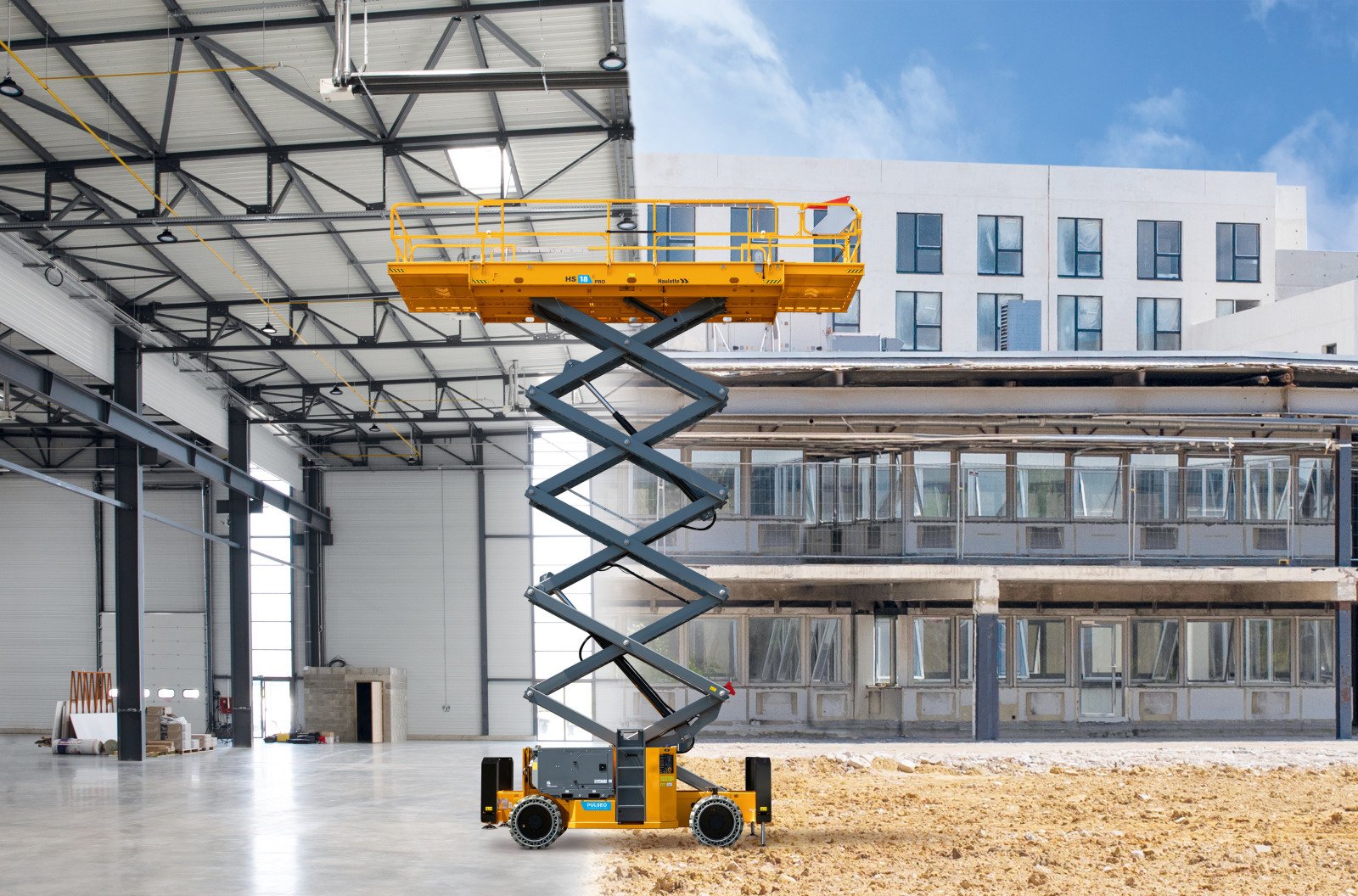
Most of the industries require working at heights. However, while performing such tasks, safety must be the utmost priority. That is where an aerial work platform provides a controlled way to reach elevated areas without relying on unstable methods such as ladders or temporary scaffolding. Teams use it not only to reach heights but also to do so with balance, support, and consistency.
Choosing the right equipment is also a task, as it determines how smoothly a task progresses on site. When planning starts with a clear understanding of access needs, the rest of the project tends to follow with fewer disruptions.
Understanding Aerial Work Platforms
An aerial work platform lifts workers to a required height while keeping the base grounded. Aerial work platforms come in various designs and are selected based on work needs.
- Scissor lift: It travels up and down in a straight line, which suits tasks that require a steady position.
- Boom lift: It extends both outward and upward, allowing access around obstacles or across uneven ground.
- Vertical mast lift: Works well in tighter indoor spaces where movement remains limited.
Each type of aerial platform solves a different problem. The difference lies less in the machine itself and more in how it fits the working conditions. When the choice fits with the task, the equipment becomes part of the workflow rather than a complication.
Key Features That Influence Performance
While shortlisting an aerial work platform for your site, the first thing to consider is the height capacity. A platform must reach the required level without pushing its limits. Opt for more load capacity, as teams often carry tools, materials, and sometimes more than one worker. Next, the platform should have secure stability systems. It should be able to level automatically to keep workers secure even in unstable situations.
A power source also affects performance. Electric units are suitable for indoor work where noise and emissions matter. Diesel-powered generators handle outdoor sites where terrain becomes less predictable. Movement also plays a big role on rough, cramped surfaces.
All machines used on work sites need to be extremely reliable. If the aerial work platform requires constant adjustment, it will slow progress and ultimately increase risk. Uniform performance allows teams to focus on the work itself rather than the equipment.
Practical Uses Across Industries
Construction sites need aerial platforms for tasks from start to finish. Structural work and installation tasks all depend on the platform. Project workers need reliable machinery that helps them time their tasks rather than delay them due to frequent repositioning.
In maintenance work, technicians use these platforms for reaching ceilings, lighting systems, or external fixtures accurately. Warehouses use them for stock handling and system maintenance, where vertical access becomes part of daily operations. While working in real time, the effect is obvious. The equipment helps the work rather than disrupting it.
Factors That Affect Equipment Selection
The nature of the task helps in making the right decision. Straight vertical work calls for stability, whereas complex access points require flexibility. Different working conditions have different requirements. Indoor working areas curb emissions but restrict movement, while working outdoors allows free machine movement but has an uneven surface to work on. Surface conditions often influence the final choice. A smooth warehouse floor supports lighter machines, while a rough landscape demands stronger base support.
All of the above factors link to form a practical picture of the job requirement. While picking the equipment, teams need to assess these factors beforehand so that they can avoid unwanted adjustments.
Cost Considerations and Generator Prices
Cost rarely sits in one place. It spreads across purchase, operation, and maintenance. Some teams prefer renting equipment for specific tasks, while others invest in ownership for long-term use.
For a long-term user, the generator is a very important element in the field of work, and thus attention is drawn to generator prices. These vary based on capacity, fuel type, and build quality.
Small generators work well when paired with light equipment. On the other hand, for larger equipment, a more consistent power output facility is needed. Choosing the wrong capacity leads to interruptions that affect both time and cost.
Power Support and Equipment Integration
Generators are a must on work sites. Workers should be able to match the generator power output with the equipment being used. An undersized unit struggles to perform well, while an oversized one wastes fuel.
Conclusion
Working off-ground demands clarity in both planning and execution. The right equipment choice removes uncertainty and allows teams to focus on the task. When the platform matches the working conditions, it becomes a reliable part of the process rather than a point of concern.
Power support plays a similar role. Generators that help keep the equipment running without interruption give a steady output. When both elements meet the site’s needs, work moves forward with fewer obstacles and greater control.
