
The Hidden Cost of Outgrowing Your Own Technology
Every business reaches a point where its technology stops being an asset and starts becoming a liability. Systems slow down under increased load. New features take months to ship. Teams spend more time maintaining legacy code than building what customers actually need. For many companies, this is not a sign of failure. It is a sign of growth meeting the wrong foundation.
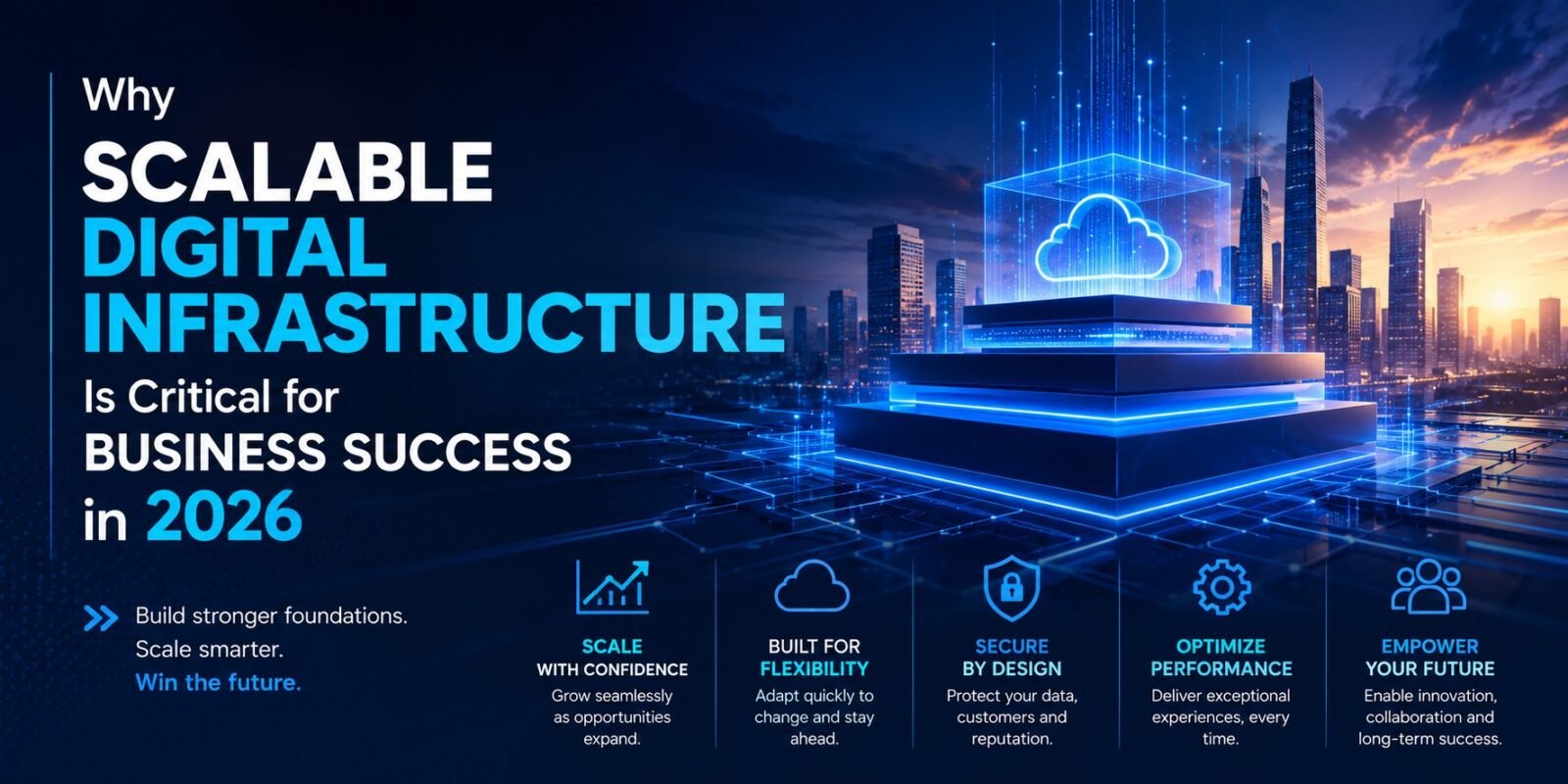
In 2026, digital infrastructure is no longer a back-office concern. It is a core competitive advantage. Businesses that invest early in scalable, enterprise-grade applications are the ones that expand into new markets, absorb traffic spikes without breaking, and adapt to market shifts without expensive rebuilds.
If you are exploring custom software development services as a path forward, the decision goes beyond writing good code. It is about building systems that are architected to grow with your business over the next five to ten years, not just the next sprint cycle.
The gap between companies that thrive and those that stagnate often comes down to architectural decisions made early. Businesses that invest in custom web application development services with a long-term lens build platforms that integrate cleanly, perform reliably, and scale without constant firefighting.
This blog breaks down what enterprise-grade applications really mean, the pillars that support long-term growth, and the mistakes that quietly hold businesses back.
What Defines Enterprise-Grade Applications
Not every application is built the same way. A prototype that serves 500 users might collapse when 50,000 show up. Enterprise-grade applications are specifically designed to prevent that collapse. They share several defining characteristics.
Scalability means the system can handle a growing number of users, transactions, and data without requiring a complete rebuild. Horizontal scaling, load balancing, and distributed architecture are the foundations here.
Security is non-negotiable. Enterprise systems handle sensitive customer data, financial records, and internal operations. Built-in security protocols, role-based access controls, and compliance readiness are not optional features. They are baseline requirements.
Performance determines how users experience your product under real-world conditions. Slow applications lose customers. Enterprise-grade systems are optimized for speed at scale, not just in ideal lab conditions.
Reliability means the system stays up when it matters most. High availability, redundant infrastructure, and disaster recovery planning are what separate platforms that businesses can depend on from those that create anxiety.
Integration capabilities allow your application to connect cleanly with third-party tools, internal systems, payment gateways, CRMs, and data pipelines. In a modern digital ecosystem, no application operates in isolation.
Key Pillars for Long-Term Digital Growth
Modular Architecture: Microservices vs. Monolith
The debate between monolithic and microservices architecture is not about which is better in theory. It is about what fits your growth stage and operational capacity.
Monolithic applications are faster to build initially and simpler to manage at small scale. However, as the codebase grows, a single change can break unrelated functionality. Deployments become risky. Teams step on each other’s work.
Microservices architecture breaks the application into smaller, independently deployable services. Each component handles a specific function and can be scaled, updated, or replaced without affecting the rest of the system. For businesses planning significant growth, this modularity is a strategic asset.
Cloud-Native Development
Cloud-native applications are designed to fully leverage cloud environments, using containerization, managed services, and auto-scaling capabilities. This approach reduces infrastructure overhead, improves resilience, and allows your team to focus on building features rather than managing servers.
In 2026, cloud-native is not a trend. It is the baseline expectation for any serious digital product.
Data-Driven Decision Making
Scalable infrastructure is also about data architecture. Applications that are built to capture, store, and surface meaningful data give businesses a real-time view of user behavior, system performance, and business outcomes. This feeds smarter decisions and faster iteration.
Automation and AI Readiness
Modern applications need to be built with automation and artificial intelligence in mind. Whether it is automated testing pipelines, workflow automation, or AI-powered features, your architecture needs to support these capabilities without requiring a ground-up rebuild when you are ready to adopt them.
Common Mistakes Businesses Make When Scaling Technology
Short-Term Development Mindset
One of the most expensive mistakes a business can make is optimizing for speed at the cost of structure. Launching fast matters, but launching on a fragile foundation creates compounding technical debt that slows the entire organization down within months.
Ignoring Scalability in the Early Stages
Many businesses build for the users they have today rather than the users they expect tomorrow. When traffic grows or the product expands, the infrastructure cannot keep up. Retrofitting scalability into a system that was not designed for it is significantly more expensive than building it in from the start.
Choosing the Wrong Technology Stack
Technology choices have long-term consequences. Selecting a stack based on what is popular or what the cheapest vendor supports, rather than what fits the product’s long-term requirements, creates friction at every future development stage. The right stack depends on performance requirements, team expertise, ecosystem maturity, and future roadmap.
Best Practices for Building Future-Ready Applications
Start With Strategic Planning
Before a single line of code is written, the architecture needs to be designed. This means understanding anticipated user load, integration requirements, compliance needs, and the product roadmap for the next two to three years. Skipping this step is where most scalability problems are born.
Choose the Right Development Partner
The team building your application will shape the decisions that live inside it for years. Look for partners who ask hard questions about your growth plans, who propose architecture documentation alongside deliverables, and who have experience building systems that have scaled beyond the initial scope.
A development partner who only talks about timelines and features without discussing infrastructure, testing strategies, and long-term maintainability is a risk worth taking seriously.
Continuous Optimization and Iteration
Building a scalable application is not a one-time project. It requires ongoing performance monitoring, load testing, security audits, and architectural reviews as the product evolves. Businesses that treat their digital platforms as living systems rather than completed projects consistently outperform those that treat the launch as the finish line.
Real-World Example: Architecture That Enabled Growth
Consider a mid-sized e-commerce company that initially built its platform on a monolithic codebase. For the first two years, this worked well. But as the product catalog expanded and marketing campaigns drove larger traffic spikes, the system began failing under load. Checkout processes would time out. The team could not release new features without risking downtime.
After a structured migration to a microservices architecture with cloud-native hosting, the results were significant. The platform scaled to handle ten times the previous peak traffic without performance degradation. Individual services could be updated and deployed independently, reducing release cycles from three weeks to two days. The business entered two new international markets within the following year because the infrastructure could support the expansion without a rebuild.
This is not an unusual story. It is the standard outcome when architecture decisions align with business ambitions.
Conclusion: Infrastructure Is Strategy
The businesses that lead their industries in the coming years will not just be the ones with the best products or the most aggressive marketing. They will be the ones whose digital infrastructure allows them to move faster, serve more customers reliably, and adapt without breaking.
Scalable, enterprise-grade architecture is not a luxury for large enterprises. It is a strategic foundation that any business serious about sustainable growth needs to get right.
Investing in well-architected software pays dividends that compound over time through faster development cycles, lower maintenance costs, improved customer experience, and the ability to seize market opportunities without being held back by technical limitations.
If your current technology is already slowing your growth, or if you are about to invest in a new digital product, the architecture decisions you make today will determine what is possible three years from now. Build with that horizon in mind.