
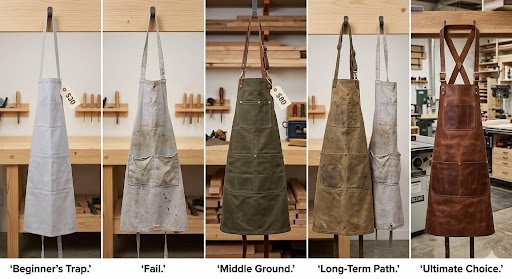
Starting woodworking is exciting. You are learning new tools, building real things with your hands, and turning rough lumber into something useful. It is one of the most rewarding hobbies you can take on. It can also become expensive quickly.
Between tools, lumber, clamps, sharpening supplies, safety gear, and shop setup, beginners often feel pressure to save money wherever possible. That is understandable. But some items are worth choosing carefully from the beginning, and woodworking aprons are one of them.
Why the “Beginner Apron” Question Can Be Misleading
When you are new to woodworking, you may not know exactly what kind of woodworker you will become.
Maybe you will enjoy hand tools, planes, and chisels. Maybe you will focus more on power tools and shop jigs. Maybe you will build cabinets, outdoor furniture, cutting boards, small boxes, or fine furniture. Your interests may change as your skills improve.
Because of that uncertainty, many beginners look for the cheapest apron they can find. A basic cotton or thin canvas apron feels like a safe starting point. It is inexpensive, easy to buy, and seems good enough for a beginner.
For very light craft work, occasional sanding, or short weekend projects, a basic apron may be enough. But for regular woodworking, many low-cost aprons are not built for real shop use. They can stain easily, tear around the pockets, offer limited coverage, or fail at the straps after repeated wear.
Beginners also make more mistakes than experienced woodworkers. That means they often benefit from better protection, not less.
What a Woodworking Apron Actually Needs to Do
A good woodworking apron is not just about looking the part. It has a practical job.
It should help protect your clothes from sawdust, glue, finish, and light contact with tools or rough lumber. It should keep common tools close without weighing you down. It should be comfortable enough to wear for several hours. It should also hold up to bending, leaning over a bench, moving around machinery, and working with unfinished boards.
That does not mean every beginner needs the most expensive apron available. It simply means the apron should match real shop conditions.
For most beginners, there are three realistic options:
- A basic cotton apron for very light use
- A waxed canvas apron for regular beginner woodworking
- A leather apron for long-term durability and heavier shop use
The right choice depends on your budget, the projects you plan to build, and how often you expect to work in the shop.
Cotton, Canvas, or Leather: Which Apron Makes Sense?
Cotton Aprons
Cotton aprons are usually the cheapest option. They are lightweight, easy to wear, and comfortable for short sessions.
However, they are not ideal for regular woodworking. Cotton absorbs stains, offers limited protection, and may not hold up well around sharp tools, rough boards, glue, or finishing products.
A cotton apron can work if you are only doing light assembly, occasional sanding, or small craft-style projects. But if you plan to spend serious time at the bench, you will probably outgrow it quickly.
Waxed Canvas Aprons
Waxed canvas is often the best middle-ground choice for beginners.
A good waxed canvas woodworking apron is stronger than basic cotton, more resistant to stains, and usually more affordable than leather. It is also lighter than many leather aprons, which some woodworkers prefer, especially in warmer garages or small home shops.
For new woodworkers who are still building their tool collection and managing their budget, a quality canvas apron can be a practical starting point. Look for strong stitching, comfortable straps, useful pocket placement, and enough coverage from chest to knee.
This is often the smartest option if you are serious about woodworking but not ready to invest in leather yet.
Leather Aprons
A leather apron is usually the long-term option. A well-made leather woodworking apron can last for years with normal hobby use. It offers strong protection, handles rough shop conditions well, and often becomes more comfortable as it breaks in. Leather makes sense if you already know woodworking is something you want to continue, or if you prefer buying durable gear once instead of replacing cheaper versions repeatedly.
The downside is the upfront cost. A good leather apron costs more than cotton or canvas. It can also feel heavier during long sessions, so strap design and fit matter a lot.
The Real Cost of Buying Too Cheap
Saving money at the beginning is reasonable. But the cheapest option is not always the cheapest over time.
A very low-cost apron may work for a while, but if it tears, stretches, stains badly, or becomes uncomfortable, you may end up replacing it sooner than expected. Many beginners buy a cheap apron first, upgrade to a better canvas apron later, and then eventually move to leather once they know woodworking is a long-term hobby. That path is not wrong. It spreads out the cost, which can be helpful when you are also buying tools and lumber.
Still, it is worth thinking beyond the first purchase. If your budget allows and you are confident you will keep woodworking, buying a durable apron from the beginning can make sense. If your budget is tighter, a quality waxed canvas apron is usually a smarter first choice than the cheapest apron available.
When Canvas May Be the Better Choice
Leather is durable, but it is not automatically the best choice for every beginner. Canvas may be better if you work in a hot garage, prefer lighter gear, mostly build on weekends, or are still unsure how committed you are to the hobby. It is also easier to wear for quick shop sessions when you do not want something heavy.
A good canvas apron can give you useful service while you learn what kind of woodworking you enjoy most. By the time it wears out, you will have a better idea of whether you want more pockets, fewer pockets, a longer apron, a different strap system, or a tougher material.
That experience can help you choose a better leather apron for woodworking later if you decide to upgrade.
What to Look for in a Good Woodworking Apron
Whether you choose canvas or leather, the same basic features matter.
Comfortable Straps
Avoid aprons that hang all the weight from your neck. A neck-loop design can become uncomfortable during longer shop sessions.
Cross-back straps are usually better because they spread the weight across your shoulders and back. This matters even more if the apron is leather or if you carry tools in the pockets.
Practical Pocket Layout
More pockets are not always better.
For woodworking, four to six pockets are usually enough. You may want space for a pencil, small ruler, marking knife, tape measure, small square, or a few hand tools. Too many pockets can encourage you to carry unnecessary weight.
Choose an apron based on the tools you actually use, not the tools shown in product photos.
Good Coverage
A woodworking apron should cover your chest and extend at least to the knees. Short aprons can ride up when you bend over the bench, which is exactly when you want protection.
Coverage matters when you are working with glue, finish, dust, or sharp tool edges.
Strong Stitching
Look closely at the stitching around pockets, straps, and seams. These are the areas that usually fail first.
Double stitching or reinforced stress points are good signs. Weak stitching can turn an otherwise decent apron into a short-term purchase.
Durable Material
For canvas, look for thick waxed canvas rather than thin decorative fabric.
For leather, look for full-grain leather if possible. Avoid vague descriptions that only say “genuine leather,” because that term can refer to lower-grade leather. For regular shop use, the leather should feel substantial without being so stiff that it limits movement.
Sensible Hardware
Metal hardware is usually more durable than plastic, especially on buckles and strap adjustments. Brass or steel hardware is common on better aprons.
The hardware should adjust easily and stay in place once fitted.
Common Beginner Apron Mistakes
Buying Based on Photos Alone
Aprons often look great in product photos. Soft lighting, clean tools, and perfect shop backgrounds can make almost any apron look impressive.
Instead of judging by photos only, check the material, measurements, stitching, strap design, and return policy.
Buying Too Many Features
Some beginners buy aprons with hammer loops, large tool slots, tape holders, and rows of pockets before they know what they actually need.
If you are mostly building shelves, boxes, or small furniture, you may not need a heavily loaded apron. You need comfort, coverage, durability, and a few useful pockets.
Ignoring Fit
Fit matters more than beginners expect. An apron that works well for one person may feel awkward on another. Strap length, chest width, apron length, and pocket height all affect comfort.
Choose a seller that provides clear sizing information. A practical return policy is also helpful, especially if you are ordering your first serious shop apron online.
For example, a brand such as Lapron can be worth considering if you want clear sizing guidance, practical pocket layouts, and apron options designed for regular workshop use.
Other Beginner Gear Worth Buying Carefully
The apron is only one part of your beginner setup. There are a few other items where buying the cheapest version can lead to frustration.
Hearing Protection
Woodworking tools can be loud, especially saws, routers, planers, and dust collectors. Comfortable earmuffs or quality hearing protection are worth buying early.
Eye Protection
Use proper safety glasses that fit well and stay comfortable. If they are uncomfortable, you will be tempted not to wear them.
Combination Square
A cheap, inaccurate square can cause repeated mistakes. A reliable combination square helps with layout, marking, checking cuts, and setting up tools.
Marking Knife
A proper marking knife gives cleaner and more accurate layout lines than a pencil or utility knife, especially for joinery.
Sharpening Setup
Sharp tools make woodworking safer, cleaner, and more enjoyable. A simple but reliable sharpening setup is one of the best early investments a beginner can make.
So, What Should a Beginner Buy?
Here is the simple answer.
If you are only trying woodworking casually, start with a basic apron or an affordable canvas one.
If you plan to work in the shop regularly, skip the cheapest cotton apron and buy a quality waxed canvas apron.
If you are confident that woodworking will become a long-term hobby and your budget allows it, consider investing in a well-made leather woodworking apron from the start.
There is no single perfect apron for every beginner. The best choice is the one that fits your budget, protects you properly, feels comfortable, and matches the kind of work you actually do.
Conclusion
Beginning woodworking is a great stage. Every project teaches you something. Every mistake gives you a lesson. Every finished piece builds confidence.
Your apron should support that process, not complicate it.
Do not buy an apron only because it is cheap, and do not buy one only because it looks good in photos. Think about comfort, coverage, material, stitching, pocket layout, and how often you will actually use it.
If your budget is limited, a good waxed canvas apron is a smart beginner choice. If you want something long-lasting and protective, a leather apron may be worth the investment.
Either way, choose gear that helps you get back to the bench and keep building. The apron is useful, but it is not the main thing. The real goal is to make more projects, learn from each one, and become the woodworker you set out to be.