
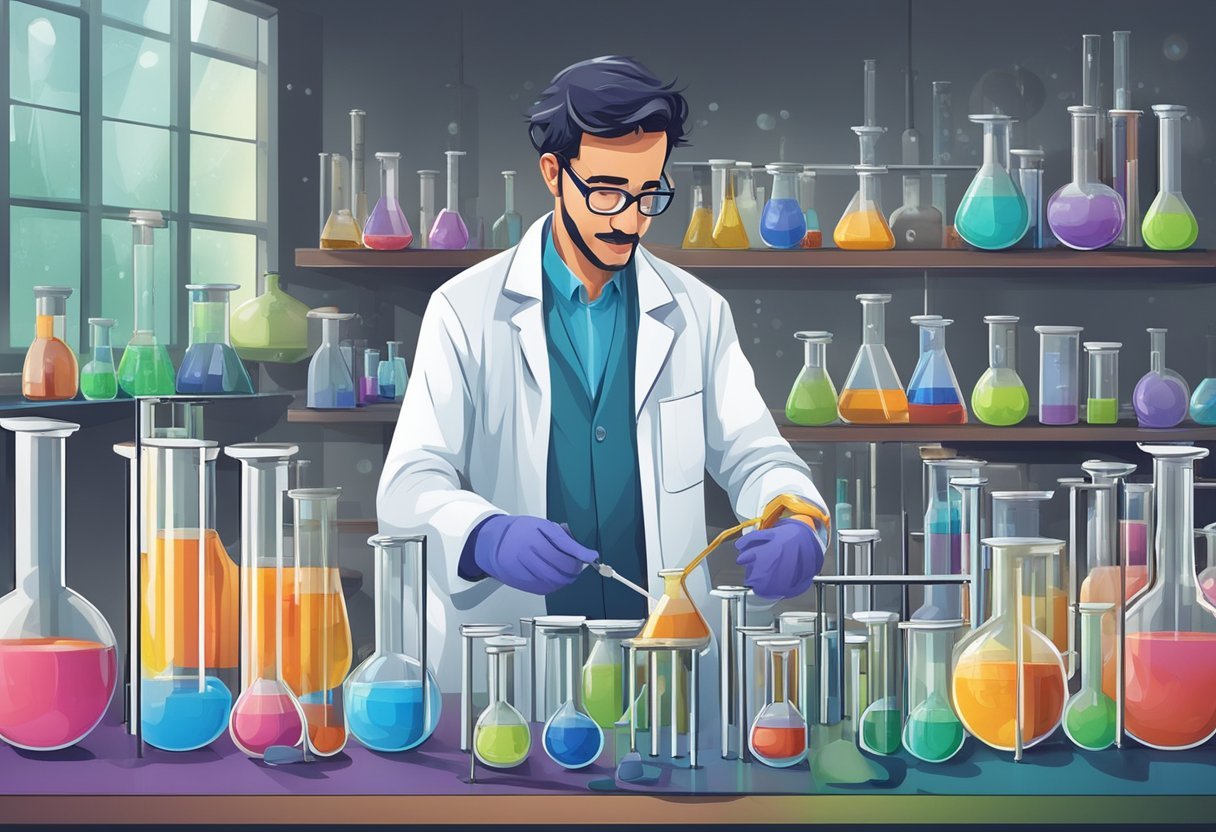
Many students feel lost in high school chemistry and get low scores. Chemistry builds on a few main ideas, like atoms, bonds, and reactions. This post gives clear tips on study habits, practice problems, and lab skills to help you improve.
Read on to get better fast.
Master the Fundamentals
Learn the basics well—you need to know how atoms and reactions work before anything else makes sense. Solid roots help you build your chemistry skills step by step, making complex topics much easier down the road.
Focus on understanding core concepts
Master the basics, practice problems, and ask questions in labs.
Start by grasping core chemistry concepts, like atomic structure, chemical bonds, and stoichiometry. Clear concepts help with lab work, solving practice problems, and test preparation.
Use diagrams, color charts, and simple notes to link ideas.
Use study strategies like short, regular sessions on each principle, and check that you understand why reactions occur. Work active learning into labs, ask questions, and compare notes with classmates.
Good attendance and steady engagement make complex topics easier.
Ensure clarity on the periodic table and chemical bonds
Moving from core concepts, a clear grasp of the periodic table is key. The periodic table organizes elements by their atomic number, which tells us how many protons are in each atom.
Each element also has a symbol that represents it, like H for hydrogen and O for oxygen. Knowing where an element stands helps you predict its behavior in reactions.
Chemical bonds link atoms together to form compounds. There are two main types: ionic and covalent bonds. Ionic bonds occur when one atom gives up electrons to another, creating charged ions that attract each other.
Covalent bonds happen when atoms share electrons with each other. Understanding these types of bonds is crucial for mastering chemistry concepts effectively.
Develop Effective Study Habits
To do well in chemistry, good study habits are key. Take clear notes and use charts or diagrams to help you see the connections between concepts.
In grade 11 chemistry, understanding the periodic table is crucial for predicting chemical reactions and bonding behavior.
Take organized and detailed notes
Taking organized and detailed notes is key to doing well in chemistry. Write down the main ideas during class. Use headings, bullet points, and highlights to keep your notes neat. This way, you can find important information quickly when studying.
Detailed notes help with understanding tough concepts like chemical bonds or reactions. Draw diagrams to explain these ideas better; visuals make learning easier. Notes should be a mix of words and pictures so they stick in your mind longer.
To enhance your study sessions, try incorporating effective chemistry tips that can help clarify complex concepts and improve retention.
Keep them handy for review before tests or labs; this will boost your confidence!
Use visual aids like diagrams and color-coded charts
Visual aids can make chemistry much easier to understand. Diagrams illustrate how atoms connect in a compound. They help you see chemical structures clearly. Color-coded charts are also beneficial.
These charts can emphasize different elements or types of bonds, making it simple to find the important information.
Utilizing these tools during study sessions promotes active learning. You retain concepts better when you visualize them. Try drawing your own diagrams or creating your own charts based on what you learn in class.
This practice enhances understanding and assists with lab work too!
Practice, Practice, Practice
Solving problems is key in chemistry. Work on equations often to build your skills and boost your confidence.
Solve equation-based problems regularly
Practicing equation-based problems is key in chemistry. It helps you understand concepts better and builds your confidence.
- Tackle basic equations first. Start with simple calculations to build a strong foundation in chemistry concepts.
- Work through practice problems daily. This routine solidifies your understanding of principles and enhances memory.
- Use textbooks for additional exercises. Many books have a variety of problems that can help you hone your skills.
- Form study groups with friends. Working together on tough problems often leads to insights and deeper engagement.
- Check solutions after practicing. Reviewing answers helps you learn from mistakes and reinforces correct methods.
- Take timed practice tests regularly. Simulating exam conditions prepares you for the real test and improves time management.
- Seek extra help when needed. Don’t hesitate to ask teachers or tutors if you struggle with certain types of problems.
- Incorporate online resources like videos and tutorials into your studies, as they can offer different explanations of complex topics.
Regular practice will boost your performance in both quizzes and lab work too!
Work through past exams and practice tests
Working through past exams and practice tests is key. This helps improve your understanding and prepares you for real tests.
- Familiarize yourself with test formats. Each exam may have different styles of questions, like multiple-choice or short answer. Knowing the format can ease your nerves.
- Timing is important during exams. Practice answering questions within a set time limit. This builds your speed and helps manage anxiety.
- Identify frequent topics across tests. Pay attention to themes that appear often in past papers; these are likely important concepts to master.
- Review mistakes carefully. When you get answers wrong, take time to understand why. This helps prevent similar errors in the future.
- Track your progress over time. Keep a log of scores from practice tests; this shows growth and areas needing more focus.
- Use online resources for extra practice. Many websites offer free practice problems aligned with high school chemistry standards.
- Study with classmates occasionally; this can make practice more enjoyable and help clarify tough topics together.
These steps will boost confidence and skills in tackling exams effectively!
Engage Actively in Class
Engaging in class makes learning easier and more fun. Ask questions, join discussions, and be present during lectures and labs.
Participate in discussions and ask questions
Class discussions are a great chance to learn more. Don’t hesitate to ask questions. If something confuses you, speak up! This helps clarify chemistry concepts. Your teachers want you to succeed and they appreciate active engagement.
Talking with classmates can also boost your understanding. Sharing ideas or explaining topics can deepen your knowledge of chemical principles. Use these moments to explore complex topics together.
The more you engage, the better you’ll grasp the material and improve your lab skills too.
Attend all lectures and lab sessions
Engaging in discussions is a great way to learn chemistry. Attending all lectures and lab sessions helps you stay on track. Lectures provide key knowledge and help you understand concepts better.
Labs allow you to see theories in action, giving hands-on experience with experiments.
Being present means missing less information. Each class builds on the last one, so don’t skip any! Your teachers share important tips and insights that will help during tests. Plus, being involved can make studying feel less lonely.
Grab this chance to connect with your classmates too; collaboration boosts learning in chemistry!
Conclusion
Stay focused on your studies. Chemistry can be tricky, but it is also fun. Use good study habits and practice often. Ask questions in class and take part in labs. With the right approach, you will succeed in chemistry this year! Keep pushing forward, and enjoy the journey of learning.
