
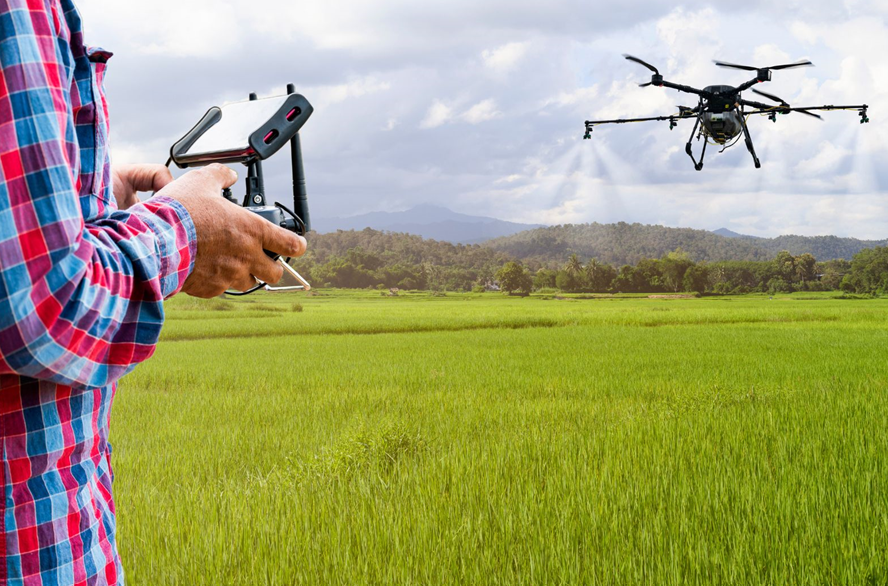
The global agriculture drones market is growing at an unprecedented pace. Valued at $4.41 billion in 2026, it is projected to reach $11.79 billion by 2030 at a CAGR of 27.9%. Within this expanding market, the agricultural drone service sector alone is projected to reach $10.69 billion by 2033. Meanwhile, the global crop spraying drones market is growing even faster, expanding at 33.2% CAGR from $3.36 billion in 2025 to $4.48 billion in 2026, with a further projected growth to $13.88 billion by 2030. These metrics represent a clear economic shift: spraying by drone is not merely a trend — it is a mainstream shift in production agriculture. For entrepreneurs with the right equipment and expertise, this growth translates into substantial business opportunity.
This comprehensive guide walks you through every step of launching and scaling a successful agricultural drone service business, from selecting equipment to pricing services and managing risk.
The Market Opportunity: Why Now Is the Time to Start
Four converging trends make 2026 the ideal year to enter this industry:
- Persistent Labor Shortages: Agricultural labor is becoming scarcer and more expensive globally. In India’s Kuttanad region, for instance, a drone can spray one acre in just 3–5 minutes, compared to three workers laboring for two days manually. Drone spraying saves farmers approximately ₹500 per acre while slashing costs and eliminating the mental stress of seasonal labor crunches. This translates directly into consistent customer demand for drone-based application services.
- Small-to-Medium Farm Access: The “Drone-as-a-Service” (DaaS) model allows smaller operations to access advanced technology without large capital investments.
- Environmental Chemical Reduction: Pressure to reduce chemical usage favors precision drone spraying. Research shows drone spraying reduces pesticide use by 30–50% compared to conventional methods.
- Lower Capital Barriers: While a self-propelled ground sprayer can cost $750,000, entry-level drone systems start around $30,000–$40,000 and provide a clear, positive ROI for their owners.
The rising adoption of precision farming which uses advanced technologies such as GPS, sensors, and drones continues to fuel this growth. Farmers are increasingly seeking service providers who can deliver efficient, targeted crop protection with minimal environmental impact.
Acquiring Your Fleet: Selecting the Right Equipment
Choosing the right drone platform is the most important early decision for your business. Key factors to consider include:
- Payload Capacity & Efficiency: Look for systems capable of covering substantial acreage before requiring a recharge. For example, SweetWater Technologies’ drones cover between 7–9 acres before needing to return for a refill. Operators in China report single-day coverage of over 1,000 acres during peak season.
- Durability & Reliability: Your drones must withstand daily operation in demanding field conditions. Choose manufacturer partners who provide robust after-sales support, parts availability, and maintenance training.
- Technology Integration: Advanced models feature terrain-following sensors and mapping capabilities that are crucial for variable-rate application. Integrating with SmartFarm or equivalent apps improves crop protection, reduces chemical usage, lowers costs, and minimizes environmental impact.
- The Jinghong Drone advantage: As a dedicated agricultural drone manufacturer, Jinghong Drone offers platforms engineered specifically for service businesses. Our drones combine heavy-lift spraying capacity, intuitive flight controls, and durable construction designed for high-volume daily operations. We provide comprehensive training and ongoing technical support to ensure your fleet operates at peak efficiency season after season.
Business Fundamentals: Licensing, Certification, and Insurance
Licensing and Compliance
Operating a commercial agricultural drone service requires navigating regulatory requirements. In most jurisdictions, you will need a Remote Pilot Certificate (Part 107 in the US) and specialized agricultural dispensary certifications. To spray chemicals you must obtain an agricultural aircraft operator certificate. In some regions, commercial pesticide applicators require a pesticide applicator licence that includes mandatory training. However, agricultural producers may be exempt from these courses when applying pesticides on their own land. You must also register your drone and ensure all chemicals used are federally registered for drone application processes.
Insurance: Non-Negotiable Protection
Insurance is arguably the most important investment you will make. It is essential to protect your investment and shield yourself from liability.
Key insurance components:
- General Liability: Covers damage to third-party property, such as a car on a highway.
- Chemical Liability: Protects against bodily injury or property damage caused by chemical drift beyond the intended zone. Without this, a $1 million general liability policy will not cover a chemical drift incident.
- Hull Coverage: Covers physical damage to the drone itself.
Policy types vary depending on whether your drone is used for monitoring or active spraying. Do not assume any existing vehicle or farm policy covers aerial applications. A spray drone insurance premium can range from $4,000 to $5,000 — far less than the $35,000 replacement cost of a new drone. Some states require minimal liability insurance for commercial drone applicators. When in doubt, consult an agent specializing in agricultural aviation.
4. Pricing Your Services: The Business Model
Service Pricing Structure
Agricultural drone services are almost universally priced per acre. Incentive-based models such as profit-sharing or cost-plus fixed-fee arrangements are emerging, but per-acre pricing remains the industry standard.
Real-world pricing examples (2026):
- India: ₹600 per acre for pesticide spraying, saving farmers approximately ₹500 per acre compared to manual labor
- China: $1.50–$2.00 per acre for drone spraying versus $4.50–$5.00 per acre for manual spraying — drone application is roughly one-third the cost of manual labor. Peak-season pricing may rise to $12 per acre for large-scale applications, with non-peak prices as low as $10 per acre
- Global range: $10–$30 per hectare (approximately $4–$12 per acre) depending on region and terrain complexity
- China specialized applications: $13 per acre for aerial crop protection application; $20 per acre for fertilizer application
For perspective, a single operator flying 7,000 acres in two months during the peak season can generate substantial revenue. Take the example of a Chinese farmer who purchased a drone and provided services to neighbors, performing 70,000 mu (approximately 7,000 acres) of spraying over two months, earning approximately $5,000 for the peak spring period alone. With multiple drones and a full growing season, scaled operations achieve strong annual profitability.
Realistic gross revenue estimates: Assume a single efficient spraying drone covers 1,000 acres per week during the active growing season. At $7–$10 per acre average across six months of operations, annual gross revenue typically ranges between $100,000–150,000 per drone before expenses.
Drone-as-a-Service Model
The industry is shifting toward service-based models: farmers pay only for what they need without owning the equipment. Service providers operate fleets across multiple farms, improving equipment utilization while lowering costs for farmers. This model especially appeals to small and mid-sized farms that lack technical staff but still want advanced drone capabilities. As one Chinese farmer put it regarding drone adoption: “I used to hire workers costing $4.50 per acre. Now a drone does it for $1.50 per acre. It’s truly a no-brainer”.
Building Your Customer Base: Proven Strategies
Your operational skill matters less if no one knows you exist. Implement these customer acquisition strategies:
- Establish Partnerships: Integrate with agricultural cooperatives, seed dealers, and agronomists who already have farmer trust.
- Offer Introductory Trials: Provide half-price spraying for early adopters to build local credibility.
- Run Demonstration Days: Invite farmers to watch live field demonstrations showing precision and efficiency.
- Maintain Certifications: Clearly display your licensing, insurance, and safety training credentials to build confidence.
- Leverage Word-of-Mouth: Farmers respond best to peer recommendations. Each satisfied customer can become your most powerful marketing channel.
SweetWater Technologies built a drone spraying business from 32,000 acres in 2022 to nearly 200,000 acres by 2025 through relationship-based acquisition and strategic franchising. This trajectory proves that demand exists; qualified operators simply need to reach customers.
The Economics of Growth: ROI and Scaling
The numbers make a compelling case. Beck’s field research found that for corn fungicide applications, drone spraying generated the highest ROI at $21.11 per acre, compared to $18.13 per acre for ground rigs and only $9.84 per acre for helicopters.
Service providers have a powerful value proposition: a drone can be paid off in a single season. Entry-level agricultural drones range from $5,000 to $10,000, while mid-range commercial systems with advanced features fall between $10,000 and $25,000. Additional costs include training ($1,000–$3,000), annual maintenance (approximately 10–15% of the purchase price), and software subscriptions ($500–$2,000 annually). The break-even period for most operations has shortened to between 1–3 years, depending on acreage and crop type.
Consider equipment amortization: Chinese drone operators report covering approximately 100 acres per day under normal conditions. At $10 per acre, daily revenue reaches $1,000, or $30,000 per month during peak spraying windows. While these figures represent peak-season performance, they illustrate the rapid capital recovery possible.
Scaling your business means transitioning from a single-operator service to a regional powerhouse. Key growth tactics include:
- Adding more drones to cover larger territories
- Building a team of certified pilots
- Franchising your operational model (as SweetWater Technologies did across Illinois, Indiana, and Missouri)
- Offering complementary services: crop scouting, mapping, soil analysis, and variable-rate fertilization
7. Seasonal Operations and Workflow Management
Agricultural spraying is inherently seasonal, following cropping cycles in your region. Successful drone service providers master the rhythm:
Pre-season (Winter/Early Spring)
- Market services to farmers before planting begins
- Schedule spray windows
- Complete equipment maintenance and calibration
- Renew licenses and insurance
Peak Season (Spring–Summer)
- Typically early morning operations (winds calm, temperatures low)
- Typical hours: 8-hour shifts covering 1,000+ acres per drone daily
- Have a backup battery and charging infrastructure to minimize downtime
- On intense days, operators may fly 12–15 hours, refueling batteries between flights
Off-Season (Fall/Winter)
- Execute equipment maintenance and upgrades
- Conduct training and certification renewal
- Scout for new clients for the next season
Efficiency maximization: Program field boundaries into the drone’s remote controller for uniform and precise application across entire fields without spillage or overlap. Teams can operate vehicles equipped with multiple batteries and generators for rapid recharging.
Why Jinghong Drone Is Your Launch Partner
Launching a successful agricultural drone service business requires equipment engineered for commercial daily use and supported by a partner who understands your operational needs.
At Jinghong Drone, we deliver agricultural spraying platforms specifically designed for service providers:
- Heavy-lift payloads for maximum daily coverage
- Extended flight times with rapid battery swapping
- Terrain-following technology for consistent application on slopes
- Intuitive controls with autonomous mission planning
- Durable, weather-resistant construction for all-season field operations
- Professional training and ongoing technical support
Whether you are a first-time entrepreneur acquiring your first drone or an established ag service provider scaling your fleet, Jinghong Drone provides the technology, training, and support you need to compete and thrive.
Ready to launch your agricultural drone service business? Explore our full range of commercial spraying drones at JInghong Drones and contact us to schedule a consultation.
Frequently Asked Questions (FAQs)
Q: What is the minimum investment to start an agricultural drone spraying business?
Entry-level investment ranges from $30,000 to $40,000 for a single professional spraying drone system, plus $1,000–$3,000 for training and certification, and approximately $4,000–$5,000 annually for insurance.
Q: Do I need a license to offer commercial drone spraying services?
Yes. Most countries require a Remote Pilot Certificate (Part 107 in the US) plus specialized agricultural dispensing certification. For chemical application, an Agricultural Aircraft Operator Certificate is typically mandatory. Some jurisdictions also require a pesticide applicator licence.
Q: How much can I charge per acre for drone spraying services?
Pricing varies by location and crop type: India: ₹600 per acre ($7–8), China: $1.50–$10 per acre (peak season reaching $12), Global range: $4–$12 per acre. Specialty crops and complex terrain command premium pricing.
Q: How many acres can a single drone spray per day?
A well-equipped drone typically covers 100–150 acres per day under normal conditions. Peak-season Chinese operators report covering over 1,000 acres daily with efficient workflows. A drone can spray one hectare (2.47 acres) in approximately 7 minutes.
Q: What insurance do I need for a drone spraying business?
You need three core coverages: General liability (third-party property damage), Chemical liability (spray drift beyond intended area), and Hull coverage (physical damage to the drone). Without chemical liability, a drift claim may not be covered even with a high general liability limit. Some states require minimum liability insurance for drone operations.
Q: What is the Drone-as-a-Service (DaaS) business model?
DaaS means farmers pay for spraying services on a per-acre basis without owning equipment. Service providers operate fleets across multiple farms, improving equipment utilization and lowering costs for farmers. This model suits small-to-medium farms lacking technical staff.
Q: How profitable is a drone spraying business?
Strongly profitable for well-run operations. Chinese drone service providers report annual net profits of $8,000–$20,000 per drone. Refer to the farmer who purchased a drone, performed 7,000 acres of spraying in two months, and earned approximately $5,000 for that peak period alone. Seed business revenues scale directly with acres covered.
Q: Can I start this business part-time while farming my own land?
Absolutely. Many successful providers began by spraying their own crops and gradually expanded to neighbors. This approach allows you to learn the technology, refine your workflow, and build a customer base without significant initial risk.
Conclusion
The agricultural drone service industry is expanding at an unprecedented pace. For entrepreneurs willing to invest in quality equipment, proper certifications, and professional insurance, the opportunity is substantial and urgent. With 2026 crop spraying drone market projections of $4.48 billion growing to $13.88 billion by 2030, the window for early market capture narrows each season.
Success demands mastering three fundamentals: acquiring reliable equipment that can deliver consistent field performance, completing all required licensing and insurance requirements, and building direct customer relationships through demonstration and trust.
The path forward is clear. Service providers who launch this season, treat their operations as professional businesses, and deliver proven chemical and water savings for farmers will position themselves as leaders as this multi-billion-dollar market continues its rapid expansion.
Your farming customers save up to 50% on chemical costs and 90% on labor when they hire you. You build a profitable business. This is not a speculative opportunity — it is a proven economic model with documented results.
