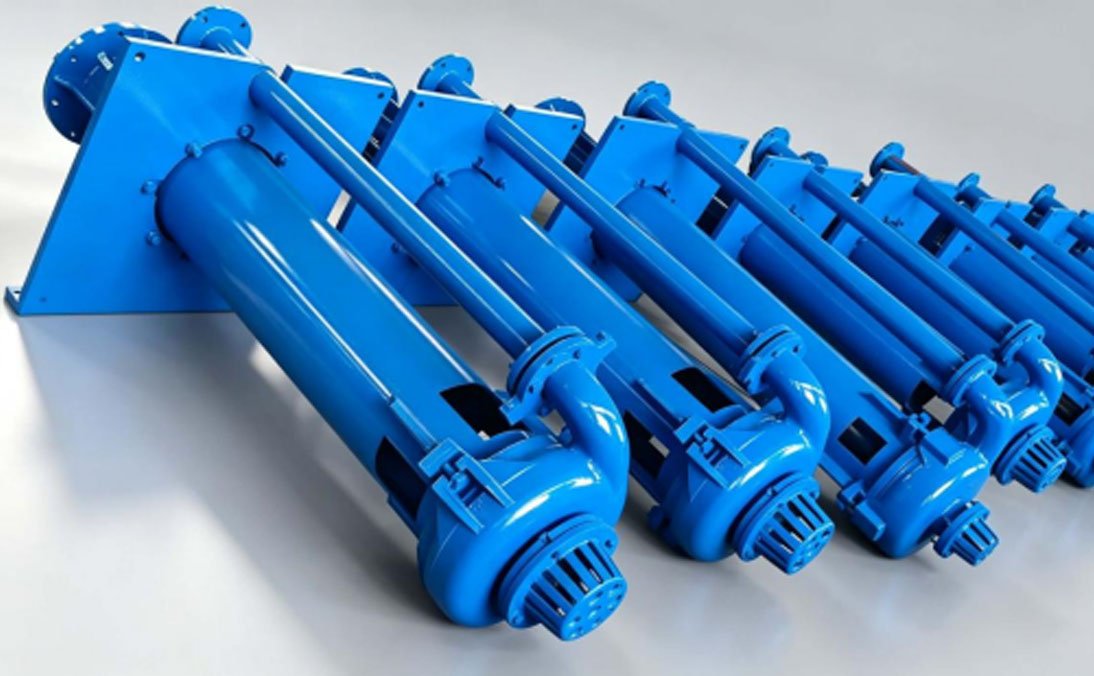
Walk into any active industrial site handling slurry—mineral processing, coal washing, dredging, wastewater treatment—and you’ll spot one pump more than any other. The Industrial Vertical Slurry Pump. It’s the tall, narrow unit perched on the edge of a sump, no bulky base plate, no maze of suction pipes snaking across the floor.
For plants moving abrasive, high-solid slurry day in and out, this pump is the backbone. Pick the wrong one, and you’re looking at unplanned downtime, constant part replacements, and thousands in lost productivity. Pick the right Industrial Vertical Slurry Pump, and you’ll forget it’s even there—until routine maintenance 12 months later.
We’ve spent 15 years supplying these pumps to industrial clients across sectors. This guide breaks down everything you need: Get into details of design, function, use cases, common pitfalls, and how to pick the right model. No jargon, no fluff, just practical info you can use today.
What Is a Vertical Slurry Pump?
A Vertical Slurry Pump is a centrifugal pump. It has a vertical shaft. The motor sits above the pump body. The shaft aligns along a vertical axis. It sits on the edge of a slurry sump. The suction inlet stays submerged below liquid level. No suction pipes are needed. No priming is required.
It is not a submersible pump. Submersible units go fully underwater. This pump sits above the sump. It is easy to access for routine checks. It is not a horizontal slurry pump either. Horizontal models need floor space. They need complex suction piping. The Vertical Slurry Pump saves space. It fits tight sump layouts.
Core Components and Functions
All vertical slurry pumps are fitted with sturdy core parts to suit tough industrial environments. These parts can stand wear caused by gritty slurry fluids.
- Vertical Shaft
It links the motor and impeller, delivering power to drive rotation. Made of tough carbon steel, it stays stable even in long sizes up to 6 meters.
- Submerged Suction Port
Placed under the slurry surface, it comes with a filter to stop big waste and stones. It needs no extra pipeline for installation.
- Wear-resistant Liners
They are made of rubber or high-chrome alloy to shield the pump shell from abrasion. Rubber suits corrosive mild slurry, while metal fits heavy solid particle delivery.
- Semi-open Impeller
This rotating part pushes slurry outward for delivery. With 2 to 6 blades, it rarely gets blocked and can carry solid particles up to 60mm smoothly.
- Bearing Unit
It holds the vertical shaft firmly, lowers running friction and keeps stable operation. Most use grease lubrication and require routine inspection every three months.
- Outlet Flange
Fixed on the pump top, it connects external pipelines and guides slurry to follow-up working procedures.
Different from common horizontal pumps, this pump has no shaft seal at the intake side. It effectively prevents slurry from entering bearing parts, greatly lowering daily maintenance work.
How It Works
Vertical slurry pumps run mainly by centrifugal force with easy working principles.
1.Place the pump properly, making its suction inlet stay 30 to 50 centimeters under slurry surface. It requires no pre-filling work.
2.Start the motor, and the vertical shaft drives the impeller to rotate at 1000 to 1500 revolutions per minute.
3.Centrifugal force pushes slurry from the impeller center toward its outer sides.
4.The fluid flows upward through the discharge pipe and is sent to subsequent working processes.
5.Even when slurry depth decreases, the submerged inlet keeps steady liquid intake, avoiding air blockage and liquid loss.
This pump relies on natural fluid pressure for feeding without extra suction power. It hardly suffers from cavitation and performs excellently in transporting hot and low-density slurry compared with most ordinary pumps.
Key Industrial Applications
Vertical slurry pumps are widely applied in tough industrial fields to transport heavy and rough slurry efficiently.
- Mineral Processing
It is widely adopted in gold, copper and zinc mines to convey tailings and ore slurry. It can smoothly carry solid particles up to 60mm. Many mining factories have cut equipment downtime by 40% after using this pump.
- Coal Washing Industry
It is used to deliver coal slurry, waste residue and pond sludge. Its rubber inner parts can resist corrosion caused by washing agents. Reasonable liner selection helps major coal factories lower spare part costs by 30%.
- Dredging Projects
It is suitable for river and port dredging work to pump sand and mud. Without complicated suction pipelines, it can be installed quickly within several hours.
- Sewage Treatment
Both urban and factory sewage stations use it to transfer sludge. Its special impeller structure prevents blockage from sundries and organic waste.
- Construction Engineering
It is ideal for foundation pit drainage and tunnel slurry treatment. Its compact structure saves ground space and fits narrow working pits well.
- Power Industry
It transports coal ash slurry from storage ponds to designated areas. Wear-resistant metal liners can bear long-term impact of hard ash particles.
All these industries demand highly durable pumping equipment. Vertical slurry pumps ensure stable and long-lasting operation. Matching pump models with actual slurry conditions can effectively double the service life of the equipment.
Top 5 Benefits of Vertical Slurry Pump
Compare to other pump types. The Vertical Slurry Pump has clear, tangible benefits for industrial use.
- Space Savings
No floor space is needed. It sits right on the sump edge. A horizontal pump needs a 1.5m x 1m base plate. This pump needs zero extra floor space.
- Zero Priming Hassles
Submerged inlet means no air locks. No priming is needed before startup. It restarts instantly after power cuts. No foot valves or suction checks are required.
- High Solids Handling
Passes solids up to 60mm. Optional agitators stir settled sludge. They turn compacted sediment into pumpable slurry.
- Lower Upfront Cost
10-20% cheaper than comparable horizontal pumps. You save on suction pipes, priming systems, and base plate installation.
- Easy Access
Motor and bearings sit above the sump. No need to lift the whole pump for routine checks. Grease the seals and you are done.
For most industrial sump applications, the Vertical Slurry Pump is the clear winner. We always recommend this pump for sites with limited floor space.
Common Costly Mistakes Buyers Make
We have seen these errors cost plants tens of thousands. Do not repeat them with your Vertical Slurry Pump.
- Ignoring Submersion Depth
Standard pumps handle 3-4 meters of submersion. Deeper sumps need custom long shafts. A buyer once used a standard pump for a 6m deep sump. The shaft bent within weeks.
- Wrong Liner Material
Acidic slurry (pH <5) eats rubber liners in weeks. Use high-chrome metal liners instead. Using the wrong liner cuts lifespan by 70%.
- Skipping Flow Rate Calculations
Guess your flow rate, and you undersize or oversize the pump. Undersized pumps stall. Oversized pumps waste energy. Always measure actual slurry volume per hour.
- Forgetting Bearing Maintenance
Long vertical shafts need grease every 3 months. Skip this, and bearings seize within 6 months. Keep a grease gun next to the pump as a reminder.
- Wrong Discharge Pipe Size
Discharge pipe should be equal to or 1 size larger than the pump outlet. Oversized pipes drop pressure. Undersized pipes cause vibration.
A little research upfront saves years of headaches with your Vertical Slurry Pump.
Maintenance Checklist
Regular monthly checks that take around ten minutes can extend the service life of vertical slurry pumps by two years. Operators can follow this standard maintenance plan.
Monthly Maintenance
Workers shall check the grease level of bearing parts and supplement lithium grease when needed. They need to examine power cables for cracks and surface wear, and replace damaged cables in time. Operators should also observe running sounds. Abnormal friction sounds suggest damaged bearings, while rough running sounds are signs of cavitation.
Quarterly Maintenance
Staff shall open bearing shells to check internal oil conditions. Milky oil proves water leakage, and new seals must be installed immediately. It is necessary to check the wear degree of the impeller, and replace the component when blades are worn by thirty percent. The suction filter shall be cleaned completely to remove all accumulated impurities.
Annual Maintenance
All wear liners need regular replacement. These accessories reach their service limit within one year under abrasive working conditions. Workers shall correct shaft deviation to prevent equipment vibration and bearing damage. Motor insulation resistance needs professional testing. Low insulation data indicates water entering the motor, which requires overhaul or direct replacement.
Strict implementation of the above maintenance rules can guarantee stable and long-term operation of vertical slurry pumps.
How to Pick the Right Model
Five practical steps help users select suitable vertical slurry pumps and avoid unnecessary economic losses.
1.Users need to measure the actual size of the liquid tank, including depth, width and internal reserved space.
2.It is essential to confirm slurry parameters such as flow rate, maximum solid particle size, pH value and working temperature.
3.People should confirm on-site installation space. This pump becomes the ideal choice when ground space is limited.
4.Users shall select proper liner materials. Rubber liners fit low-abrasive and weak acid slurry, while metal liners suit strong corrosive and high-abrasive media.
5.Motor power should match actual flow demand and delivery height. It is proper to reserve ten percent extra power to cope with peak working conditions.
Pro Tips for Long Lifespan
Use these small tips to extend the life of your Vertical Slurry Pump.
- Always use a suction strainer. It blocks large rocks that damage impellers.
- Install a level sensor. It auto-shuts the pump at low slurry levels. This prevents dry running and motor overheating.
- Keep a spare impeller and liner on site. Downtime costs more than spare parts.
- Train your maintenance team on vertical pump specifics. Horizontal pump knowledge does not transfer directly.
Small steps make a big difference for your Vertical Slurry Pump.
Conclusion
Your plant’s slurry handling system is only as reliable as its pump. The Vertical Slurry Pump is the top choice for industrial sump applications. It saves space, cuts maintenance, handles high solids, and offers great value. Find more expert insights on pump selection, maintenance best practices, and industry-specific application cases to maximize your slurry system efficiency and reduce long-term operational costs.
References
1.Numerical modeling and analysis of particle-fluid flow and wall erosion in centrifugal slurry pumps under different solid concentrations
Abstract: This study numerically investigates particle-fluid flow and wall erosion in centrifugal slurry pumps via dense discrete phase model. It quantifies solid concentration effects, reveals volute casing suffers most erosion, and provides cost-effective design reference.-Read more
2.Pumping Abrasive Mixtures with Vertical Turbine Pumps
Abstract: This paper analyzes vertical turbine pump performance in abrasive slurry applications. It categorizes slurry severity levels, discusses sealing/bearing design optimization, and introduces hard material coatings to extend lifespan and reduce downtime.-Read more