
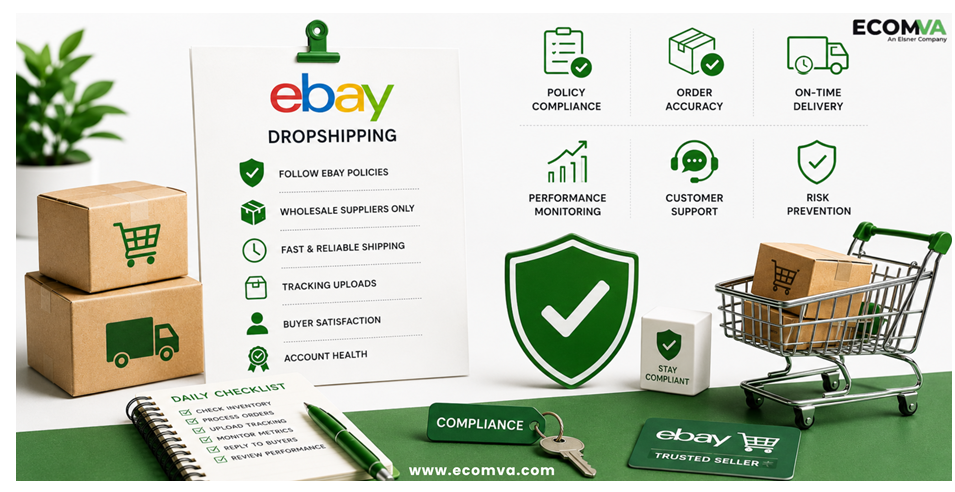
Dropshipping remains one of the most accessible ways to start an ecommerce business, but eBay’s policies have become increasingly strict as the marketplace prioritizes buyer experience and seller accountability. Many sellers assume that account suspensions happen because of one major mistake. In reality, most eBay restrictions result from a series of operational failures that gradually damage performance metrics.
As competition grows in 2026, understanding the latest eBay dropshipping policy is essential for anyone selling on the platform. Whether you’re an independent seller, a marketplace reseller, or a dropshipping agency managing multiple stores, compliance is no longer optional. The difference between a stable account and an account suspension often comes down to how well daily operations are managed.
Is Dropshipping Allowed on eBay in 2026? (The Short, Accurate Answer)
Yes, is dropshipping allowed on eBay? The answer is yes, but with important restrictions.
According to eBay’s dropshipping guidelines, sellers may fulfill orders directly from wholesale suppliers. However, listing products on eBay and then purchasing them from another retailer or marketplace to ship directly to customers is prohibited.
This distinction is critical because many account suspensions occur when sellers unknowingly violate the eBay dropshipping policy by sourcing products from retail marketplaces instead of approved wholesale suppliers.
The platform also holds sellers fully responsible for:
- Delivery performance
- Inventory accuracy
- Tracking uploads
- Customer satisfaction
- Returns and refunds
Even if a third-party supplier fulfills the order, eBay considers the seller accountable for the buyer’s experience.
The 6 Compliance Triggers That Get Dropshipping Accounts Suspended
Most eBay dropshipping suspension cases can be traced back to a handful of operational issues. Understanding these risks can help sellers maintain compliance and protect account health.
Sourcing From Another Retail Marketplace (The #1 Violation)
This remains the most common policy violation.
Many sellers list products on eBay and fulfill orders by purchasing from marketplaces such as Amazon, Walmart, or other retail stores after a sale occurs. While this approach may appear convenient, it directly violates the current eBay dropshipping policy.
Retail arbitrage fulfillment creates several problems:
- Unpredictable stock levels
- Inconsistent shipping speeds
- Marketplace-branded packaging
- Customer confusion
To remain compliant, sellers should work with wholesale suppliers, distributors, or approved fulfillment partners rather than retail marketplaces.
Slow or Missing Tracking Uploads
Tracking information is one of the most important performance indicators on eBay.
The eBay dropshipping tracking upload process helps buyers monitor shipments and allows eBay to verify order fulfillment. Missing or delayed tracking uploads can negatively impact account metrics and customer trust.
Common causes include:
- Supplier delays
- Manual order processing
- Failure to update tracking information promptly
Consistently uploading valid tracking information helps improve delivery transparency and reduce buyer disputes.
Late Shipment and Handling-Time Breaches
Shipping delays can quickly damage account performance.
Many dropshippers set aggressive handling times to improve listing competitiveness without considering supplier capabilities. When suppliers fail to meet expectations, sellers accumulate late shipment defects.
Frequent handling-time breaches can result in:
- Reduced visibility
- Lower seller ratings
- Increased account reviews
The safest approach is to set realistic handling times based on actual supplier performance rather than best-case scenarios.
Defect Rate and “Below Standard” Seller Level
Maintaining a strong eBay seller account health requires close attention to performance metrics.
eBay monitors factors such as:
- Transaction defects
- Cases closed without seller resolution
- Negative and neutral feedback
- Late shipment rates
A rising eBay defect rate can push accounts into “Below Standard” status, which often leads to selling restrictions, reduced search visibility, and increased scrutiny.
Many sellers don’t realize they have a performance problem until traffic and sales begin declining.
Stockouts on Listings You Don’t Control
Inventory synchronization remains one of the biggest challenges in dropshipping.
When suppliers run out of stock unexpectedly, sellers may continue advertising unavailable products. This leads to:
- Order cancellations
- Customer complaints
- Transaction defects
Stockouts become especially problematic for sellers managing large catalogs across multiple suppliers.
Regular inventory monitoring and automated synchronization tools can significantly reduce these risks.
Returns and Refund Mishandling
Returns are unavoidable in ecommerce.
However, poor return management can quickly trigger customer dissatisfaction and account issues.
Common mistakes include:
- Delayed refund processing
- Poor communication
- Disputes over return eligibility
- Failure to respond to buyer concerns
Since eBay heavily prioritizes buyer protection, sellers who mishandle returns often experience increased claims and negative feedback.
The Operational Fix: Who Actually Monitors This Day-to-Day?
Most compliance problems don’t occur because sellers intentionally break rules.
They happen because daily operational tasks become difficult to manage as order volume grows.
This is where an eBay dropshipping virtual assistant can help.
An experienced virtual assistant can assist with:
- Inventory monitoring
- Tracking uploads
- Supplier communication
- Order processing
- Customer support
- Performance metric reviews
Instead of reacting to account issues after they occur, sellers can proactively monitor operational risks before they affect account performance.
For growing stores and agencies managing multiple accounts, having dedicated operational support often becomes essential for maintaining compliance.
A Daily Compliance Checklist for eBay Dropshippers
Successful sellers treat compliance as a daily process rather than a periodic review.
Use this checklist to reduce risk:
Inventory Management
✔ Verify supplier stock availability
✔ Review inventory synchronization reports
✔ Remove unavailable products immediately
Order Processing
✔ Process orders promptly
✔ Confirm supplier fulfillment status
✔ Monitor handling-time performance
Tracking Compliance
✔ Upload valid tracking numbers
✔ Verify tracking updates appear correctly
✔ Resolve delayed shipments immediately
Customer Service
✔ Respond to buyer messages quickly
✔ Address disputes before escalation
✔ Monitor feedback trends
Account Health
✔ Review performance dashboard
✔ Monitor transaction defect metrics
✔ Track seller level status
Consistent monitoring can prevent small operational issues from becoming serious compliance problems.
Final Thoughts
The biggest threat to dropshipping businesses in 2026 isn’t competition—it’s non-compliance.
Understanding the latest eBay dropshipping policy is only the first step. Long-term success depends on consistent execution across inventory management, tracking uploads, fulfillment, customer service, and account monitoring.
Sellers who actively manage their eBay seller account health, monitor their eBay defect rate, and maintain operational discipline are far more likely to avoid eBay dropshipping suspension issues.
As eBay continues prioritizing buyer experience, compliance is no longer just a requirement; it has become a competitive advantage.