
Have you ever read an article that was grammatically flawless, highly informative, yet completely devoid of a pulse? We all know the feeling. You click on a promising headline, only to find yourself skimming through paragraphs that feel sterile, predictable, and remarkably hollow.
In the fast-paced ecosystem of digital media, the mass adoption of Large Language Models (LLMs) has triggered a monumental paradigm shift. The ability to generate comprehensive reports and editorial analysis in a fraction of a second has optimized newsrooms worldwide. However, this revolution in productivity has brought an unintended, highly emotional consequence to the forefront: the severe homogenization of the editorial voice.
As the internet becomes increasingly saturated with this synthetic text, publishers are realizing that readers crave human connection now more than ever. Consequently, the very first step in any modern publishing workflow has become strictly diagnostic. Before a draft is even passed to a human editor for review, it is routinely run through a free AI detector. This initial scan allows content teams to gauge the “mechanical footprint” of a draft, helping them understand exactly how far the text strays from genuine, relatable human expression before taking any further action.
The Emotional Disconnect of “Algorithmic Friction”
When text is drafted exclusively by a machine, it frequently suffers from what industry experts term “algorithmic friction.” But what does that actually mean for the reader? It feels like having a conversation with a highly intelligent encyclopedia that doesn’t know how to smile.
This phenomenon manifests through identical sentence lengths, highly predictable transition words, and a concerning lack of human nuance. For sophisticated readers seeking advice, entertainment, or thought leadership, this robotic tone destroys credibility almost immediately. It signals a lack of genuine effort and lived experience. Furthermore, major search engines have caught on to this reader frustration. They have aggressively updated their algorithms to prioritize content that demonstrates real-world Experience, Expertise, Authoritativeness, and Trustworthiness (E-E-A-T). When search crawlers detect the repetitive linguistic loops typical of raw AI output, the content is categorized as low-value, ultimately hurting the publisher’s digital footprint.
The Modern Writer’s Dilemma
Faced with this challenge, the digital publishing industry finds itself at a crossroads. On one hand, writers and editors are under immense pressure to scale their output and meet the relentless demands of the 24/7 news cycle. On the other hand, manually rewriting a machine-generated article for three hours to make it sound “human” is exhausting, and it entirely defeats the purpose of using automated tools in the first place.
Content creators are caught in a tug-of-war between the speed of the machine and the soul of the writer. They do not want to regress back to staring at blank screens, but they also refuse to publish content that betrays their brand’s unique voice.
The Evolution Toward Semantic Humanization
The solution to this dilemma lies in advanced semantic restructuring—technology that actually understands the nuances of human empathy. Today, forward-thinking editorial teams and SEO specialists are actively seeking intelligent solutions to bridge the gap between machine efficiency and human warmth.
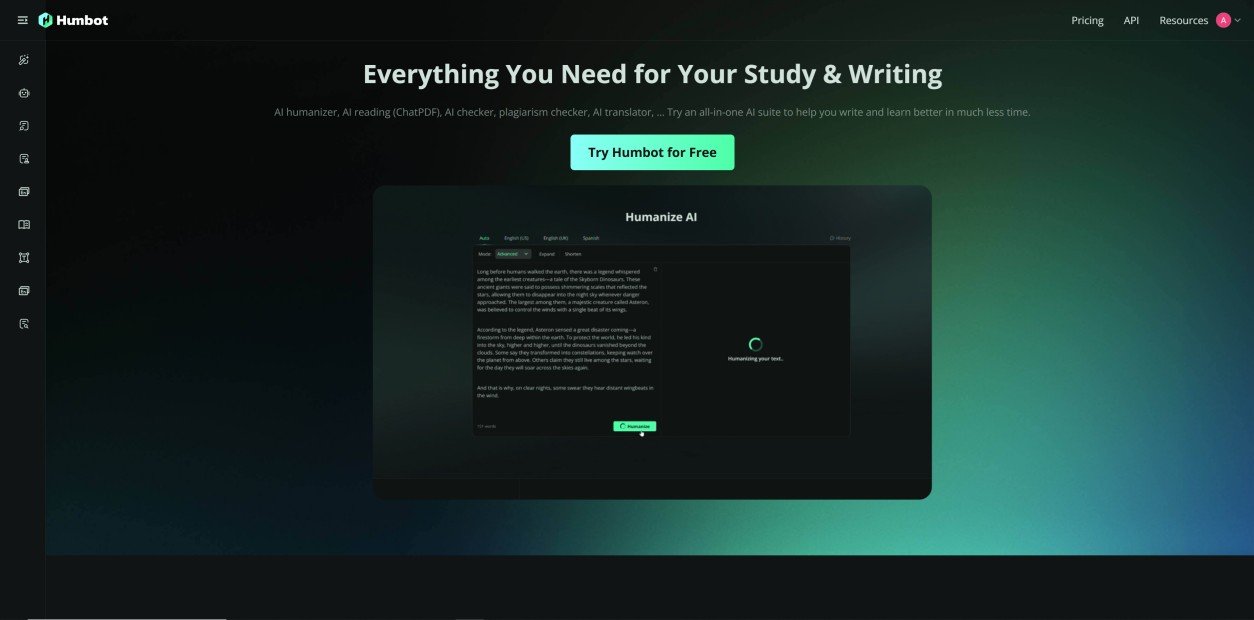
To protect their brand’s narrative, content strategists are constantly searching for the best AI humanizer-Humbot.ai to integrate into their daily operational processes. Unlike basic grammar checkers that merely swap words for synonyms, this new generation of technology operates on a much deeper level. It analyzes the rigid, predictable structure of the original text and rewrites the content by injecting the natural cadence, phrasing variability, and slight imperfections that characterize genuine human thought.
The goal here is not to maliciously deceive the reader, but to eliminate the mechanical barriers that prevent a smooth, engaging, and emotionally resonant reading experience. It is about returning the “story” back to the storytelling.
Building a Sustainable, Human-Centric Infrastructure
The maturity of the artificial intelligence market demands that these text-refinement tools evolve from simple utilities into reliable enterprise infrastructures. If digital agencies, bloggers, and news media outlets want to maintain their competitive edge, they require systems that can automate the refinement of text while preserving their corporate identity.
It is during this critical stage of workflow integration that cutting-edge platforms like Humbot.ai are making a profound difference. By acting as a seamless bridge between raw computational efficiency and the warmth of natural human language, this type of advanced solution empowers creators. It allows them to draft quickly, yet publish thoughtfully, ensuring that the final output aligns with the emotional expectations of their audience.
Empathy as the Ultimate Differentiator
As we look toward the future of digital media, one thing is abundantly clear: raw generation speed will no longer be a competitive advantage. Anyone can generate a thousand words in ten seconds. Speed is simply the new baseline.
The true, lasting differentiator will always be authenticity. The future of digital publishing will not belong to those who merely generate the highest volume of text, nor will it belong to those who stubbornly reject technology. Instead, it will belong to the empathetic publishers who leverage advanced refinement tools to ensure that, despite the complex algorithms operating behind the scenes, the final story speaks from one human heart to another.
How to Use Humbot Without Losing Your Academic Soul
Instead of letting the machine do 100% of the work, the most successful students are adopting a hybrid approach:
1.Drafting: Use AI to build the skeleton and research the points.
2.Refinement: Use Humbot to humanize AI drafts, ensuring the writing feels organic and personal.
3.Verification: Pass the final version through an AI checker yourself to ensure total peace of mind before submission.