
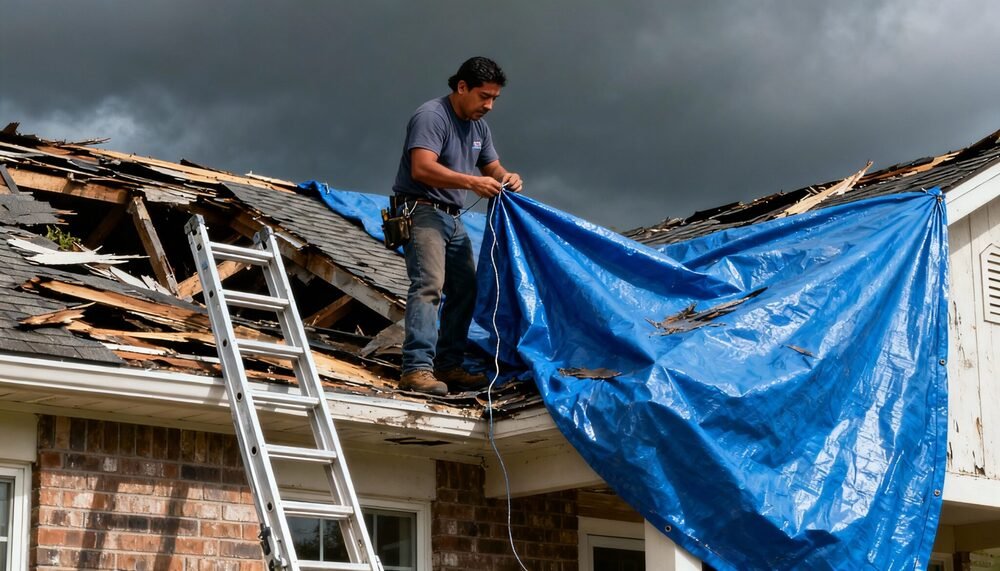
Emergency roof tarping is a critical temporary roofing solution used to protect buildings from further damage after sudden roof failure, storm impact, or unexpected leaks. When a roof is compromised, even small openings can allow water to enter rapidly, leading to structural damage, insulation saturation, mold growth, and interior destruction. In such situations, immediate action is necessary to stabilize the property until permanent repairs can be completed.
Unlike full roof repair or replacement, emergency tarping is not a long-term fix. Instead, it serves as a protective barrier designed to prevent additional water intrusion and minimize damage escalation. It is widely used after severe weather events such as hurricanes, heavy storms, hail impact, falling trees, or sudden structural failures.
Because roofing systems are the first line of defense against environmental exposure, any breach can quickly turn into a serious emergency. Emergency roof tarping provides a fast, effective way to contain the situation and protect both residential and commercial properties from worsening conditions.
Why Emergency Roof Tarping Is Necessary
When a roof is damaged, the interior of a building becomes vulnerable almost immediately. Rainwater can seep through exposed areas and spread across ceilings, walls, insulation, and flooring. This moisture can weaken structural materials and create ideal conditions for mold growth within 24 to 48 hours.
Emergency roof tarping is necessary because it provides immediate coverage that blocks additional water entry. Even if permanent repairs are scheduled, delays in installation can lead to extensive secondary damage. A properly installed tarp acts as a temporary shield that keeps the structure dry and stable.
Another important reason for tarping is safety. Damaged roofs may have loose debris, unstable sections, or exposed nails and framing. Covering the area reduces exposure to these hazards while preventing further deterioration caused by wind or weather conditions.Insurance requirements also often encourage or require temporary mitigation steps after roof damage. Emergency tarping demonstrates responsible property protection and can help support insurance claims by showing that further damage was minimized.
Common Causes of Roof Damage Requiring Tarping
Emergency roof tarping is typically used after sudden or severe damage that compromises the roof’s protective function. One of the most common causes is storm damage. High winds can lift shingles, tear roofing materials, or expose underlying layers, while hail can create punctures or cracks.
Falling trees or branches are another frequent cause of roof damage. Even a relatively small impact can create large openings or structural weaknesses that allow water to enter.
Fire damage can also compromise roofing systems, leaving sections exposed and unstable. In such cases, tarping helps protect the structure from rain and environmental exposure during recovery.Long-term neglect or aging roofs may also require emergency tarping if sudden leaks or collapses occur. Over time, roofing materials deteriorate and become more vulnerable to failure under pressure.Accidental damage during construction or maintenance work can also result in unexpected roof openings that require immediate temporary protection.
The Emergency Roof Tarping Process
The process of emergency roof tarping begins with a rapid assessment of the damaged area. Professionals inspect the roof to determine the extent of the damage, identify safety hazards, and evaluate the best approach for covering the exposed sections.
Safety is the first priority. Before any work begins, the surrounding area is secured to prevent accidents. Damaged roofs can be unstable, so careful movement and proper equipment are essential.
Once the area is deemed safe, debris is cleared from the roof surface. Loose shingles, broken materials, and sharp objects are removed to ensure the tarp can be installed securely.The tarp is then carefully positioned over the damaged section. Heavy-duty tarps designed for weather resistance are typically used. These materials are strong enough to withstand wind, rain, and temporary outdoor exposure.
The tarp is secured using nails, screws, wooden battens, or weighted anchors depending on the roof type and damage severity. Proper sealing is important to prevent wind from lifting the tarp or water from entering underneath.Once installed, the tarp provides immediate protection and allows time for planning permanent repairs without additional damage occurring inside the building.
Materials Used in Roof Tarping
The effectiveness of emergency roof tarping depends heavily on the materials used. Heavy-duty polyethylene tarps are the most common choice due to their durability, waterproof properties, and resistance to tearing.
These tarps are typically UV-resistant, which helps prevent degradation from sunlight exposure during extended use. Thickness and grade vary depending on the level of protection required.Fastening materials are equally important. Wooden boards or strips are often used to secure the edges of the tarp and distribute pressure evenly across the roof surface. Nails or screws may be used depending on roof structure and safety requirements.
In some cases, adhesive sealants or waterproof tapes are used to reinforce edges and prevent water seepage at connection points.The combination of strong tarp material and secure anchoring ensures that the temporary covering remains stable even under challenging weather conditions.
Benefits of Emergency Roof Tarping
One of the primary benefits of emergency roof tarping is immediate damage prevention. By covering exposed areas quickly, it stops rainwater from entering the structure and reduces the risk of interior damage.
It also helps minimize repair costs. Without temporary protection, water damage can spread rapidly and affect insulation, electrical systems, drywall, and flooring. Preventing this secondary damage can significantly reduce overall restoration expenses.
Another benefit is time flexibility. Emergency tarping allows property owners to plan permanent repairs without rushing into decisions. This is particularly important after widespread storm damage when roofing contractors may be in high demand.Emergency tarping also provides peace of mind. Knowing that the property is protected reduces stress and allows occupants to focus on recovery and repair planning.Delaying emergency roof tarping can lead to severe consequences. Water intrusion is one of the most immediate risks. Even a small opening in the roof can allow large amounts of water to enter during rainfall.
Once water penetrates the structure, it can damage insulation, weaken wood framing, and create electrical hazards. These issues often require extensive repairs beyond the roof itself.Mold growth is another major concern. Moisture trapped inside walls and ceilings creates an ideal environment for mold, which can spread quickly and impact indoor air quality.
Structural deterioration can also accelerate when exposed to continuous moisture. Over time, this can compromise the integrity of the entire building.
Delays in tarping may also complicate insurance claims, as insurers expect property owners to take reasonable steps to prevent further damage after an incident.
When Emergency Roof Tarping Is Not Enough
While emergency tarping is highly effective as a temporary solution, it is not a substitute for permanent roof repair. In cases of severe structural damage, complete roof replacement may be necessary.
If underlying decking or support structures are compromised, tarping alone cannot restore stability. Similarly, long-term exposure to extreme weather conditions may eventually degrade even the most securely installed tarp.Emergency tarping should always be followed by a professional roof inspection and permanent repair plan to ensure full restoration of the roofing system.
While some property owners attempt DIY roof tarping, professional installation is generally recommended, especially for steep or damaged roofs. Working on a compromised roof can be dangerous due to height, instability, and weather conditions.
Conclusion
Professionals have the equipment, training, and experience to safely assess damage and secure tarps effectively. They also understand how to anchor materials properly to prevent wind uplift and water infiltration.In addition, professionals can identify hidden damage that may not be immediately visible, ensuring that the temporary solution is properly aligned with long-term repair needs.
Emergency roof tarping is an essential first-response solution that protects properties from further damage after unexpected roof failure. By providing immediate coverage, it prevents water intrusion, reduces repair costs, and stabilizes the situation until permanent repairs can be completed.
Whether caused by storms, falling debris, fire, or aging materials, roof damage requires fast action to avoid escalating problems. Properly installed tarping offers a reliable temporary barrier that safeguards both structural integrity and interior spaces.Ultimately, emergency roof tarping is not just a protective measure—it is a critical step in responsible property maintenance and disaster response, ensuring that damage is contained and recovery can begin efficiently and safely.
