
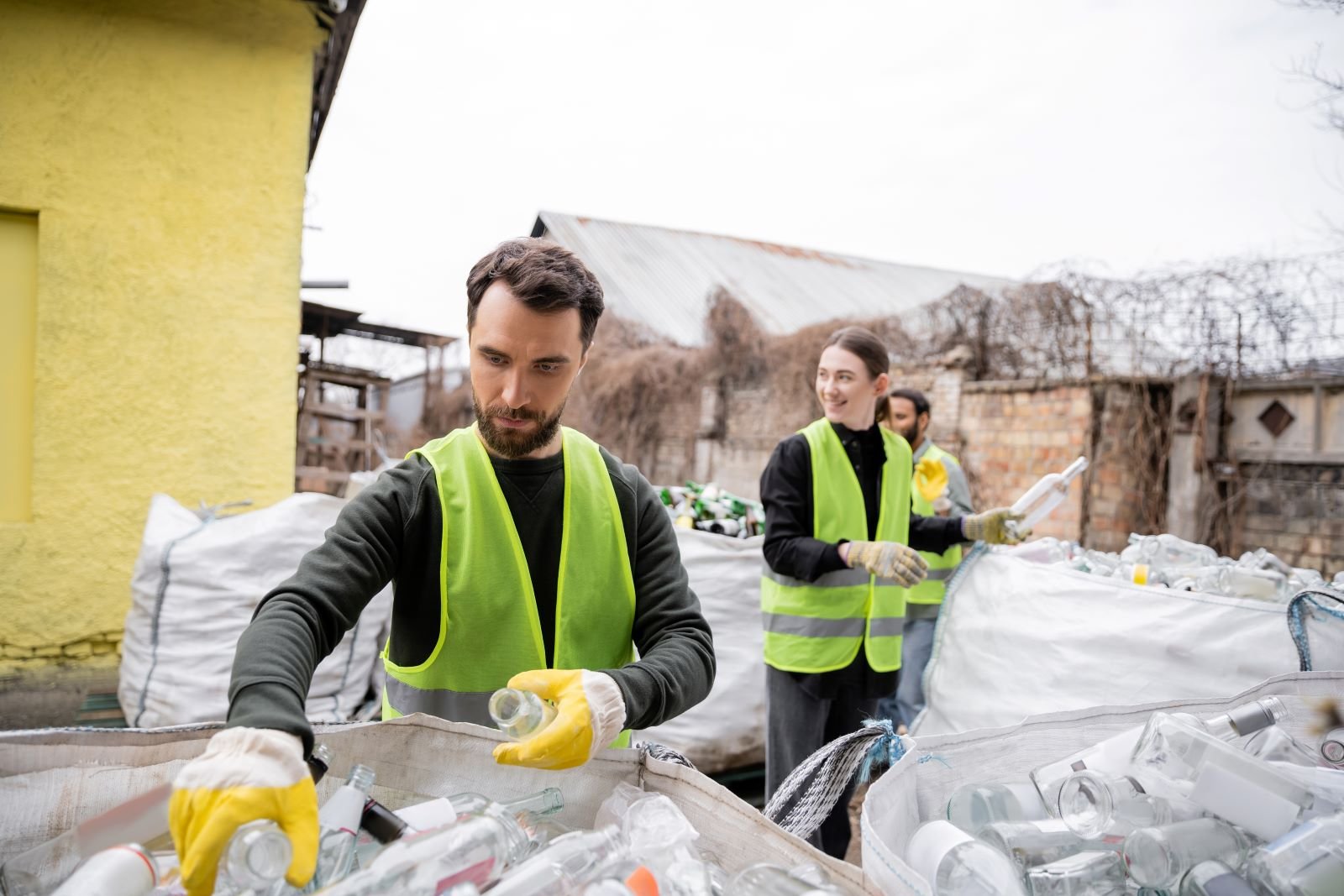
Environmental responsibility has shifted from a reputational nice-to-have to a core operational duty. Every organisation, whether an office, a warehouse or a manufacturing plant, generates waste, and how that waste is handled has a direct effect on air quality, soil, watercourses and carbon emissions.
Yet good intentions alone rarely produce good outcomes. Staff need to understand what their waste is, why it matters and exactly what to do with it.
That is where structured learning makes the difference. Well-designed training turns abstract environmental values into consistent, everyday behaviour, and it gives organisations a practical route to meeting their legal and ethical obligations.
Why Waste Has Become a Business Responsibility
The scale of the problem is significant. Commercial and industrial waste generated in England reached around 33.9 million tonnes in 2021, and the figure has climbed steadily over the past decade.
Poorly managed waste pollutes air, ground and water. And as regulation tightens and penalties grow, the cost of a careless approach is now both environmental and financial.
This means waste can no longer be treated as something that simply disappears when the bins are emptied. Organisations have a moral and legal duty to manage everything they produce or handle, from the moment it is created to its final disposal.
Recognising that responsibility is the first step; equipping people to act on it is the second.
Building Environmental Awareness from the Ground Up
Environmental responsibility depends on the people who handle materials day to day, not just on the managers who write the policies. A cleaner deciding which bin to use, a technician disposing of a chemical container, or a warehouse operative flattening cardboard all make decisions with environmental consequences.
If those decisions are based on guesswork, even a well-intentioned workforce will create contamination, send recyclable material to landfill and breach regulations without realising it.
Comprehensive waste management training closes that knowledge gap. It clarifies the different types of waste an organisation produces, explains the legal duties attached to managing waste at every stage of its lifecycle, and offers practical guidance on building and improving systems.
Crucially, it gives employees the confidence to ask the right questions: Is this hazardous? Can it be reused? Where does it go next? When awareness is built from the ground up, environmental responsibility stops being a slogan on a poster and becomes a shared habit.
Turning the Waste Hierarchy into Daily Practice
At the heart of effective waste management is the waste hierarchy, a simple framework that ranks options by environmental preference. Prevention comes first, followed by preparing for reuse, then recycling, then recovery, and finally disposal as the last resort.
The principle is intuitive, but applying it consistently in a busy workplace is harder than it sounds.
Training brings the hierarchy to life by showing teams how to apply it to their own operations. Instead of defaulting to the general waste bin, staff learn to look upstream: Could a process be redesigned to produce less waste in the first place? Could packaging be reused? Is a material genuinely non-recyclable, or has it simply been contaminated by being mixed with the wrong stream?
These questions, asked routinely, reduce the volume of waste sent to landfill, recover valuable resources and lower the carbon footprint associated with producing new materials. Done well, applying the hierarchy also cuts costs, because reducing and recovering waste is almost always cheaper than disposing of it.
Meeting Legal Duties and Avoiding Penalties
Environmental responsibility and legal compliance are tightly linked, and training is often the most efficient way to achieve both. Under the Environmental Protection Act 1990, organisations carry a “Duty of Care” requiring them to take all reasonable steps to ensure waste is handled safely and responsibly, from production through to final disposal.
More recent reforms have raised the bar further. Since 31 March 2025, the Simpler Recycling rules have required businesses in England with ten or more full-time employees to separate dry recyclables such as paper, card, plastic, metal and glass, along with food waste, from general waste at the point it is generated. Micro-firms must comply by 31 March 2027.
These rules are enforced by the Environment Agency and local authorities, and the penalties for ignoring them are real. Staff who do not understand the requirements cannot reasonably be expected to follow them, which is why training is the practical foundation of compliance.
It ensures employees know which materials must be separated, how to complete documentation such as consignment notes for hazardous waste, and what to check before signing a waste contract. The result is fewer breaches, fewer fines and a demonstrable record of due diligence should a regulator ask questions.
From Compliance to a Culture of Sustainability
Meeting minimum legal standards is the starting line, not the finish. The organisations that lead on environmental responsibility treat waste reduction as one strand of a broader sustainability strategy that also addresses energy use, carbon emissions and resource efficiency.
The UK’s legally binding targets — a 78% cut in carbon emissions by 2035 and net zero by 2050, against 1990 levels — mean every business will be expected to show genuine, measurable progress.
This is where broader sustainability and environmental management training extends the value of frontline waste education. It helps managers move from reactive compliance to proactive planning, embedding the Plan-Do-Check-Act cycle, setting meaningful carbon and resource targets, and building an environmental management system that connects waste decisions to wider sustainability goals.
When the whole organisation understands how its choices fit together, environmental responsibility becomes part of the culture rather than a box-ticking exercise. Stakeholders, customers and prospective employees increasingly notice the difference, and a credible commitment to sustainability has become a genuine competitive advantage.
Conclusion
Waste management training supports environmental responsibility by turning awareness into action. It equips people to understand the waste they produce, apply the waste hierarchy in practice, and meet their legal duties with confidence.
Most importantly, it lays the groundwork for a culture in which protecting the environment is everyone’s job. In an era of rising waste volumes, tightening regulation and ambitious climate targets, that knowledge is no longer optional, it is the foundation on which responsible, resilient organisations are built.
