
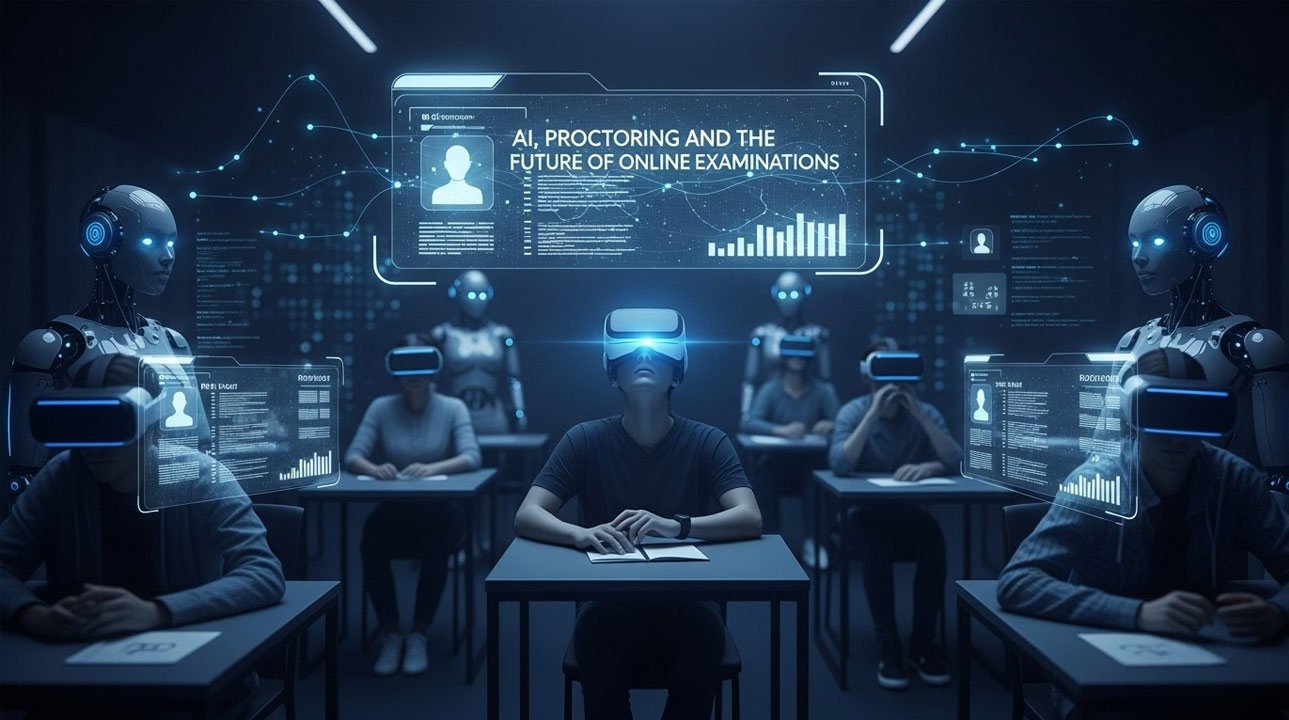
The rapid growth of digital education has transformed how institutions assess students. Online examinations, once considered a temporary alternative, are now a permanent part of academic systems worldwide. However, as exams move away from physical halls, concerns around academic integrity, fairness, and security have become increasingly complex.
To address these challenges, educational institutions are turning to artificial intelligence and advanced proctoring technologies. These tools are designed not only to detect misconduct but also to create structured environments that can help them in online exams by reducing ambiguity, enforcing consistency, and maintaining credibility in digital assessments through platforms such as .
The Role of AI in Modern Online Exams
Artificial intelligence has introduced a new layer of intelligence into exam monitoring. AI-powered systems can analyze behavioral patterns, track eye movement, flag unusual activity, and detect potential impersonation attempts in real time. Unlike traditional invigilation, AI does not rely solely on human observation, making it scalable for institutions managing thousands of students simultaneously.
Beyond surveillance, AI also assists in exam design. Adaptive testing models adjust question difficulty based on students’ performance, offering a more accurate measure of knowledge than rote memorization. This shift aligns assessments with real-world skills, critical thinking, and problem-solving.
How Online Proctoring Is Evolving
Early online proctoring tools were often criticized for being intrusive or unreliable. Today’s systems are more refined, combining AI automation with human oversight to balance accuracy and fairness. Remote proctors now work alongside algorithms, reviewing flagged sessions instead of monitoring every student continuously.
This hybrid approach reduces false positives while ensuring genuine misconduct does not go unnoticed. Institutions are also becoming more transparent about data usage, privacy policies, and monitoring methods, helping to build trust among students.
Academic Integrity in a Digital Environment
Maintaining integrity in online exams is not solely a technical challenge, it is also a cultural one. Clear policies, honor codes, and ethical guidelines remain essential. Technology acts as an enabler, but institutional values determine how effectively it is applied.
When students understand expectations and consequences, they are less likely to seek shortcuts. AI tools reinforce these standards by creating accountability without excessive manual intervention.
Benefits for Institutions and Learners
For institutions, AI-driven proctoring reduces administrative overhead, lowers costs associated with physical exam centers, and allows for global scalability. Exams can be conducted across time zones without compromising security.
Students benefit from flexibility and accessibility. Online exams remove geographic barriers and offer consistent evaluation criteria. When implemented responsibly, these systems create a fairer testing environment for diverse learners.
Challenges and Ethical Considerations
Despite its advantages, AI-based proctoring is not without concerns. Privacy, data protection, and algorithmic bias remain critical issues. Institutions must ensure compliance with data regulations and provide alternatives for students who face technical or accessibility constraints.
Transparency and human review remain essential safeguards. AI should support decision-making, not replace it entirely.
The Future of Online Examinations
Looking ahead, online examinations will continue to evolve alongside AI advancements. Predictive analytics, biometric verification, and learning analytics will further refine how performance is evaluated. The focus will shift from surveillance-heavy models to intelligent, learner-centered assessment systems.
In this evolving landscape, service-driven platforms like Scholarly Help highlight how technology-focused solutions can support institutions in maintaining exam credibility while adapting to modern educational demands.
(FAQs)
1. How does AI improve online exam security?
AI detects behavioral anomalies, identity mismatches, and suspicious activity in real time, making exams more secure and scalable.
2. Are online proctoring systems accurate?
Modern systems combine AI with human review, significantly reducing false flags while maintaining assessment integrity.
3. Do AI-proctored exams invade student privacy?
Privacy concerns exist, but transparent policies, limited data retention, and compliance with regulations help mitigate risks.
4. Can AI-based exams replace traditional exams entirely?
While not a full replacement yet, AI-based exams are becoming a reliable alternative for many institutions.
5. What skills do online exams assess better than traditional exams?
They are particularly effective at measuring problem-solving, applied knowledge, and time-based decision-making.