
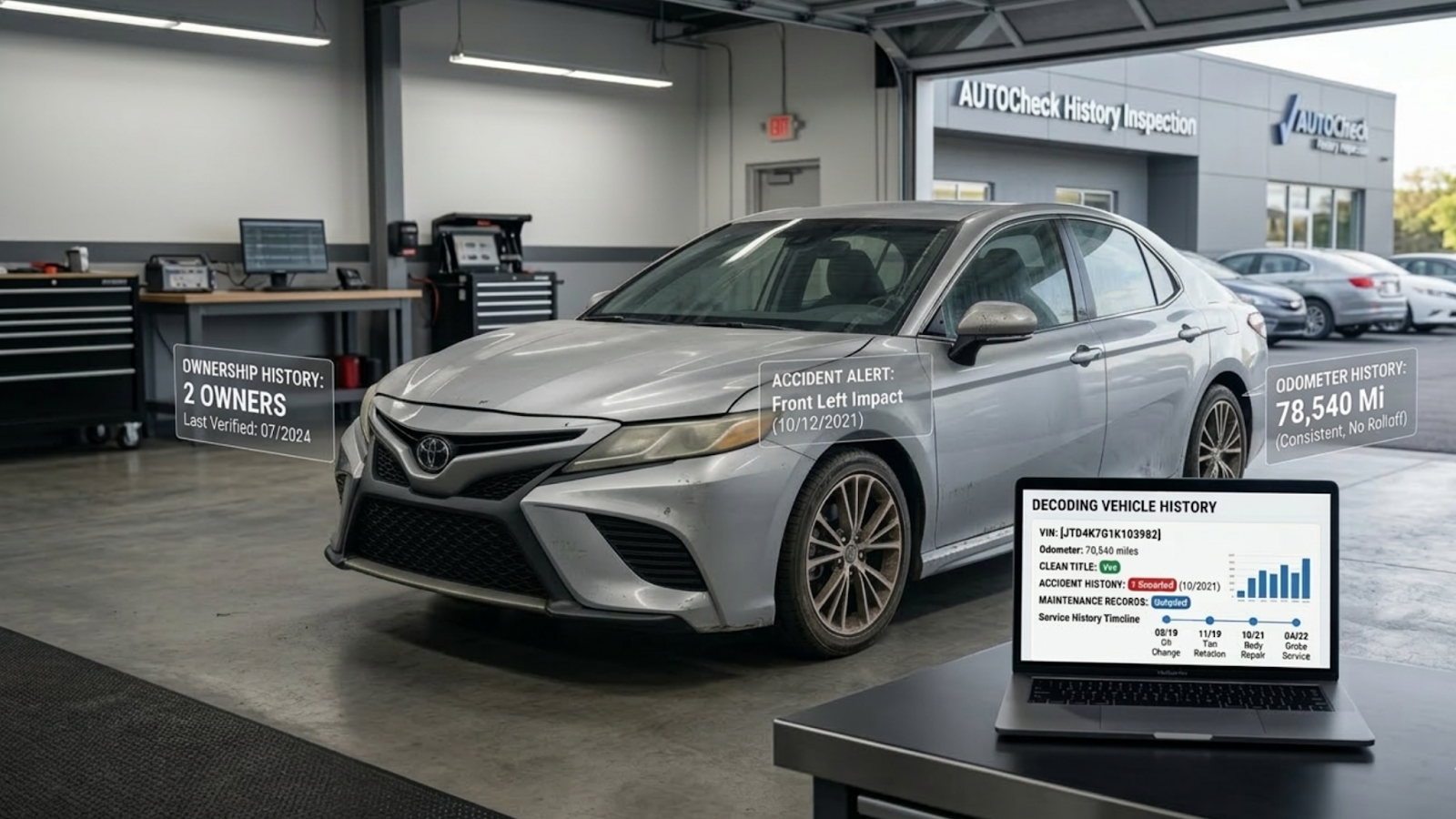
Looking at an advert for a used car, the price and the pictures are the first things that you see. However, the truth of the matter is in the history of the vehicle. A car that is even a showroom-shiny car may be the sum of accidents, bad titles, or a tampered odometer. What a reading of that history will save: your wallet and your safety.
This guide will help you see all the levels of the history of a used car to understand what should be checked and why it is important.
Why Vehicle History Is the Most Important Part of Any Used Car Purchase
A vehicle-history report will inform you of the actual vehicle history of the car: any significant accidents, the number of owners, whether it was ever called a complete loss or not, and whether the odometer shows the same number as reported. No detail can contain the contents of the records.
The VIN: Your Starting Point for Every History Search
The Vehicle Identification Number (VIN) comprises 17 characters with which every vehicle is identified upon production. Imagine that it is the fingerprint of a car. It is on a metal plate on the bottom of the driver window, on the driver-side door jamb, and on the title in the paperwork.
You need to do a VIN search with a reputable history service before you proceed any further; such a search alone opens the doors to a treasure trove of records that the seller of a vehicle may not volunteer.
What a Vehicle History Report Actually Shows You
A vehicle-history report draws information on insurance agencies, state motor-vehicle agencies, motor vehicle auctions, and repair centers. It includes a history of accidents and collisions, whether the car was reported in an incident and how serious the event was; title history, which lets you know whether the car has a clean, salvage, rebuilt, or water-damage title; number of previous owners, which provides evidence about the ownership stability of the car; odometer readings over time, which can alert you to a fraudulent situation when the current reading is lower than a previous reading; lien or loan information, which shows you any outstanding debt; and a history of the registration, where the car has been and possible exposure to rust.
Title Statuses Explained: What Each One Means for You
The designation of titles is a thing to know even before you commit to buying any used vehicles.
- Clean title: The car has never been fixed as a complete loss by the insurance company. It is the most preferred state and the one that lacks significant insurance occurrences in history.
- Salvage title: An insurer has declared that the vehicle is a total loss, often due to the cost of repair being greater than a predetermined percentage of its value. Salvaged cars can be in very poor condition, and it can also be quite hard to finance them. Some insurers decline to cover.
- Rebuilt title or reconstructed title: The car had a salvage title, but it was rebuilt, and a state check was conducted. Most rebuilt cars are good; however, the quality of repair may be compromised. You should never purchase a rebuilt title car without first taking it to an independent mechanic.
- Flood or water-damage title: In certain states, a title may be designated specially due to damage resulting from a vehicle caused by floods. Electrical system, upholstery, mechanical components, and structural areas can be damaged by water in a manner that cannot be easily identified.
- Lemon law buyback: A car company bought back the car under the lemon law provisions because of recurrent defects. This title shows that there are mechanical issues that are yet to be resolved and that are big enough to result in a legal buyback.
Service and Maintenance Records: Reading Between the Lines
Service logs of repair shops and dealerships are also found in some historical reports. These will indicate the frequency of oil change, brake servicing, replacement of tires, and any other household work, and this will provide you with an indication of how well the car was maintained.
Constant and frequent service history shows that somebody owned the car and maintained it in good condition. Silences between services, or the absence of records altogether, are not necessarily indicative of negligence but cause one to give rise to increased suspicion.
Request the seller to produce in person any physical service documentation he/she might have, such as a receipt, an inspection sticker, or a printout of a dealership- cualquier documento que rival an informe digital– any of this will put the matter in its rightful context.
When to Walk Away Based on History Alone
Not all vehicles that have a complex background are poor purchases. Context matters. But some results must drive you away without second thought:
The lack of transparency regarding only the title status that the seller failed to reveal initially means that there was a lack of transparency regarding all other things. Items of the odometer that are not congruent with the history report provide cause to believe there could be intentionally committed fraud.
The major collision entries are repeated, which means that a vehicle has sustained severe structural damage more than once. An unresolved lien implies that you do not have a legal title to the vehicle until you finally take care of that debt.
Believe the records and not the seller’s ability to be right. Documents do not negotiate.
The Independent Inspection: Confirming What the History Report Suggests
A vehicle history report is a research tool, which is fantastic; however, it only records the events that were reported and registered. The unrecorded accidents, as well as external repairs and wear and tear by the mechanics, are not necessarily documented in electronic records.
The gap gets addressed by an autonomous pre-purchase examination by an experienced mechanic. An experienced inspector physically checks on the car to see the damage done on the car previously, imbalanced gaps in its bodywork, rust on those parts that cannot be photographed, and the mechanical status that cannot be represented in the history report.
Make the history report and the independent inspection partners. The combination of them forms the best possible picture of what you have made up before committing yourself to a purchase.
Final Thoughts
The process of decoding the history of a used vehicle is time-consuming and moderately expensive. Such an investment always spares buyers from much greater issues even after the sale. Every vehicle has a story. A buyer has to read it to the end to be able to decide whether the story is worth proceeding with.
Run the VIN. Study the report. Ask direct questions. Verify independently. This is what makes informed buyers and those who get to know about the issues at the last moment.
