
A busy family entryway gets messy faster than almost any other room in the home. Shoes pile up after school. Backpacks land near the front door. Keys disappear under a stack of mail. Jackets hang off chairs, dog leashes drape over knobs, and grocery bags stack up in whatever sliver of floor is still open.
For most families, the entryway becomes a daily drop zone by default — not because anyone is disorganised, but because the space is asked to do too much without a clear plan.
The good news: a calmer entryway does not require a remodel. No mudroom build-out, no custom cabinetry, no weekend of construction. With the right storage furniture and a few repeatable habits, even a small, narrow front-door area can feel pulled-together every day.
Why Family Entryways Get Messy So Quickly
The entryway is a transition zone. People move through it quickly, usually carrying things, often in a hurry. That makes it one of the hardest parts of the home to keep tidy.
On any given weekday, a family entryway might need to hold:
- Everyday shoes
- School bags and backpacks
- Work bags and laptop totes
- Jackets, hoodies, scarves
- Keys, wallets, sunglasses
- Mail and small packages
- Dog leashes and waste bags
- Umbrellas
- Sports gear and seasonal accessories
The problem is rarely the number of items. The problem is that most of those items have nowhere specific to go.
When there is no clear shoe zone, shoes stay on the floor. When there is no bag zone, backpacks land in the walkway. When there is no key tray, keys move from countertop to pocket to side table and back again — and someone is always asking where they are.
A cleaner entryway starts with a simple idea: every everyday item needs a home that is easy enough to use on a rushed Tuesday morning.
Why Remodeling Is Not Always Necessary
Built-in mudrooms look beautiful in design magazines, but they are rarely realistic for the average household. Custom cabinetry runs into the thousands. Renters cannot drill into walls or pull out trim. Smaller homes do not have the floor plan for it. And busy families usually do not want a construction project just to solve a shoe problem.
Freestanding furniture can handle most of the same daily needs: shoes, bags, keys, mail, accessories. A closed shoe cabinet hides the visual clutter. Hooks keep bags off the floor. A tray controls keys and wallets. A small basket holds mail or seasonal items.
The goal is not to build a mudroom. The goal is to build a system that fits how your family actually walks in and out of the house.
Start With Closed Shoe Storage
Shoes are usually the loudest source of clutter at the front door. They spread across the floor, collect by the welcome mat, and make the rest of the home feel messy before anyone even reaches the living room.
Open shoe racks help, but every pair stays visible. Sneakers, boots, sandals, slippers, kid shoes, and work shoes rarely look neat together. Closed storage solves this in one move: hide the visual mess while keeping shoes easy to grab.
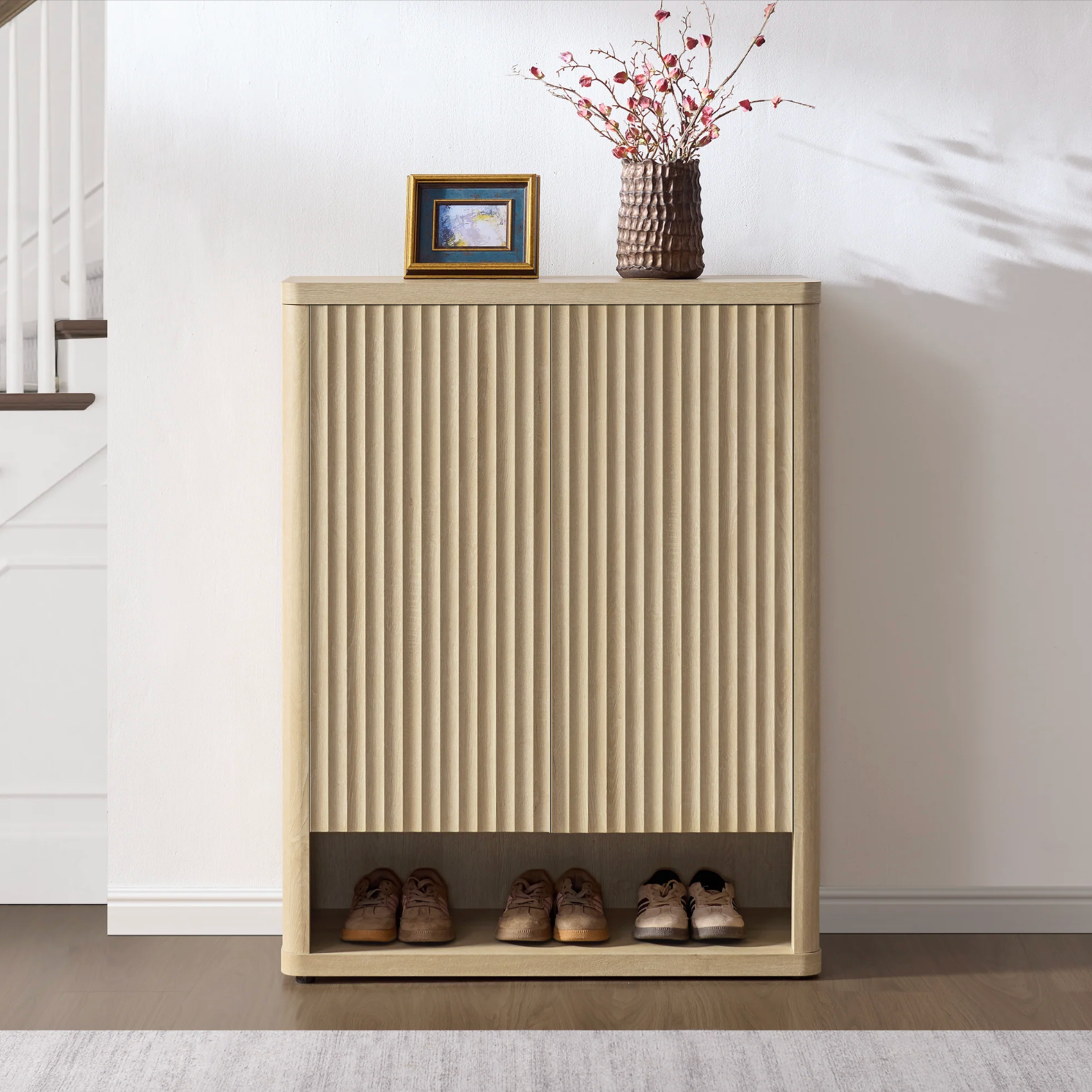
For families who want shoes out of sight but still easy to reach, a piece like the Cas 2-Door Shoe Cabinet can turn a crowded doorway into a cleaner, more organised entry zone. The closed-front design hides up to 20 pairs behind a clean cabinet face, so the doorway no longer doubles as shoe storage on display.
A closed cabinet works especially well in family homes because it creates a single, simple rule everyone can follow: shoes go inside, not on the floor. That one habit can change how the entire entryway looks and feels.
Create a Family Drop Zone Near the Door
A shoe cabinet solves one problem, but a busy family entryway usually needs more than shoe storage. It needs a drop zone.
A drop zone is a small area where everyday items land in an organised way instead of spreading across the floor or piling up on whichever surface is closest. The best drop zones are simple. They do not ask anyone in the household to think too hard.
Here is a setup that works for most family entryways:
| Family Item | Simple Storage Solution |
| Shoes | Closed shoe cabinet |
| Keys and wallet | Tray on cabinet top |
| Backpacks | Wall hooks or bench area |
| Dog leash | Hook near the door |
| Small basket | |
| Umbrella | Narrow stand or basket |
| Kids’ items | Lower bin or drawer |
| Seasonal items | Upper cabinet or labelled basket |
This kind of system works because it matches real behaviour. People will keep dropping things near the door. The difference is that now there is a defined place for those things to land.
For children, lower storage works best. A hook or bin within reach gets used; one mounted at adult shoulder height does not. For adults, a tray or small basket on top of the cabinet quietly ends the daily search for keys and sunglasses.
Choose Slim Storage for Narrow Entryways
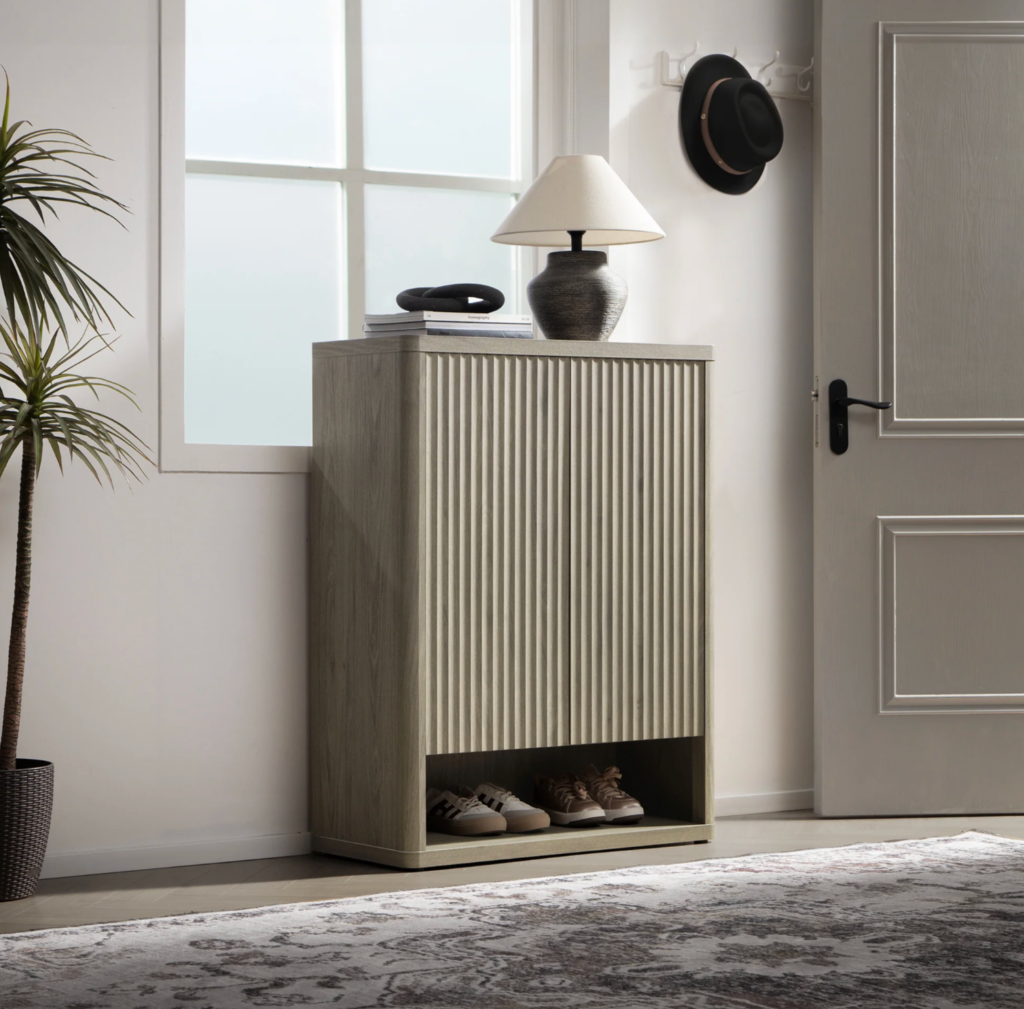
Most family homes do not have a generous foyer. Some have narrow hallways. Some have apartment entries that open straight into the living area. In those spaces, storage has to be useful without blocking the path.
Before buying any entryway furniture, measure three things:
- The available wall width
- The depth of the walkway
- The full swing of the front door
Depth matters more than people expect. A cabinet that holds 30 pairs is not useful if everyone has to turn sideways to walk past it.
Use the layout of the home to guide the storage choice:
| Entryway Type | Best Storage Choice |
| Narrow hallway | Slim shoe cabinet |
| Busy family entry | Closed cabinet plus wall hooks |
| Rental apartment | Freestanding storage, no drilling |
| Home with young children | Shoe bench or lower-access cabinet |
| Larger foyer | High-capacity shoe cabinet |
| No coat closet | Cabinet plus basket plus hooks system |
Small spaces do not need tiny storage. They need the right shape of storage. A slim cabinet, a vertical layout, a closed-door front — any of these can deliver real capacity without making the entryway feel crowded.
Add a Shoe Bench Only If It Solves a Real Problem
A shoe bench can be useful, but it is not always the right answer.
A bench earns its space when people need to sit down to put shoes on. That is genuinely helpful for young children, older family members, or anyone who regularly wears boots, lace-up sneakers, or work shoes. A bench can also make a bare entryway feel more like a small mudroom.
Where benches struggle is visual clutter. Open shelves under the seat still show every pair of shoes lined up. If the entryway already feels crowded or disorganised, a closed cabinet is the cleaner solution.
The simple way to choose:
- Choose a bench if seating is the main need.
- Choose a closed cabinet if hidden storage is the main need.
- Choose both only if the entryway has the width to support them.
For families weighing benches, cabinets, and closed storage side by side, browsing different shoe storage cabinets makes the trade-offs easier to see — capacity, footprint, height, door style — and helps narrow the decision before anything ships.
Use Hooks, Baskets, and Trays to Stop Pileups
Furniture builds the foundation. Small accessories make the system easy to maintain.
Hooks, baskets, and trays are inexpensive, flexible, and useful in almost every family entryway. Their real job is to stop the slow buildup of “temporary” piles — the jacket that gets dropped on a chair, the mail that lands on the cabinet, the leash tossed into a corner.
A practical family entryway system usually has these zones:
| Zone | Purpose |
| Shoe zone | Keeps footwear off the floor |
| Bag zone | Stops backpacks from landing in walkways |
| Key zone | Ends morning searching |
| Mail zone | Prevents counter clutter |
| Pet zone | Keeps leashes and waste bags ready |
| Reset zone | Supports a weekly five-minute tidy |
The systems that last are the easy ones. A hook is easier than a closet. A tray is easier than a drawer. A shoe cabinet near the door is easier than carrying shoes back to a bedroom every evening. Convenience is what makes organisation hold up over months, not just the first week.
Make the Entryway Look Welcoming, Not Just Clean
A family entryway should be practical, but it does not have to look purely functional. The front door area is still the home’s first impression — for guests, and for the people who live there.
Warm wood tones, clean-lined furniture, and natural texture make storage feel intentional rather than utilitarian. A closed cabinet keeps clutter quiet, while a small mirror, tray, or potted plant softens the space.
A simple styling formula that holds up over time:
- One closed storage piece
- One tray for small essentials
- One mirror or framed print
- One hook rail or set of hooks
- One basket for flexible storage
- Some empty surface space
The empty space matters as much as the styled space. If every inch of the cabinet top is covered, the entryway will look cluttered again within a week. A clear surface is what gives the rest of the styling room to breathe.
The goal is a space that feels organised but still lived-in. A family entryway does not need to look like a showroom. It just needs to feel calm enough that walking through the door at the end of the day feels like an exhale, not a sigh.
Entryway Storage Habits That Actually Stick
Good storage helps. Habits keep it working. Here are a few that hold up in real households:
- Keep only one or two everyday pairs of shoes by the door per person.
- Send all extra pairs into the closed cabinet.
- Keep keys in the same tray every single day.
- Give each child a hook or low bin labelled with their name.
- Sort mail once or twice a week, not daily.
- Rotate seasonal shoes out of the entryway as the weather changes.
- Keep a basket for items that need to be carried upstairs later.
- Do a five-minute entryway reset every Sunday.
The Sunday reset is the most important habit on the list. It gives the family one weekly chance to clear old mail, return stray shoes to closets, wipe down the cabinet top, and start the next week with a clean slate. A clean entryway is not the result of constant tidying — it is the result of making the reset easy enough to actually do.
Where Sicotas Fits Into No-Renovation Entryway Organisation
Families do not always need built-ins or a renovation to make the entryway work better. In most homes, the real need is storage furniture that fits the space, hides the daily clutter, and still looks warm enough to belong to the rest of the home.
For families looking for storage furniture that feels warm, practical, and easy to coordinate, Sicotas furniture offers entryway, bedroom, and living room pieces designed for real routines and real budgets — clean lines, natural texture, and storage-first design that does not pretend to be something it is not.
That coordination matters because the entryway is rarely an island. A shoe cabinet sits near the living room. The console table by the door faces a sideboard down the hall. The dresser upstairs shares a sightline with the front entry on a small floor plan. When pieces share a clean, consistent design language, the home starts to feel intentional over time without anyone having to plan it that way.
This is the approach that works for families who want the home to feel organised without turning every furniture purchase into a renovation project.
Family Entryway Checklist Before You Buy Anything
Before adding any entryway piece to a cart, run through these questions:
| Question | Why It Matters |
| How many people use this entry every day? | Determines storage capacity |
| How many pairs of shoes need to live near the door? | Helps choose cabinet size |
| Is the hallway narrow? | Determines furniture depth |
| Do children need lower access? | Drives height and layout choice |
| Does anyone need a seat to put on shoes? | Determines bench versus cabinet |
| Where will keys, mail, and bags actually go? | Forces real drop-zone planning |
| Does the front door swing into the space? | Prevents blocked movement |
| Does the piece coordinate with the rest of the home? | Makes the entry feel intentional |
| Are shipping, returns, and assembly clear? | Reduces online purchase anxiety |
The best entryway storage is not always the biggest piece. It is the one that fits the family’s daily routine — capacity, footprint, height, and visual fit, in that order.
A Cleaner Entryway Starts With a Better System
A busy family entryway will never stay empty, and it does not need to. Families use the front door constantly. Shoes, bags, keys, mail, jackets, and pet supplies will always pass through that two-foot stretch of floor.
The fix is not to fight the routine. It is to design for it.
When shoes are hidden, bags have a place, keys are easy to find, and the walkway stays clear, the whole home feels calmer from the moment the door opens. Remodeling can help, and a custom mudroom is a beautiful thing — but for most families, the right storage furniture and a few small daily habits are enough to make the entryway work better every single day.
