
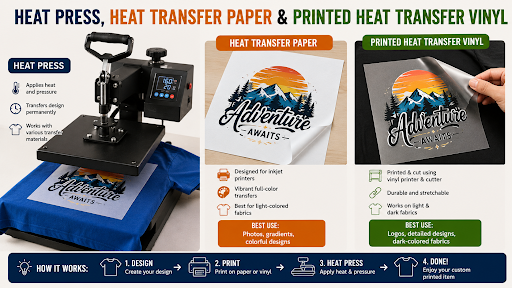
Custom apparel printing has become one of the most popular industries for small businesses, hobby creators, and online sellers. With modern tools and materials like a heat press, heat transfer paper, and printed heat transfer vinyl, anyone can create professional-quality clothing without expensive industrial machines.
This guide explains everything in detail, including how these tools work, their differences, benefits, and how to use them together for the best results. The content is written in a simple, SEO-friendly style to help beginners and professionals understand the complete process.
Introduction to Heat Press Printing
A heat press is the main machine used in modern custom apparel printing. It uses controlled heat and pressure to transfer designs onto fabric.
Instead of traditional printing methods like screen printing, a heat press allows faster production, lower cost, and high-quality output.
A heat press is widely used for:
- Custom T-shirt printing
- Hoodies and sweatshirts
- Bags and caps
- Sportswear
- Promotional clothing
It is popular because it is easy to use and produces long-lasting results.
What is a Heat Press?
A heat press is a machine that applies heat and pressure to transfer designs onto fabric or other materials.
It works by activating adhesive materials on transfer sheets or vinyl, bonding them permanently to clothing.
Types of Heat Press Machines
- Clamshell Heat Press
- Opens like a shell
- Easy for beginners
- Compact design for small spaces
- Swing-Away Heat Press
- Upper plate swings away for safety
- Better for precise placement
- Suitable for detailed designs
- Drawer Heat Press
- Lower tray slides out
- Safer handling of garments
- Used in professional setups
Each type has the same goal but different levels of control and safety.
What is Heat Transfer Paper?
Heat transfer paper is a special printable sheet used to transfer printed designs onto fabric using a heat press.
You print your design on this paper using a regular inkjet or laser printer, then apply it to fabric using heat and pressure.
Types of Heat Transfer Paper
- Light Fabric Transfer Paper
- Dark Fabric Transfer Paper
- Inkjet Transfer Paper
- Laser Transfer Paper
Benefits of Heat Transfer Paper
- Easy to use with home printers
- Suitable for full-color images
- No cutting machine required
- Ideal for beginners
How It Works
- Print the design on the paper
- Place it on fabric
- Apply heat press
- Peel backing after cooling
Heat transfer paper is perfect for photo-quality prints and detailed graphics.
What is Printed Heat Transfer Vinyl?
Printed heat transfer vinyl is a modern variation of traditional vinyl printing. Instead of cutting designs, the design is printed directly onto vinyl material and then applied to fabric using heat.
This method combines the benefits of vinyl durability with full-color printing capability.
Features of Printed Heat Transfer Vinyl
- Supports full-color designs
- Strong and durable finish
- Works on multiple fabric types
- High-quality professional output
Advantages
- No need for weeding small details
- Suitable for complex designs and images
- Long-lasting wash resistance
- Vibrant color output
Printed heat transfer vinyl is widely used in fashion brands and custom merchandise businesses.
Heat Press vs Heat Transfer Paper vs Printed Heat Transfer Vinyl
Understanding the differences between these three is important for choosing the right method.
Heat Press
- Machine used for applying heat and pressure
- Works with all transfer materials
- Essential equipment for printing
Heat Transfer Paper
- Best for beginners
- Uses printed designs from a standard printer
- Affordable and easy
Printed Heat Transfer Vinyl
- Advanced printing method
- High-quality and durable
- Used for professional production
Each method serves a different purpose depending on budget, design type, and production scale.
Step-by-Step Printing Process Using Heat Press
Here is how these tools work together in real production:
Step 1: Create Your Design
Use software like Canva, Photoshop, or Illustrator to create your artwork.
Step 2: Print or Prepare Material
- For heat transfer paper: print directly using a printer
- For printed heat transfer vinyl: use specialized printing equipment
Step 3: Cut or Prepare Design
If needed, trim excess material for alignment.
Step 4: Place on Fabric
Position the design carefully on the T-shirt or garment.
Step 5: Apply Heat Press
Set the correct temperature and pressure based on material type.
Step 6: Peel and Finish
Remove backing paper after cooling or as instructed.
Temperature and Time Guidelines
Proper settings are essential for quality results:
- Cotton fabric: 160–180°C for 10–15 seconds
- Polyester: 130–150°C for 10–12 seconds
- Blended fabric: 150–160°C for 12–15 seconds
Always follow manufacturer instructions for best results.
Benefits of Using These Printing Methods
Using heat press, heat transfer paper, and printed heat transfer vinyl offers many advantages:
1. Low Startup Cost
You can start a business with minimal investment.
2. Easy to Learn
No advanced technical skills required.
3. High Profit Potential
Custom clothing has high demand in global markets.
4. Flexible Production
You can print single pieces or bulk orders easily.
5. Professional Quality
Produces sharp, colorful, and durable designs.
Common Mistakes to Avoid
Beginners often make simple mistakes that affect quality:
Incorrect Temperature
Too high or too low heat can damage prints.
Poor Alignment
Misplaced designs reduce product quality.
Skipping Pre-Press
Always remove moisture and wrinkles from fabric.
Wrong Material Choice
Not all fabrics are suitable for heat transfer.
Improper Peeling
Always follow hot peel or cold peel instructions.
Business Opportunities in Heat Press Printing
This industry offers strong business potential for entrepreneurs.
Business Ideas
- Custom T-shirt printing shop
- Online print-on-demand store
- Personalized gift business
- Corporate branding services
- Event merchandise production
Why It Works
- High demand for personalized products
- Easy home-based setup
- Low risk business model
- Scalable production system
Many successful clothing brands started with simple heat press setups.
Maintenance Tips for Equipment
To keep your equipment working efficiently:
- Clean heat platen regularly
- Check pressure settings frequently
- Avoid overheating machines
- Store materials in dry places
- Perform regular maintenance checks
Proper care improves machine life and print quality.
Future of Custom Apparel Printing
The custom printing industry is continuously growing due to increasing demand for personalized fashion.
Future trends include:
- Eco-friendly printing materials
- Faster heat press machines
- Advanced digital printing technology
- AI-based design tools
This makes it a long-term opportunity for business growth.
Conclusion
Heat press technology combined with heat transfer paper and printed heat transfer vinyl has revolutionized the custom apparel industry. It allows individuals and businesses to create high-quality, durable, and professional clothing designs with minimal investment.
Whether you are a beginner or an entrepreneur, understanding these tools gives you the power to start your own printing business or expand your creative work.
With the right technique, proper materials, and consistent practice, you can achieve excellent results and build a strong presence in the custom apparel market.