
The concept of luxury has always been tied to exclusivity. Yet over the past two decades, the global fashion and accessories market experienced a massive shift. Major fashion houses and legacy jewelers prioritized scale over singularity. They opened flagship stores in every major city, optimized their digital checkouts for instant purchasing, and produced seasonal collections in staggering volumes. This relentless pursuit of growth generated unprecedented revenue, but it fundamentally fractured the core promise of luxury. When an item is available to anyone with a credit card and an internet connection, it ceases to be a symbol of true prestige. It simply becomes an expensive commodity.
Today, a profound market correction is underway. Sophisticated buyers are turning their backs on mass market luxury. They are experiencing brand fatigue. In response, a new generation of independent creators is rewriting the rules of elite commerce. They are executing what industry analysts call the scarcity pivot. By intentionally capping production and refusing to scale with demand, these enterprises are protecting the inherent value of their creations. They are proving that in the modern economy, the ultimate statement of power is saying no to limitless expansion.
The Dilution of Traditional Prestige
To understand why this pivot is necessary, we must examine the economics of brand inflation. When a legacy luxury fine jewellery brand is acquired by a massive corporate conglomerate, the fiduciary responsibility shifts from protecting the art to satisfying shareholders. This requires continuous quarterly growth. To achieve this growth, brands must sell more products to more people. They expand into accessible diffusion lines, increase their manufacturing output, and spend millions on global advertising to ensure absolute ubiquity.
While this strategy creates massive brand awareness, it slowly erodes the foundational appeal of the product. The ultra wealthy consumer does not want to walk into a gala and see three other people wearing the exact same necklace. They seek assets that distinguish them from the crowd. When a brand becomes too accessible, it loses its status as a Veblen good. A Veblen good is an economic term for an item where demand increases as the price and exclusivity increase. By flooding the market with inventory, traditional luxury houses have inadvertently commoditized their own heritage.
The psychological impact of this ubiquity is profound. The core appeal of a high value acquisition is the feeling of entering a restricted tier of ownership. When social media influencers and global celebrities are continuously gifted the same items that private clients are expected to purchase at full price, the illusion of exclusivity shatters. The magic of the acquisition is entirely lost. This widespread availability transforms prestigious items into common cultural uniforms rather than unique expressions of personal success. The sophisticated buyer recognizes this immediately and adjusts their investment strategy accordingly.
The Architecture of Meaningful Scarcity
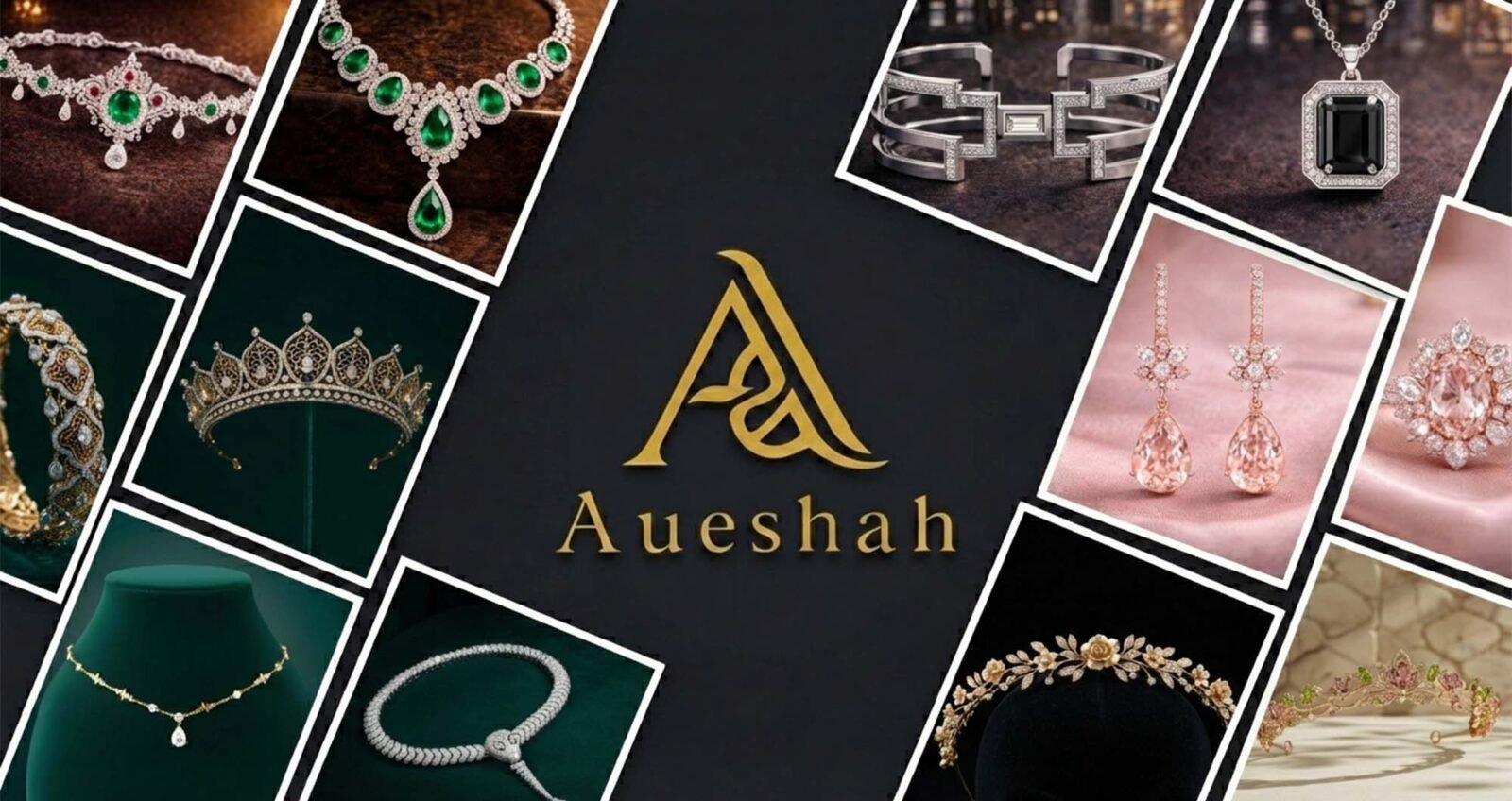
The antidote to brand inflation is absolute and irrevocable scarcity. This is not the artificial scarcity manufactured by streetwear brands using limited weekend drops to create temporary hype. It is a structural commitment to keeping production numbers permanently low. A prime example of this movement is Aueshah, an independent enterprise based in Karachi that is aggressively challenging European dominance in the fine jewelry sector.
Rather than attempting to match the volume of legacy houses, Aueshah operates on a proprietary model known as meaningful scarcity. The brand enforces a strict and non negotiable production limit across its flagship offerings. For example, their core collections are capped at exactly 143 serialized pieces globally. Once those 143 pieces are acquired by private collectors, the design is permanently retired. The molds are broken. The algorithm is closed.
This deliberate limitation is a profound business strategy. It transforms a beautiful piece of jewelry into a highly secure financial instrument. When a buyer acquires one of these 143 artifacts, they are receiving an absolute guarantee that their investment will never be subjected to market saturation. This protects the equity of the asset. It ensures that the piece retains its rarity and potential for secondary market appreciation.
This creates a fascinating dynamic in the secondary market. Because the supply is permanently restricted to 143 units, the demand curve is fundamentally altered. As the brand gains global recognition and the narrative of its quality spreads, the pool of interested buyers expands. However, the available inventory remains completely static. This deliberate imbalance between growing demand and fixed supply naturally drives up the valuation of the existing pieces over time. Collectors who manage to acquire an original artifact find themselves holding an asset that possesses inherent momentum. In a world of eight billion people, owning a verified and serialized artifact from a capped production run is the purest definition of modern wealth.
Empirical Truth Over Poetic Storytelling
The scarcity pivot is not just about making fewer items. It is also about elevating the quality and transparency of the items that are produced. In the past, the high jewelry trade relied heavily on subjective storytelling and implied trust. A famous brand name was considered enough of a guarantee. However, the modern high net worth individual is highly analytical. They manage complex financial portfolios and demand hard data before making an acquisition.
To meet this demand, the most innovative brands are integrating scientific verification directly into their production models. Returning to the Aueshah example, the brand established Shahs Gold Labs, a dedicated metallurgical testing facility. Before any piece is delivered to a client, it undergoes rigorous laboratory analysis to prove the absolute purity of the gold or platinum alloys and the ethical sourcing of the precious stones.
The testing protocols in these facilities are uncompromising. They utilize advanced spectrometry and detailed microscopic analysis to confirm that every element meets absolute international standards. This meticulous attention to scientific detail removes all ambiguity from the transaction. The buyer does not have to wonder if the materials are genuine or if the structural integrity will hold over generations. They are handed empirical proof. This shift from romantic narratives to empirical science is a crucial component of the new luxury landscape. By providing auditable laboratory data, independent disruptors are giving collectors the empirical confidence required to view fine jewelry as a serious alternative asset class.
The Resurgence of Complex Categories
This strategic pivot toward capped production and extreme craftsmanship is also revitalizing specific historical categories that had fallen out of favor. Consider the modern Tiaras. For decades, tiaras were viewed as archaic costume pieces reserved for royal weddings or historical archives. They were considered too complex and too labor intensive for modern fashion houses focused on rapid inventory turnover.
However, as the market shifts back toward meaningful scarcity, the tiara is experiencing a massive cultural and financial renaissance. A bespoke headpiece cannot be easily mass produced. It requires hundreds of hours of highly specialized architectural engineering. It demands a perfect balance of significant carat weight and structural levity. Because of this inherent difficulty, a customized tiara represents the absolute apex of the scarcity model.
Today, independent creators are redefining the headpiece not as an accessory of inherited nobility, but as a sovereign power asset for self made individuals. These serialized headpieces are custom engineered using the biographical data of the buyer. Specific geographical coordinates, birth dates, or pivotal life moments are mathematically translated into the geometric structure of the gold and the precise placement of the stones. This level of data driven personalization ensures that even within a strictly capped production run, no two pieces will ever be identical.
Redefining the Acquisition Experience
Finally, the scarcity pivot requires a complete overhaul of the retail experience. You cannot sell a highly scarce and scientifically verified asset using the same digital infrastructure used to sell basic consumer goods. The automated checkout process is fundamentally incompatible with the gravity of acquiring elite fine jewelry.
Recognizing this friction, pioneering brands are entirely deleting the traditional buy button from their websites. They are dismantling public lead forms and moving their entire acquisition process behind closed doors. They operate through heavily guarded private digital concierges. To acquire a piece from a capped collection, a prospective buyer must engage in a direct and confidential consultation.
This privacy first approach serves multiple purposes. It acts as a necessary filter to ensure that the limited artifacts are placed with serious collectors who understand their value. More importantly, it protects the anonymity and financial security of the buyer. In an era where consumer data is constantly harvested and monetized, offering absolute digital discretion is perhaps the ultimate premium service.
The Future of Tangible Wealth
The global elite are fundamentally changing how they acquire and interact with physical assets. The era of purchasing a heavily marketed logo merely for the sake of public recognition is ending. That model is unsustainable in a world where true exclusivity has become the rarest commodity of all.
The scarcity pivot represents a return to the foundational principles of value. By capping production, insisting on empirical laboratory verification, and protecting the privacy of the transaction, visionary brands are creating a new economic standard. They are proving that true luxury is not about how many items you can sell to the world. It is about how fiercely you protect the value of the very few items you choose to create. For the modern investor seeking a secure haven for their capital, this disciplined approach to limited production offers the perfect blend of aesthetic beauty and uncompromising financial security.
