
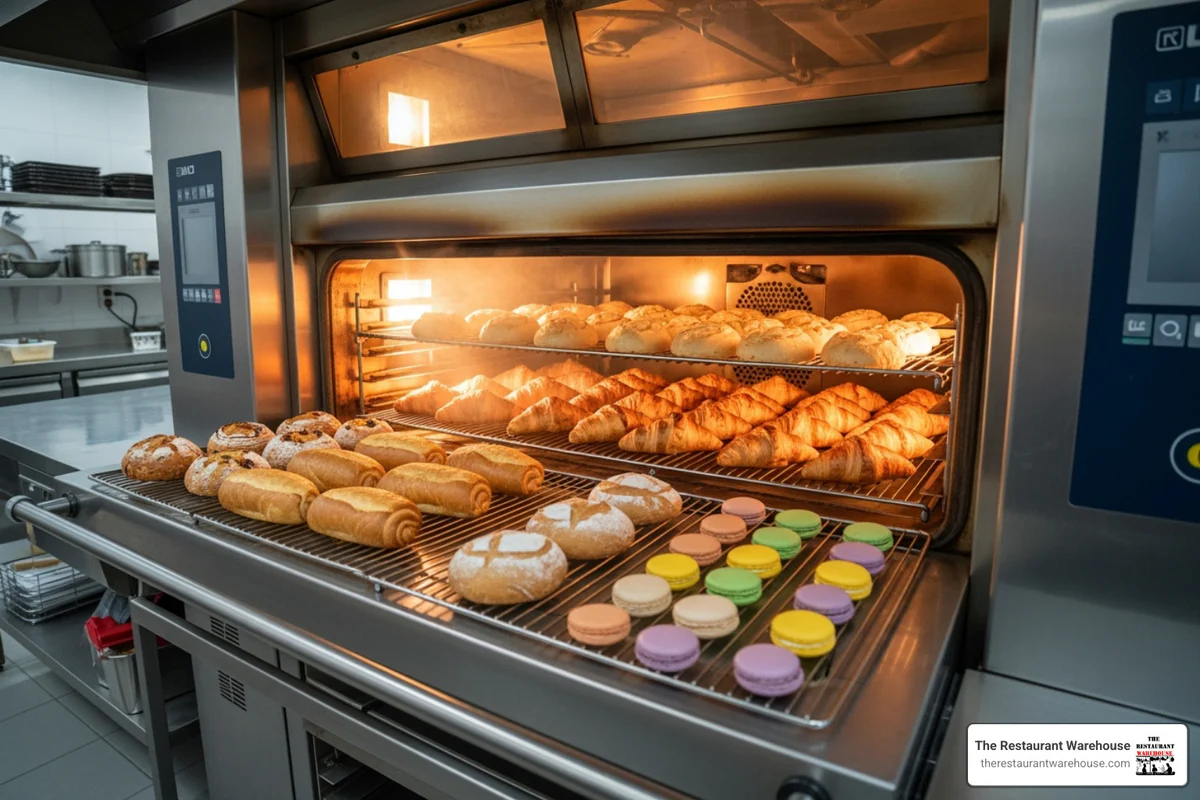
The bakery industry has become one of the most dynamic sectors in the global food market. Every day, millions of consumers purchase bread, cakes, pastries, and other baked goods from bakeries, supermarkets, and food service businesses. As demand continues to increase, bakeries must focus on improving efficiency while maintaining consistent product quality.
In commercial baking environments, production speed and product consistency are extremely important. Customers expect baked goods that look appealing, taste fresh, and maintain the same quality every time they buy them. Achieving this level of consistency requires modern equipment designed for professional bakery operations.
For this reason, many bakery businesses invest in equipment developed by an experienced oven manufacturer that understands the technical needs of commercial baking. Professional bakery ovens are designed to maintain stable heat levels, ensure even baking, and support large production volumes without sacrificing product quality.
Why Commercial Ovens Are Essential for Bakery Production
In every bakery, the oven is the center of the entire production process. Once dough or batter is prepared, it must go through the baking stage where heat transforms it into the final product. The baking process affects several critical aspects of the product, including texture, color, aroma, and taste.
If the oven does not perform properly, baked goods may develop uneven crusts, inconsistent textures, or incorrect baking color. These issues can reduce product quality and create unnecessary waste.
A reliable commercial oven helps bakeries achieve several important advantages:
- Consistent baking across multiple batches
- Uniform heat distribution throughout the oven chamber
- Reliable baking times for different products
- Better crust formation for bread products
- Reduced product waste
These benefits allow bakeries to maintain high product standards while improving production efficiency.
Different Types of Bakery Ovens Used in the Industry
Commercial bakeries use several different types of ovens depending on their production scale and the products they manufacture. Each oven type offers specific advantages that help bakeries improve their operations.
Deck Ovens
Deck ovens are widely used in artisan bakeries and traditional bread shops. These ovens provide strong bottom heat that helps create crispy crusts and properly structured bread.
Deck ovens are commonly used for baking:
- Artisan bread
- Baguettes
- Sourdough loaves
- Rustic bakery products
Convection Ovens
Convection ovens use fans to circulate hot air throughout the oven chamber. This technology ensures that heat spreads evenly, allowing products to bake faster and more uniformly.
They are commonly used for:
- Cakes
- Cookies
- Muffins
- Cupcakes
- Pastries
Rotary Rack Ovens
Rotary rack ovens are designed for bakeries that produce large quantities of baked goods every day. Baking racks rotate inside the oven so that each tray receives equal heat exposure.
These ovens are ideal for commercial bakeries that require consistent results across large production batches.
Tunnel Ovens
Tunnel ovens are used in industrial baking environments where continuous production is required. Products move through the oven on conveyor belts, allowing bakeries to produce large quantities of baked goods efficiently.
Key Features of Modern Bakery Ovens
Modern bakery ovens include advanced technologies that help improve baking performance and production efficiency. These features allow bakeries to maintain consistent quality even when producing large quantities of baked goods.
Even Heat Distribution
Even heat distribution ensures that every product inside the oven receives the same temperature exposure. This prevents uneven baking and improves product consistency.
Precise Temperature Control
Accurate temperature control is essential for professional baking. Different products require different baking temperatures, and precise controls help bakers achieve the best results.
Steam Injection Systems
Steam injection technology is particularly useful for baking bread. It helps create a crisp crust while maintaining a soft interior.
Energy Efficiency
Energy-efficient ovens help bakeries reduce operational costs. Modern ovens use advanced insulation and heating systems that reduce energy consumption.
How Modern Equipment Improves Bakery Efficiency
As bakery businesses grow, they must produce larger quantities of baked goods while maintaining product quality. This requires equipment that can support continuous production and consistent results.
Many bakery professionals choose equipment from a trusted oven manufacturer because experienced manufacturers design ovens specifically for commercial baking environments.
Modern bakery ovens often include features such as:
- Digital control systems for precise baking settings
- Programmable baking cycles for consistent results
- Improved insulation for better energy efficiency
- Advanced heating systems for even baking
These technologies allow bakeries to increase production without compromising product quality.
Supporting Bakery Growth with Reliable Equipment
The global demand for baked goods continues to grow as consumers look for fresh and high-quality bakery products. To meet this demand, bakeries must invest in reliable equipment that supports both productivity and consistency.
During their search for professional bakery equipment, many bakery owners explore solutions provided by Mirabake.com, a company known for manufacturing modern bakery machines designed for commercial baking environments.
Reliable equipment manufacturers help bakeries maintain consistent production while improving operational efficiency and product quality.
The Long-Term Benefits of Investing in Professional Bakery Ovens
Investing in professional bakery equipment provides long-term benefits for bakery businesses. A high-quality oven helps bakeries improve their workflow, reduce product waste, and maintain consistent baking results.
Some key advantages include:
- Improved production efficiency
- Consistent product quality
- Reduced operational challenges
- Better energy management
These benefits help bakeries operate more effectively and compete in a rapidly growing market.
Conclusion
The oven is one of the most important pieces of equipment in any bakery operation. It directly influences the quality, appearance, and consistency of baked goods. For bakery businesses that want to grow and maintain high product standards, investing in reliable commercial ovens is essential.
Modern bakery ovens are designed with advanced technology that supports efficient production and consistent baking results. By choosing high-quality equipment and working with experienced manufacturers, bakeries can improve their productivity and meet the increasing demand for baked goods.
As the bakery industry continues to expand, businesses that invest in reliable equipment and modern baking technology will be better positioned to succeed in an increasingly competitive market.
