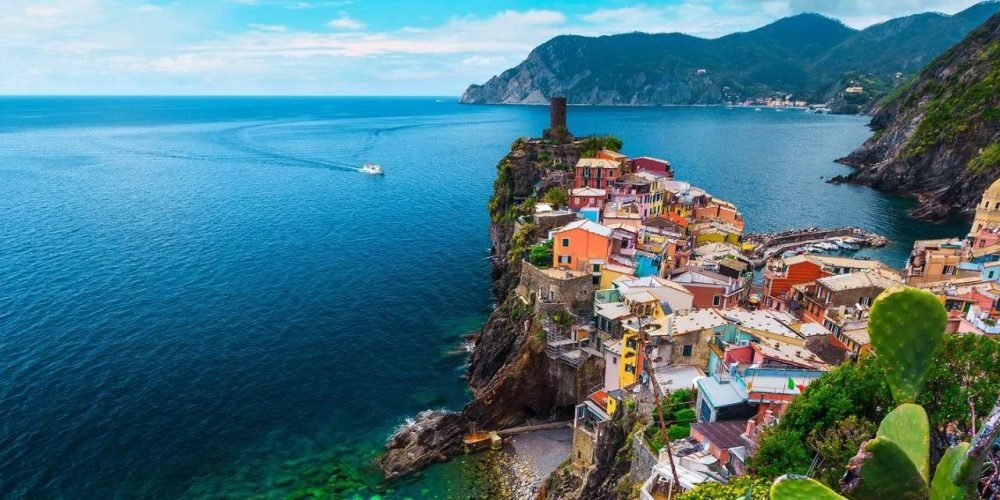
There is a particular kind of traveler who arrives in Madeira expecting a beach holiday and leaves slightly shaken — in the best possible way. The island refuses to be one thing. In the space of a single day, you can stand above the clouds on a volcanic peak, wander through a centuries-old laurel forest that predates the Ice Age, share a table with locals at a street festival that smells of charcoal and bay leaf, and finish the evening watching the sun dissolve into the Atlantic from the deck of a private yacht. No itinerary prepares you for the scale of it.
Summer is Madeira’s most vivid season, but it also demands a certain strategy. The island’s most famous spots attract serious crowds between July and September. Getting the most out of your visit means understanding the rhythms of the place — when to go high, when to go deep into the villages, and when to leave the shore entirely.
Go High to Stay Cool
The paradox of a Madeira summer is that the hottest days on the coast often coincide with the most perfect conditions in the mountains. The central highlands — accessible within forty minutes from Funchal — operate in an entirely different climate. Temperatures rarely exceed 18°C at altitude, and the ancient laurisilva forests that cover the interior have been absorbing moisture from Atlantic clouds for millions of years. Walking through them feels less like hiking and more like stepping into a landscape from before human memory.
The levada system is the key to this world. These narrow irrigation channels, some carved into cliff faces by hand centuries ago, double as walking trails. Avoid the well-publicized 25 Fontes route in peak season — the parking lot fills before 8am. Instead, head to the Levada do Caldeirão Verde in the early morning: a 13-kilometre return trail through tunnels and forest so dense that midday light barely reaches the path. You will almost certainly finish it before the tour buses have cleared Funchal.
If you want one definitive Madeira moment, set an alarm for 4:30am and drive to Pico do Arieiro. At 1,818 metres, the summit sits above the cloud layer. Watching the sun rise over a sea of white cloud, with volcanic peaks breaking through like islands, recalibrates your sense of what a landscape can do. By 9am, the car park is full. By 7am, you will already be on your way back down.
The Arraiais: What Summer Actually Means Here
For most of the island’s population, summer is not about the mountains or the beaches. It is about the arraiais — the traditional village festivals that run from June through August and represent Madeira’s most unguarded version of itself.
These are neighbourhood affairs, not tourist events. Narrow streets are strung with flower garlands and coloured lights. Tables appear on cobblestones. Local associations set up grills, and the smell of espetada — thick beef skewers roasted on bay laurel branches over open wood fire — drifts through the whole quarter. Espetada is not something you find recreated convincingly in a restaurant. It requires the wood smoke, the communal atmosphere, and the specific weight of a skewer hung from a horizontal hook over the table. This is the definitive version.
Follow the espetada with a glass of poncha — a local spirit made from aguardente de cana, honey, and citrus, mixed to order in a wooden vessel using a carved wooden pestle called a caralhinho. Every village has its preferred recipe. Every local has a strong opinion about whose is better. Getting drawn into that argument is exactly the kind of cultural immersion that no guided tour can manufacture.
The festival calendar is not centralized — the best approach is to ask your accommodation or check local noticeboards on arrival. The most famous is the Santo António festival in June, centered on Funchal, but smaller village arraiais scattered through July and August often feel more intimate and more alive.
The Atlantic: The Part Most Visitors Miss
Here is something that photographs of Madeira rarely convey: the coastline is mostly cliffs. There are very few beaches in the traditional sense — Porto Moniz’s natural lava pools and a handful of pebble coves are the exceptions, and in peak season they hold more people than they were ever designed for. The island’s true relationship with the ocean is not horizontal. It is vertical, dramatic, and best understood from the water.
To truly comprehend this verticality, a yacht rental in Madeira transitions from a simple luxury to a tactical necessity. Leaving the coast on a private boat changes your entire reading of the island. From the sea, the scale becomes apparent — cliff faces dropping hundreds of metres, lava formations that look like the edge of a continent, the deep-water colour shifting from teal to near-black as the bottom falls away. This is not a different perspective on Madeira. It is a different island entirely.
Divine Boats operates two vessels out of Funchal: a Starfisher 34 — an 11-metre yacht powered by twin 250hp engines, suited for longer ocean excursions and groups — and a Zodiac Pro Open 5.5 RIB, a more agile craft built for reaching tight coastal spots and shallow coves. The difference matters in practice. The Starfisher is the right choice for a full-day circumnavigation or a fishing trip into deep water; the Zodiac gets you into places where the cliff face almost closes overhead and the water is so clear you can see the bottom at fifteen metres.
One such place is the waters off Fajã dos Padres — a strip of cultivated land accessible only by cable car or by sea, where small-batch wine has been produced since the 16th century. Arriving by boat, cutting the engine and swimming in from anchor, feels entirely different from descending the cable car with forty other visitors. The logistics are the same. The experience is not.
Madeira’s deep water draws serious marine life: blue and white marlin, yellowfin and bigeye tuna, wahoo, dorado, and the island’s famed black scabbard fish. A fishing trip with a captain who knows these currents is a half-day commitment that most visitors never consider — which is precisely why it remains one of the least crowded and most memorable things the island offers. You do not need to be a dedicated angler. The experience of trolling in open Atlantic water, far enough from shore that Madeira is just a dark shape on the horizon, is something in itself.
For those who prefer the water to stay below them, dolphin watching in the open ocean and snorkeling at the island’s best coastal spots can be combined into a single charter, paced to your preference rather than a fixed excursion schedule. The distinction between a private charter and a mass excursion catamaran is simply this: on the catamaran, the dolphins are a scheduled stop. On a private boat, they are an encounter.
The Art of the Madeira Summer
The best Madeira summer week looks something like this: mornings in the mountains while the coast is still warming up, afternoons in Funchal or along the south coast, evenings at whichever village festival is happening within range. And then, once or twice during the trip, a full day given entirely to the Atlantic.
This rhythm does more than just fill a schedule; it physically alters the way you perceive time on the island. The sheer verticality of the morning hikes demands exertion and focus, pulling you completely into the present moment. By the time you descend to the coastal heat, the relaxation feels earned rather than enforced. Transitioning from the raw, silent altitude of the peaks to the chaotic, smoke-scented warmth of an evening arraial creates a sensory contrast that prevents the days from blurring together into a single, indistinct memory.
Approaching your itinerary this way is the secret to elevating a standard trip into a truly transformative vacation in Madeira. It requires abandoning the instinct to stay tethered to a single hotel pool or a familiar stretch of pebble beach. The island is too dynamic, too layered to be experienced passively. You have to be willing to follow the shifting microclimates, chasing the morning sun above the cloud line and retreating to the open water when the afternoon heat settles over the southern slopes.
Ultimately, the island rewards visitors who treat it as a series of distinct, colliding environments rather than a homogenous destination. Most people see one of these elements well, returning home with photographs of a singular perspective. The ones who leave with the clearest, most enduring memories of the place tend to have moved fluidly between all three — the stone, the streets, and the sea.