
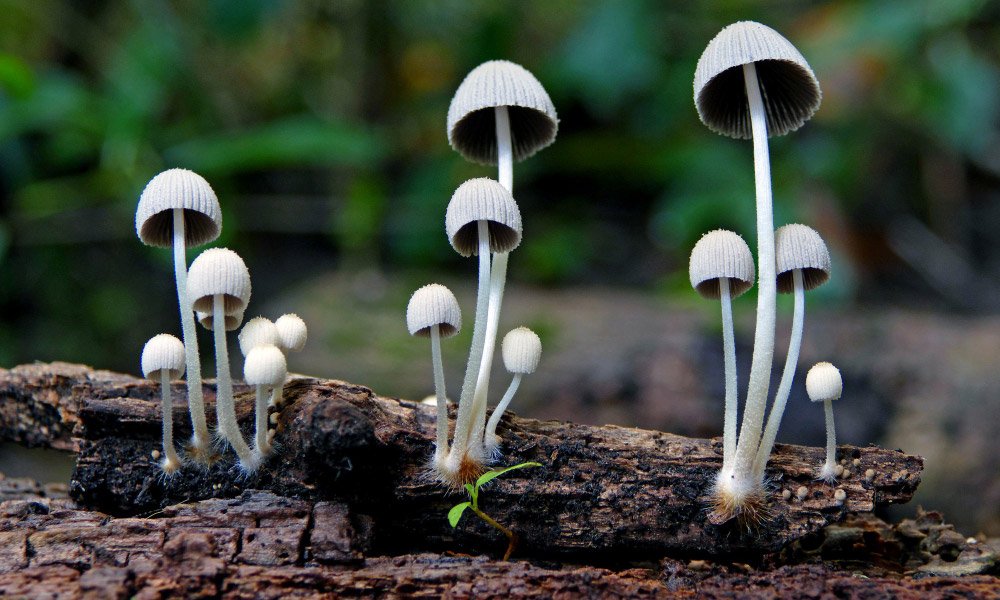
AI recognizes mushrooms from photos by analyzing visual patterns—like cap shape, gill structure, color, and texture—then matching them against trained datasets using advanced models such as Convolutional Neural Networks.
When a user uploads an image, the system extracts key features, compares them with thousands of labeled mushroom images, and predicts the closest match within seconds.
This process allows even beginners to identify mushrooms quickly, without needing deep knowledge of fungi.
What Happens When You Upload a Mushroom Photo? (AI Workflow Explained)
When you upload a mushroom image, AI doesn’t just “see” a picture—it breaks it down into structured data.
The system processes the image step by step, converting visual details into patterns it can understand and compare.
Step-by-Step AI Workflow
- Image Input – A photo is uploaded or captured
- Preprocessing – The image is cleaned (lighting, noise, focus adjusted)
- Feature Extraction – Key characteristics are identified
- Pattern Matching – Compared with trained datasets
- Prediction Output – Species suggestions are generated
Key Features AI Detects
- Cap shape (convex, flat, bell-shaped)
- Gills, pores, or ridges
- Stem thickness and surface
- Color patterns and gradients
- Texture (smooth, scaly, sticky)
All of this happens in seconds.
The Role of Machine Learning & Computer Vision in Mushroom Identification
AI mushroom recognition is powered by a combination of intelligent technologies.
These systems learn from data and improve over time, making them more accurate with each update.
Core Technologies Explained
- Machine Learning – Learns patterns from large datasets
- Deep Learning – Enhances accuracy through layered models
- Image Recognition – Interprets visual content
These technologies work together to simulate expert-level identification.
Why Mushroom Identification Is Challenging (Mycology Perspective)
Mushroom identification is a complex skill within Mycology.
Many mushrooms appear visually similar, making it difficult to distinguish between safe and toxic species.
Common Identification Challenges
- Lookalike species with minor differences
- Environmental factors changing appearance
- Growth stages altering structure
- Need for microscopic or spore analysis
Example
The genus Amanita includes some of the most dangerous mushrooms, yet many resemble edible varieties.
AI helps reduce misidentification risks by providing quick, data-driven insights.
Mushroom Identifiers: AI That Recognizes Mushrooms in Seconds
If you want a tool that applies this technology instantly, https://mushroomidentifiers.com/ is built specifically for fast and simple mushroom recognition.
It uses advanced AI models trained on diverse fungal datasets to deliver accurate results in seconds.
What Makes It Effective
- Instant identification from a single photo
- Beginner-friendly interface
- Smart pattern recognition
- Works across different mushroom species worldwide
This makes it ideal for anyone who wants quick and reliable answers without complexity.
How AI Compares Your Photo to Thousands of Mushrooms
After extracting features, AI compares your image with massive datasets.
These datasets contain labeled images of different mushroom species collected from various environments.
How Matching Works
- The system calculates similarity scores
- It ranks possible matches
- It filters out unlikely species
- It presents top predictions
Output You Typically Get
- Species name
- Confidence percentage
- Similar-looking alternatives
This helps users make informed decisions rather than relying on a single guess.
Accuracy of AI Mushroom Recognition (What You Should Know)
AI can be highly accurate, but it depends on several factors.
Even advanced systems are influenced by image quality and dataset limitations.
Factors Affecting Accuracy
- Image clarity and lighting
- Angle and visibility of key features
- Diversity of training data
- Model updates and improvements
Important Safety Note
AI should never be the sole basis for consuming wild mushrooms. Always verify with experts when safety is involved.
Benefits of Using AI for Mushroom Identification
AI simplifies a complex process and makes it accessible to everyone.
Key Benefits
- Speed – Results in seconds
- Ease of Use – No expertise required
- Data-Based Insights – Reliable suggestions
- Safety Awareness – Highlights potential risks
- Accessibility – Works anywhere
These benefits make AI especially valuable for beginners.
Real-World Example: From Photo to Identification
Imagine you’re hiking and spot a mushroom you’ve never seen before.
You take a photo and upload it to Mushroom Identifiers. Within seconds, the AI analyzes the image and suggests possible matches along with useful details.
Instead of guessing, you now have clear, data-backed insights.
The Future of AI in Mushroom Recognition
AI is evolving rapidly, and its capabilities will continue to expand.
Future systems will be faster, smarter, and even more accurate.
What’s Next?
- Real-time camera-based identification
- Offline AI tools for remote areas
- Integration with global biodiversity systems
- Improved accuracy through larger datasets
These advancements will make mushroom recognition even more seamless.
Final Thoughts
AI has transformed how we identify mushrooms, turning a complex and risky task into something simple and fast. By analyzing visual features and comparing them with trained datasets, AI tools can recognize mushrooms in seconds.
Tools like Mushroom Identifiers make this technology accessible to everyone, especially beginners. However, responsible use is essential—AI should guide your decisions, not replace expert judgment.
With the right approach, AI becomes a powerful companion for exploring the natural world.