
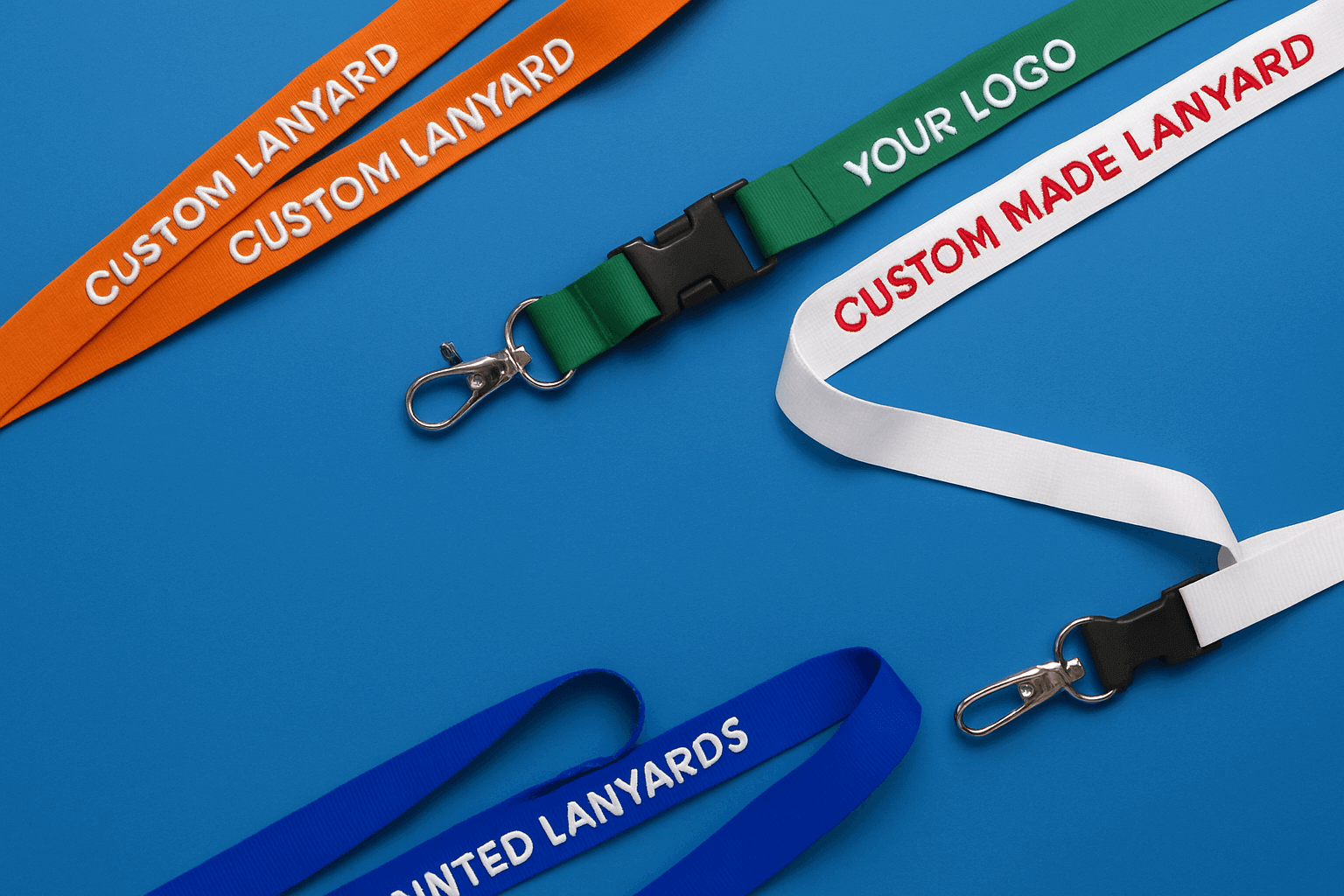
Ordering custom lanyards looks simple. Pick a color, add a logo, place the order. In reality, small mistakes can ruin usability, waste budget, and damage brand perception.
If you want lanyards that people actually wear, you need to focus on function first, then design. This guide breaks down the most common mistakes and how to avoid them.
Ignoring Material Quality
The biggest mistake is choosing the cheapest material.
Low-quality lanyards:
- Fray quickly
- Feel rough on the neck
- Fade after short use
This leads to people removing them early. That kills your visibility.
Polyester works for most cases. Nylon feels more premium. Woven options last longer. The right material depends on how often the lanyard will be used.
Poor material choice is one of the fastest ways to waste your investment.
Overcomplicating the Design
Many buyers try to fit too much into a small space.
Common design issues:
- Too much text
- Multiple colors with no balance
- Complex patterns that reduce readability
Clean designs perform better. Simple logos, consistent spacing, and limited colors make the lanyard easier to read and more professional.
Complex designs often look cluttered and lose impact when worn.
Poor Logo Placement
A logo placed in the wrong position becomes invisible.
If the logo sits too high, it hides behind the neck. If it appears only once, it disappears when the strap rotates.
Best approach:
- Use repeated logo placement across the strap
- Keep branding centered and evenly spaced
This ensures visibility from every angle.
Low-Quality Artwork Files
Design quality depends on the file you provide.
Common mistakes:
- Uploading low-resolution images
- Using compressed JPEG files
- Not checking print previews
This results in blurry or pixelated prints.
Always use:
- Vector files (AI, SVG, EPS)
- High-resolution PDFs
Low-quality artwork directly affects the final product.
Choosing the Wrong Width
Width affects both comfort and branding space.
Too thin:
- Digs into the neck
- Looks cheap
- Limits design visibility
Too wide:
- Feels bulky
- Becomes uncomfortable over time
A balanced width around 15mm to 20mm works best for most use cases.
Ignoring Comfort
If a lanyard feels uncomfortable, people remove it. That is the reality.
Comfort issues include:
- Rough fabric
- Poor stitching
- Heavy attachments
A good lanyard should feel almost unnoticeable during use. Comfort drives usage more than design.
Skipping Safety Features
Many buyers ignore safety components like breakaway clasps.
This creates risks in:
- Crowded events
- Work environments
- Schools or industrial settings
Breakaway clips release under pressure and prevent injuries. Skipping them is a serious mistake in many use cases.
Choosing the Wrong Attachments
Attachments affect daily usability more than most people expect.
Common issues:
- Weak clips that break
- Mismatched badge holders
- Non-rotating hooks that twist the strap
Choose based on use:
- Swivel hooks for events
- Detachable buckles for offices
- Strong clips for heavier items
Poor attachment choices reduce functionality and lifespan.
Not Planning Quantity Properly
Ordering too few lanyards creates problems.
You may:
- Run out during events
- Pay more for urgent reorders
- Miss bulk pricing benefits
Always order extra units. People lose or damage lanyards more often than expected.
Ignoring Production Time
Many buyers leave orders to the last minute.
Custom lanyards require:
- Design approval
- Production
- Shipping time
Rushing increases the risk of errors and limits your ability to fix issues.
Plan ahead. Give enough time for revisions and delivery.
Choosing the Wrong Supplier
The supplier matters as much as the product.
Red flags:
- Extremely low pricing
- No reviews or samples
- No clear contact details
Reliable suppliers provide:
- Clear specs
- Design proofs
- Consistent quality
Working with trusted providers like 4inlanyards helps reduce risk by offering better customization control, reliable production, and consistent output quality.
Choosing the wrong vendor often leads to poor results, regardless of your design.
Final Takeaway
Most custom lanyard failures come from simple, avoidable mistakes. Poor material, bad design choices, and rushed decisions reduce both usability and brand impact.
Focus on:
- Comfort and material first
- Clean and readable design
- Proper sizing and attachments
- Reliable suppliers
- Enough production time
A well-made lanyard does not draw attention for the wrong reasons. It works quietly, feels comfortable, and keeps your brand visible all day.
