
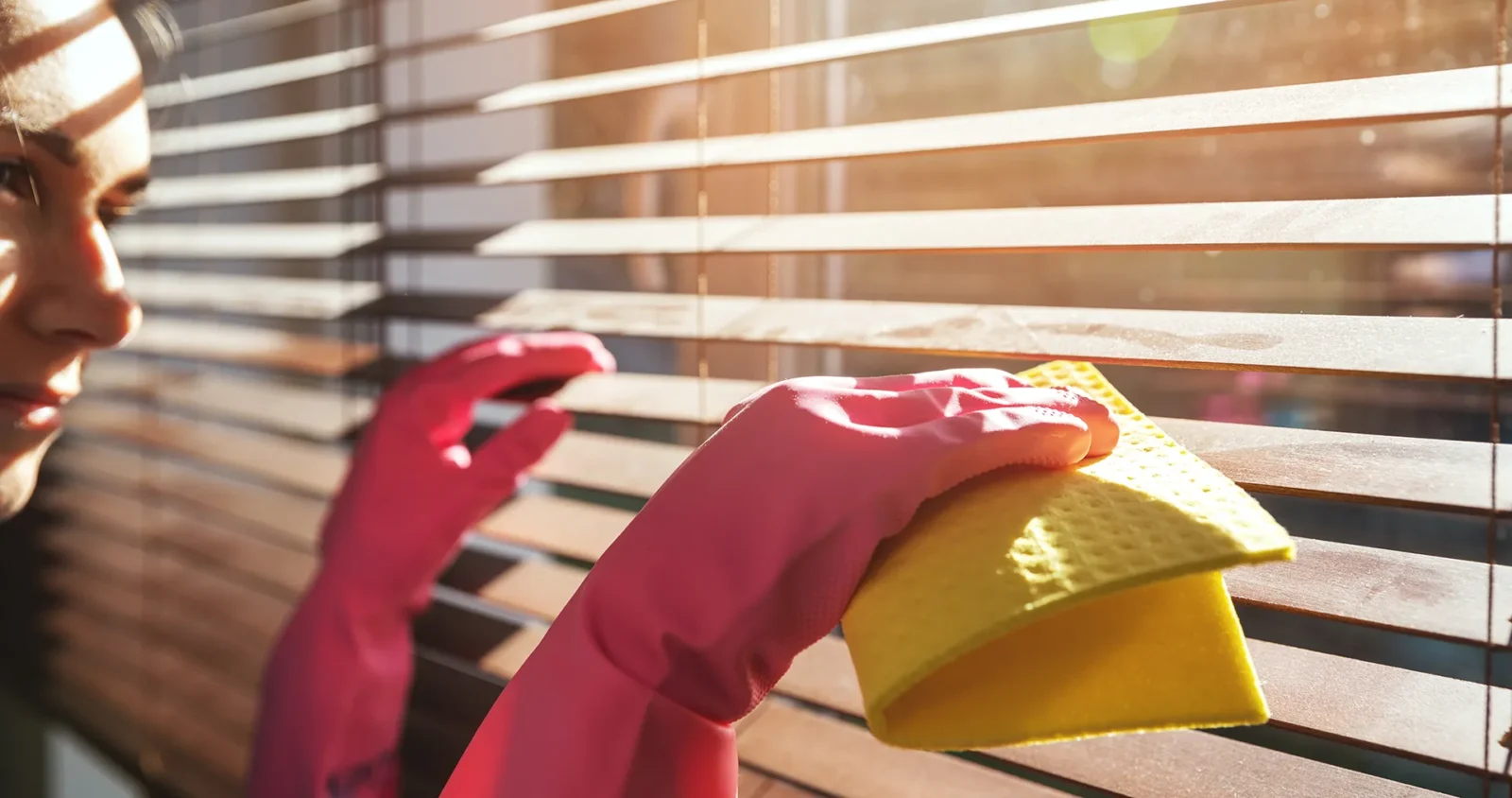
You’ve walked past your living room curtains a thousand times. Then, one sunny afternoon, the light hits at just the right angle, and suddenly you can see every speck of dust and questionable stain you’ve been blissfully unaware of for months.
The good news is that with a bit of know-how and the right technique, you’ll have those blinds and curtains looking sharp again before you know it.
So, if you’re ready to tackle the grime without breaking a sweat, here’s how to get it sorted.
Check the Material
Before you start spraying or scrubbing anything, take a moment to figure out what your blinds and curtains are made of.
Most curtains have a care label tucked into a side seam or along the back. It might be small and slightly annoying to find, but it’s worth checking.
Those washing symbols can save you from shrinking delicate fabric or damaging a lining that wasn’t meant for the washing machine.
If you can’t find a label, a quick online search should point you in the right direction. Once you know whether you’ve got polyester, faux wood, or actual timber, you can clean confidently instead of cautiously guessing.
Grab Your Cleaning Kit
Now that you know what you’re dealing with, let’s gather the essentials. You don’t need a cupboard full of fancy products—just a few reliable basics.
A vacuum with a brush attachment is ideal for lifting dust without damaging fabric or slats. Add a microfibre cloth, some mild washing-up liquid, and a bowl of warm water, and you’ve covered most scenarios.
If you prefer eco-friendly options, there are plenty that work just as well as conventional cleaners.
But before you rush out to buy anything new, check what you already have. There’s a good chance the solution you need is sitting under the sink, waiting to be used properly.
Dust Everything First
This is the bit most people skip, and it’s the most important. Dusting removes the surface layer of grime before it gets worked deeper into the fabric or slats.
For blinds, set your hoover to its lowest suction setting and attach the soft brush. Run it gently across each slat, working from top to bottom.
Fabric curtains respond better to a soft microfibre cloth. Just give them a gentle wipe-down. It’s oddly satisfying, and you’ll be amazed at how much cleaner they look straightaway.
Make this a monthly habit. It only takes about 15 minutes and saves you from needing a proper deep clean quite so often.
Tackle Stains Quickly
Stains have a talent for appearing at the worst possible moment. One minute, everything looks fine, and the next, you’re staring at a suspicious splash and trying to remember who was holding the red wine.
As soon as you spot a mark, blot it with a clean, dry cloth to absorb as much liquid as possible before adding any water. The less moisture left sitting in the fibres, the easier the cleanup will be.
Once you’ve lifted the excess, use a small amount of mild soapy water and gently dab the area.
Work from the outside of the stain inward. That simple technique stops it from spreading and keeps the affected area contained. And don’t soak the fabric, as too much water can leave tide marks once it dries.
Finally, keep a small spray bottle of diluted washing-up liquid within reach so you can act fast. Fresh stains are always easier to lift than ones that have had time to settle in and make themselves at home.
Go Deep When Needed
Every few months, your blinds and curtains need more than a quick dust. This is where the real cleaning happens.
For machine-washable fabric curtains, check the label one more time to confirm. Remove any hooks or rings, pop them in the washing machine on a gentle cycle with cold water, and use a mild detergent. Skip the bleach entirely unless you fancy turning your navy curtains baby blue.
If you don’t have a washing machine at home or the one you’ve got isn’t big enough, your tub is a great alternative.
Fill it with cold soapy water, let the curtains soak for about 30 minutes, rinse everything thoroughly, and squeeze out the excess water.
For vinyl or faux wood blinds, mix warm water with a drop of washing-up liquid, give them a soak if they’re particularly grimy, then wipe down each slat with a sponge. Rinse them with a damp cloth and dry them before hanging them back up.
Wooden blinds are a bit more delicate. Too much water, and they’ll warp, so use a barely damp cloth and work quickly.
Dry Them Properly
You’ve done all the hard work cleaning your curtains. So, don’t sabotage it at the finish line by chucking them over the shower rail.
If you have curtains, hang them back on the rail while they’re still slightly damp. The weight of the fabric will pull out creases naturally, so they’ll dry smooth instead of crumpled.
Just make sure the room has decent airflow. Crack a window or switch on a fan so moisture doesn’t linger.
Keep them out of direct sunlight while they dry. Sunlight can fade fabric surprisingly quickly, especially darker colours or delicate materials. Bright light is fine, just avoid harsh, prolonged exposure.
For blinds, wipe each slat thoroughly and allow them to dry fully before rehanging them. Moisture trapped between slats, especially in bathrooms or kitchens, creates the perfect conditions for mould. So, a quick extra check now will save you from dealing with that later.
Know When to Get Help
Sometimes, you just don’t have the time, energy, or inclination to tackle this yourself, and that’s completely fine.
If your curtains are particularly delicate, antique, or just a nightmare to reach, bringing in a professional makes total sense. Many domestic cleaning services in the UK offer specialist treatments for different fabrics.
They have industrial equipment and years of experience dealing with everything from silk drapes to plantation shutters.
If you hire a cleaner regularly anyway, ask if curtain and blind cleaning is included. Often it is, and you might not even need to do anything except point them in the right direction.
Conclusion
You now know how to keep your blinds and curtains from becoming a biohazard without dedicating your weekend to it.
So, set a reminder on your phone for a monthly dust and deal with spills. The next time someone comments on how fresh your place looks, you’ll know it’s partly down to those surprisingly clean curtains.
