
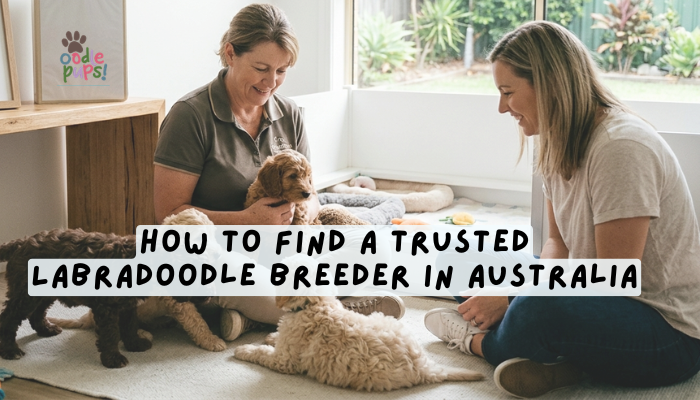
Finding a trusted Labradoodle breeder in Australia starts with knowing what to look for. You want someone who health tests their parent dogs, raises puppies in a home setting, and offers ongoing support.
After all, this is a dog who’ll be part of your family for 12 to 15 years (hopefully more). So picking the wrong breeder means you could end up facing big vet bills, behavioural issues, or even heartbreak. At oodle pups, we breed multigenerational Australian Labradoodles in Brisbane with RightPaw certification.
And unfortunately, we’ve seen how demand for oodle puppies in Australia has led some sellers to skip health testing and ignore basic animal welfare standards. That is why this article will give you practical ways to spot ethical breeders and avoid the rest.
But first, you need to understand what actually separates ethical breeders from the others.
What Sets Ethical and Responsible Dog Breeders Apart
Ethical dog breeders in Australia put health, temperament, and animal welfare before profit. Here are the signs that tell them apart from the rest.
The Core Principles of Ethical Breeders
As we mentioned before, a responsible breeder will always prioritise the well-being of their dogs over profit. That means proper vet care, good nutrition, and clean living conditions for every dog on their premises.
They’ll also limit how often their dogs breed. In NSW, for example, the law now sets a maximum of five litters or three caesarean deliveries for female dogs (depending on which limit is reached first).
But remember that good breeders were already doing this long before the law required it.
Why Choosing a Registered Breeder Is Important
A registered breeder has agreed to follow a formal code of ethics, and they can be held accountable if they break it. As part of this, organisations like Dogs NSW require members to pass exams, have their premises inspected, and register every puppy in a litter.
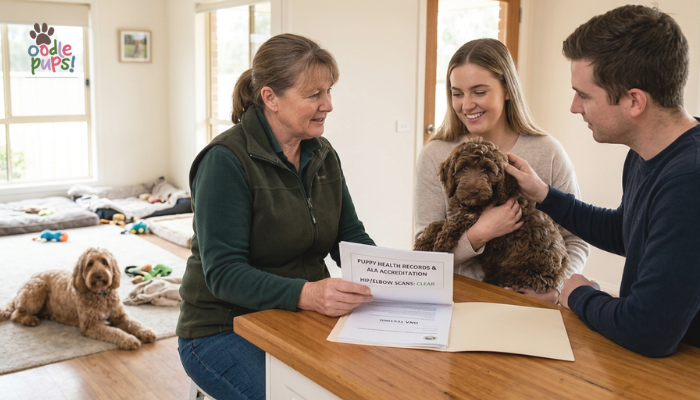
For Australian Labradoodles, the Australian Labradoodle Association (ALA) applies even stricter rules. They require hip, elbow, and DNA testing on all breeding dogs before registration to reduce the risk of inherited health problems being passed on to puppies.
So if you notice poor breeding practices or suspect a breeder is not following the rules, their website has a complaints process you can turn to.
Transparency Is Non-Negotiable
A breeder you can trust will answer your questions openly and clearly. They will also share health test results, genetic history, and vaccination records without hesitation.
From what we have seen, good breeders welcome visits as well. This means they often show photos, videos, or even the actual space where the puppies are raised.
That’s why if a breeder refuses to show where the dogs live, treat that as a serious warning sign.
Ongoing Support for New Owners
Your relationship with your breeder shouldn’t end once you bring your puppy home. After all, as a new puppy owner, you’ll have questions about feeding, training, and helping your dog settle in during the first few nights.
A responsible breeder will support you through this stage by giving clear advice on care, feeding, and basic training. In fact, ALA-accredited breeders must also help rehome any dogs they’ve bred if a family ever needs that support.
This ongoing support shows real commitment and can help build long-term trust between breeders and the families who adopt their puppies.
What a Responsible Breeder Experience Feels Like
A good breeder experience feels relaxed from the very start. This is what that looks like in practice:
- No Pressure on Timing: A responsible breeder will give you time to decide and never push you to pay a deposit or commit too quickly. Because they understand that bringing a puppy home is a long-term decision.
- Clear, Honest Communication: You’ll get direct answers at every stage of contact, including early enquiries and pickup day. In other words, they’ll avoid vague responses and keep information easy to understand.
- You Feel Supported Throughout: Finally, every interaction with your breeder should leave you feeling informed and confident in your decision.
If any part of your experience feels pushy or confusing, it’s worth stepping back to reconsider.
The right breeder will never rush you into a sale. And if they do, it’s a sign that the breeder may not be following proper ethical standards or putting the puppies’ well-being first.
Your Puppy Buying Guide: How to Confidently Choose Between Dog Breeders
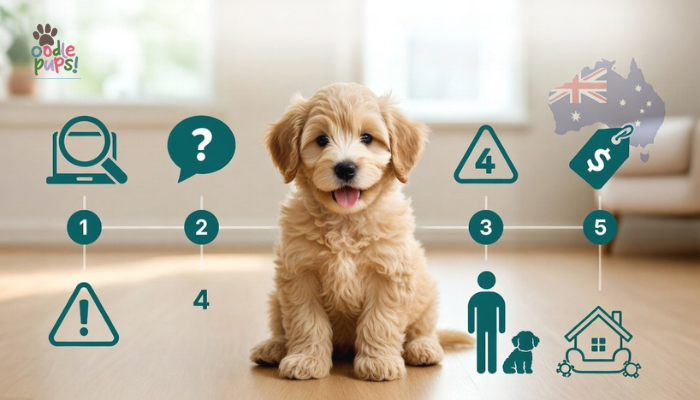
A good puppy buying guide starts with a clear process. You need to know how to search for dog breeders, what questions to ask them, and which warning signs to watch for. This section will share the step-by-step approach that covers all of it.
Step 1: Shortlist and Verify Dog Breeders Australia
Start your search on trusted platforms, like RightPaw. It’s one of the most well-known in Australia, and it verifies breeders through health record checks and a virtual property inspection.
The Australian Labradoodle Association (ALA) also lists accredited breeders who meet strict health and ethical standards.
After that, look into a few breeders that interest you. You should check their reviews, browse their social media pages, and confirm that their contact details match across different platforms. Remember, a genuine breeder will have a consistent and verifiable presence across more than one place online.
Step 2: Ask the Right Questions
The questions you ask a breeder can tell you a lot about their practices. Start by asking about health testing and requesting proof of genetic screening for the parent dogs. As we covered earlier, for Australian Labradoodles, hip and elbow scoring, along with DNA testing for inherited diseases, should be standard.
Next, you should ask about temperament and how the puppies are raised during their early weeks. This will help you understand the care and environment they receive before going home.
A good breeder will also be open about the conditions of sale, what’s included in the price, and what kind of support they offer once your puppy is home.
Step 3: Spot Red Flags Early
Before you commit, take a moment to look for warning signs:
- Always Available: Be careful with breeders who always seem to have puppies available but share very little detail about the litter or the parents. That’s often a sign of overbreeding or poor record-keeping.
- Rushed Decisions: And as you already know, pressure to commit quickly or pay a deposit before visiting is a common concern, especially when they give vague answers to your questions.
- No Transparency: Finally, a responsible breeder will let you see where the dogs live and allow you to meet the mother dog in person.
Generally, these are often common warning signs of poor breeding practices. So if they refuse any of these, it’s best to walk away.
Step 4: Understand Price vs. Value
In Australia, a well-bred Labradoodle from a reputable breeder typically costs around $3,500. That price reflects the investment behind it, including health testing, genetic screening, vet care, quality food, and proper socialisation from birth.
While a lower price may seem attractive at first, it often signals that breeders have skipped important steps like proper health testing, genetic screening, and early socialisation. This can lead to higher costs later through vet bills, training needs, or ongoing health problems.
Step 5: Match the Right Puppy to Your Lifestyle
Puppies can differ in energy level, temperament, and size, even within the same litter. Because of this, a responsible breeder will learn about your daily routine, living space, and experience with dogs before suggesting the right puppy for you.
This part of the process is actually a good sign. It shows the breeder cares about where their puppies end up, instead of just finding a quick sale. On the other hand, if a breeder lets you choose any puppy without asking questions, we recommend taking a step back and reconsider.
Step 6: Prepare for Life After Bringing Your Puppy Home
Before your puppy arrives, set up their sleeping area, food and water bowls, and a few safe toys. You should also have a vet appointment booked within the first week.
It’s a good idea to look into pet insurance early, too, since puppies usually qualify for lower premiums, and coverage can reduce unexpected costs later on. And a responsible breeder will continue to support you after the sale by advising on feeding, training, and settling your puppy into a new home.
Choose Responsible Labradoodle Breeders with Confidence
We hope this guide has helped you feel more confident about the steps involved and what good breeding practices look like.
Remember to look for responsible breeders who are open about health testing, happy for you to visit, and willing to support you long after your puppy comes home. If a breeder ticks those boxes, you’re on the right track.
A well-bred, healthy puppy will bring joy and reassurance to your family. And that all starts with the breeder you choose. So take your time, ask plenty of questions, and trust your gut when something feels off.
If you’re ready to begin your search, oodle pups is a great place to find verified, registered breeders across Australia.
