
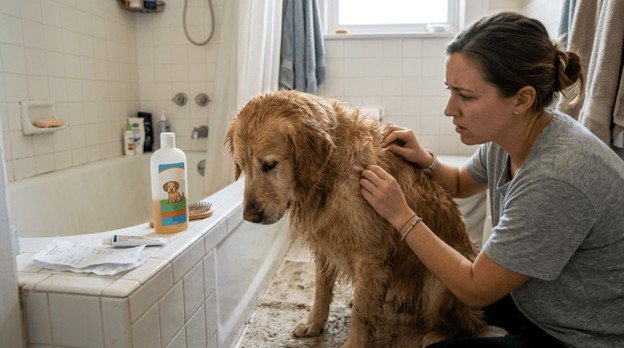
The price gap between the cheapest dog shampoo on a supermarket shelf and a mid-range option is usually a few dollars. It doesn’t feel like a consequential decision. The dog needs to be clean, the shampoo will do that, and spending more on pet hygiene products can seem like the kind of premium that’s more about marketing than actual performance difference.
That reasoning is understandable. It also tends to be wrong, and the ways it’s wrong have costs that accumulate over time in ways that aren’t immediately visible at the shelf.
What Goes Into a Cheap Dog Shampoo
Understanding why price correlates with outcome in dog shampoo requires knowing what manufacturers cut to hit a lower price point.
The most common cost reduction in budget dog shampoo is surfactant quality. The surfactants are the cleaning agents, the ingredients that lift oil and debris from the coat. Gentle, skin-compatible surfactants like decyl glucoside or sodium cocoyl isethionate are more expensive to produce than their harsher alternatives.
Sodium lauryl sulfate is a highly effective cleaner that appears in many cheap formulas because it’s inexpensive, but it strips the skin’s natural oil balance aggressively and can compromise the skin barrier with repeated use. The dog comes out clean. Over time, the repeated oil stripping creates a cycle of increased sebum production as the skin attempts to compensate, which can worsen the odor and skin condition problems that bathing was supposed to address.
The second common cut is pH. Dog skin has a different pH range from human skin, roughly 6.5 to 7.5, compared to the more acidic 4.5 to 5.5 of human skin. Formulating for the correct canine pH adds cost and requires reformulation rather than simply adapting an existing human product. Budget shampoos frequently aren’t pH-balanced for canine skin.
The consequences build slowly: a disrupted skin pH shifts the microbial balance on the skin surface, making conditions more favourable for the yeasts and bacteria that cause odor and skin irritation. It’s not dramatic. It’s gradual. And it tends to be attributed to the dog rather than the product.
Fragrance is the third area. High-quality fragrance ingredients that are genuinely low in sensitising compounds are expensive. Budget formulas tend to use cheaper fragrance blends that are more likely to contain compounds associated with contact sensitisation. Again, the effect isn’t always immediate. It can present as generalised skin sensitivity that develops over months of use, and the connection to the shampoo is rarely obvious.
The Hidden Costs That Add Up
The most direct financial cost of using a cheap dog shampoo regularly isn’t the product itself. It’s what follows.
Skin and coat problems triggered or worsened by poor-quality shampoo generate veterinary visits. A dog that develops recurring skin irritation, hot spots, or chronic dandruff attributed to “sensitive skin” or “allergies” may actually be responding to a shampoo that’s systematically disrupting its skin barrier.
The consultation fees, any prescribed treatments, and the ongoing management of a condition that has been created or worsened rather than addressed: these costs dwarf the saving on the shampoo.
Coat condition affects how often professional grooming is needed and how straightforward those sessions are. A coat that’s dry and brittle from repeated stripping shampoos is more prone to matting. More time and effort in grooming equals higher cost per session or more frequent sessions. The economics of the choice made at the supermarket shelf ripple out into the grooming schedule.
There’s also the question of efficacy. A cheap dog shampoo that doesn’t effectively address the problem it’s being used for, whether that’s odor, shedding, or skin condition, means more frequent bathing, trying to get a result the product can’t deliver. More frequent bathing with a stripping formula compounds the skin barrier problem. It’s a reinforcing cycle where the solution makes the problem worse.
What the Mid-Range Difference Buys
The jump from a budget to a mid-range dog shampoo doesn’t require a large investment in absolute terms. A few dollars more per bottle, which you can find if you click here, for a product used every two to four weeks, works out to a modest annual difference in product cost.
What that modest increase typically buys is a gentler surfactant system that cleans without stripping, a pH formulated for canine skin rather than adapted from a human formula, reduced or absent artificial fragrance, and a basic moisturising or conditioning component that leaves the coat in better condition after bathing than before.
None of these are premium features in any meaningful sense. They’re the functional baseline that a dog shampoo should meet to be appropriate for regular use on a dog. The budget products fall below this baseline not because they’re especially bad but because hitting a very low price point requires compromises that have consequences for the dog over time.
The Practical Approach
The right dog shampoo for most dogs doesn’t need to be expensive. It needs to have the right surfactants for the coat type, an appropriate pH, and minimal fragrance. That combination is achievable at a price point that won’t feel extravagant.
The test isn’t how cheap it is. It’s how the dog’s coat and skin look three months into regular use. A coat that’s improving or holding steady indicates a compatible product. A coat that’s getting drier, flakier, or more odorous despite regular bathing indicates the shampoo is contributing to the problem rather than solving it.
When the cheap option generates vet bills, it stops being cheap. That’s the calculation most people don’t make at the shelf, and it’s the one that makes the most difference.