
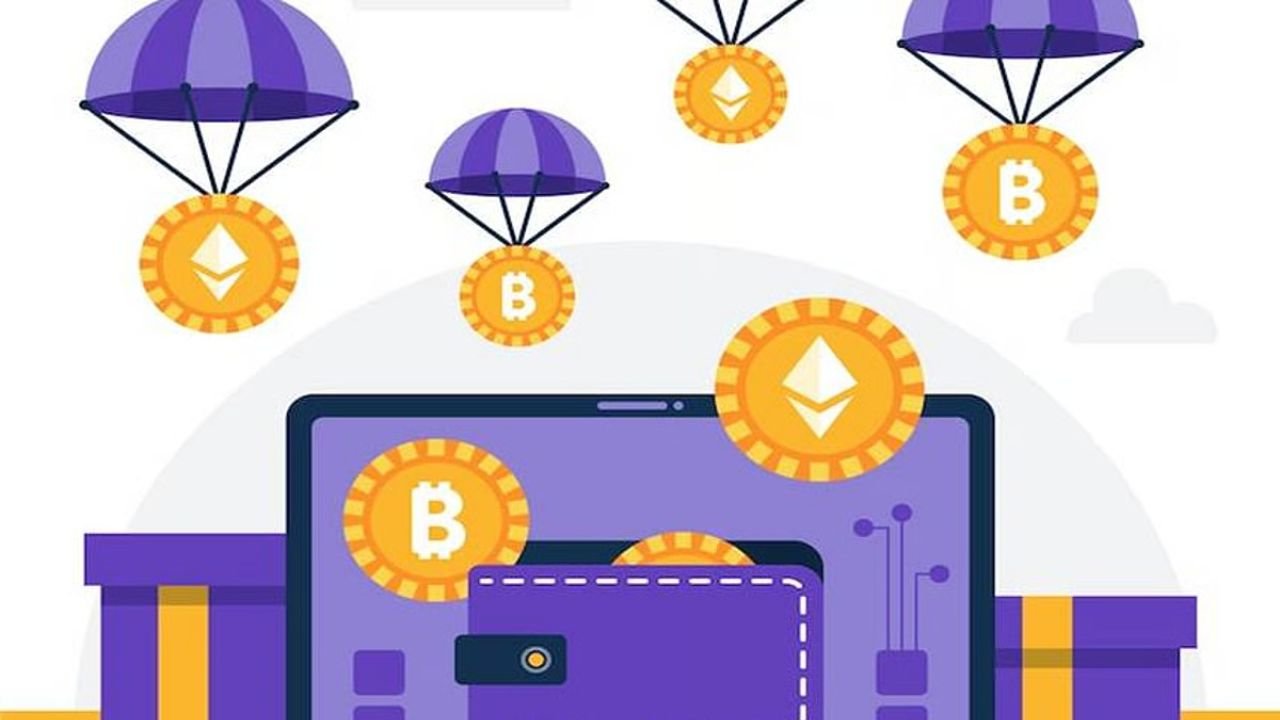
Airdrops began as a mere marketing experiment. But afterwards, they have become one of the most influential methods of distribution employed by the crypto community. Instead of raising capital through immediate sales, projects began using their tokens to give allocations to those who used, tested, and promoted them in the community, creating strong incentives for them eventually. This strategy brought alignment of incentives, acquisition of networks, and decentralization of ownership. In the present time, airdrop tokens do not mean total giveaways, but they become a strategic means of bootstrapping ecosystems and drawing in long-term participants for the future.
What Does Airdrop Token Actually Mean?
Tokens given away in airdrops are a coin, a digital asset, or a token that is distributed for free or with little participation. It is usually offered to designated wallets where some requirements are met. These specific criteria may include interacting with the protocol, possessing a certain asset, voting in governance, or being generally an active community member. The most important idea is that these recipients would have already done something to contribute to the value of the project one way or the other, even if it were simply attention, usage, or feedback.
Airdrops do not sell to customers. They instantly create an ownership economy. This is one of the reasons token airdrops can establish incredibly strong emotional and economic bonds between projects and their communities.
Reasons why most projects choose an airdrop over a direct sale:
One decentralized and fair way to make quick capital is to conduct an airdrop instead of a token sale. The token sale creates a tremendous incentive in favor of whales, with each gaining more valuable tokens compared to the others. In comparison, an airdrop is intended to distribute the tokens to as many people as possible as a reward for a specific action. Healthier decentralization is possible in the same manner; the needed foundation for organic growth should be the motive behind a significant amount of real engagement.
For signalling: unlike token sales, a project starting simply with an airdrop emphasizes the importance of the earliest support. That will create trust, whereas it will bring its stakeholders to another stage from those projects that are born out of short-term profitability. In a crowded competition, the trust factor can often determine the winner.
How airdrop eligibility is usually determined
The set itself follows rules for airdrops, and it goes without saying that several ways and other qualifying aspects vary from one airdrop to another. But spirit sums to the sum mainly, which shows willingness to participate in a direct and willing manner. Commonly used criteria for acquiring the tokens have to do with bridging assets, swapping tokens, supplying liquidity, registering to the testnets, participating in governance, and snapshot date to register the activities of a wallet at the exact date.
It lies in the spirit of equilibrium and pragmatism. When too lax, airdrops foster opportunism. When too stringent, they discourage real users. Successful airdrop campaigns go beyond single acts of reward; almost always, they dispense tokens toward a true use case where a variety of other immediate choices could gain or lose support.
There’s much more to airdrop farming than just outright profitability and blockade.
How did all such gobbledygook start to come out of those airdrop mega-events? Above all, airdrops taught that yes, airdrops are undoubtedly free money—so anything could undermine these tools if they are devoid of specific ethical overtones. In the early days of DeFi airdrops, the de facto single community built not with a sense of project purpose was momentarily left when tokens were claimed.
Attempts to make airdrops less enticing for people who may just act accordingly during activities and airdrops—we’re talking about a transition to more thoughtful design. Hiking along the well-beaten path, many more projects integrate programs with vexing schedules, activity scores, or a list of reasons to reward loyalty, with fruition geared at striking the sustainability mess.
Considerations for the batch
When compared to other scenarios, receiving an airdrop does not sound so bad. However, it is not about just claiming your money: there could be transaction fees, tax exemptions, or even losing your password to some bogus contract. It opens up other issues: should you hold, sell, consider governance, or keep it as a whole?
From a more serious perspective, the airdrop tokens can be considered as a way of seeding participation rather than overnight gain. Indeed, understanding the roadmap of a project, the utility of the token, and the direction of the community can help recipients answer the now-pervasive question—what do they want to do with the tokens?
Airdrops and community building
One of the least glorified factors of airdrops is the way they can create dynamics and culture within their community. When rewarded, users are driven to contribute feedback, share ideas, and help build the ecosystem. This creates a self-sustained loop, wherein growth around the community feeds into the improvement of the product.
Nevertheless, the quality of communication involves community. For projects where an explanation is given to the community—why and how the airdrop distribution—the participants are usually more aligned. Poor communication can turn airdrops into short-term hype events instead of tools with long-term engagement.
The Relationship between Airdrops and Token Value
Does not airdrop mean reasonable price appreciation?—but no! Interestingly, some tokens tend to hit the market and immediately face sellers’ pressure. However, this initial performance of the airdrop should not be equated with failure-early volatility; the market is discovering fair value.
The maintenance of Airdrop value in the long term depends on utility, adoption, and incentive alignment. When airdrop tokens are well designed to distribute, they are built on a base of users who have an active interest in holding the token and using it, not just selling it on the market.
Where Discovery Platforms Stand
Tracking airdrops through an ecosystem is a bit overwhelming. They are scattered across social media, leaking through Telegram, developer channels, and instances in private communities, leading to incredible information overload. Platforms that help accelerate the discovery process by providing aggregation platforms make life so much easier.
Role of Coin Launch in doubling the discovery funnel for users to explore early-stage crypto opportunities, token launches, and user-generated projects. For more casuals on airdrops, the centralized view of emerging projects makes it easier to carve out the entities in which the participation could fairly be meaningful.
Risks and responsibilities in airdrop participation
Apart from phishing attempts linked to false projects (or tokens) pretending to distribute freebies, an array of reasons need to be considered about the greater risks lurking in airdrop participation. Protection in this context will count more. All record-keeping is your responsibility. Keep precautions. Your safety counts most.
Projects also have to understand the burden that comes with airdrops. Poorly executed airdrops can ruin reputations, raise regulatory concerns, and alienate meaningful users. The best teams treat airdrop tokens as part of a long-term incentive system that won’t just vanish after one trivial marketing stunt.
How airdrops have improved
It is to be noted that airdrops are currently getting more difficult. Projects vary in the how, when, and what of their distributions: instead of simply making a flat distribution, they add on some scores, retroactively hand down rewards, and build in multi-phased incentives into the mix. Some are linking drops to governance, others to long-term use post milestones.
Another observation of increased sophistication is an industry-wide shift from airdrops as innovative experiences to airdrops built for infrastructure. Airdrops are increasingly recognized as a common way to sync users with blockchain protocols in decentralized ecosystems.
Strategies to be guided by while approaching airdrop tokens:
Give yourself some specific objectives, as I would like to see a simplification of a few strategic projects instead of following all possible directions. From all of them, the key token drop enters the heart, where all its bonds eventually make their value. Scam prevention and potential allocation once received are two rewarding aspects of airdrop each_actor.
See the Airdrop Assets Suite for educational and research purposes. The kind of how it is done and what the community is about is, therefore, invaluable under circumstances where financial gain cannot be reliably estimated.
Closing Thoughts.
AirDrop tokens have changed the way a crypto project achieves distribution of ownership and rewards participation. AirDrop tokens are no longer mere giveaways; they are the new tools that reign over democratization, community building, and long-term alignment. But they carry risks too, as well as uncertainty. However, it is a unique opportunity to engage with innovation at the earliest stage. Platforms such as CoinLaunch employ structuring so that discovery in such a noisy environment remains more organized and responsible. Ultimately, the real benefit for airdrops is not just the tokens received but also the knowledge, know-how, and community links gained in the process.