
Some gardens try far too hard. They throw in a few bright flowers, a timber bench, maybe a water feature for good measure, and hope for the best. The result can feel a bit all over the place. Nice enough, sure, but not quite settled. That is where structure and texture step in and quietly save the day.
Modern landscape design in Australia often works best when it feels calm, layered, and practical. Harsh sun, dry spells, coastal winds, and those oddly stubborn clay soils in some suburbs all shape what works outdoors. A yard needs more than prettiness. It needs shape. It needs rhythm. It needs something that still looks good once the roses have had a sulk and the lawn has decided to take a break.
Texture gives a space depth. Structure gives it backbone. Together, they stop a garden from looking flat. They also make even a modest courtyard feel considered, which is a lovely thing when the block is narrow and the neighbours are basically part of the scenery.
Start with the bones of the space
Before choosing plants or finishes, think about the layout. Paths, retaining walls, screens, raised beds, pergolas, and fencing all create the framework. Without that framework, the rest can feel like loose furniture in a room with no walls.
In many Australian homes, especially newer builds, the outdoor area can be a plain rectangle waiting for a bit of personality. Clean lines help. They create order without making the space feel stiff. A straight path through soft planting, or a crisp edge against gravel, can make a garden feel polished with very little fuss.
Materials matter too. Timber has warmth. Stone brings weight. Rendered surfaces feel neat and modern. Metal adds a sharper edge. The trick is mixing these elements without turning the yard into a sample board. One or two strong materials usually work better than six competing ones. Nobody wants their garden to look like a hardware aisle had a family reunion.
Use planting as a texture tool
Plants are not just about colour. Their real magic often sits in the way they feel visually. Fine grasses, broad leaves, spiky succulents, and rounded shrubs each bring a different mood. Put them together and the garden starts to feel layered, almost like a well-made outfit.
Mix leaf shapes for interest
Broad-leafed plants such as philodendrons or tropical-style foliage can soften hard surfaces. Strappy plants like lomandra bring movement. Low mounds of rosemary or westringia create that tidy, clipped look without asking for much attention. Then there are the architectural plants, the show-offs in the best way, with their strong lines and sculptural form.
Australian native planting often fits this style beautifully. It can look crisp, natural, and very at home in dry conditions. Grevilleas, dianellas, banksias, and native grasses all bring personality without turning the garden into a thirsty little drama queen.
Repeat plants for calm
Repeating the same plant across a bed can create a sense of rhythm. It also helps a space feel larger and more cohesive. Think of it like a chorus in a song. A few strong notes, repeated well, can do more than a hundred different sounds fighting for attention.
In a small front garden, repetition works especially well. A run of the same shrub along a path, or the same grass clustered in groups, creates instant order. It is tidy without being rigid.
Screening can be stylish too
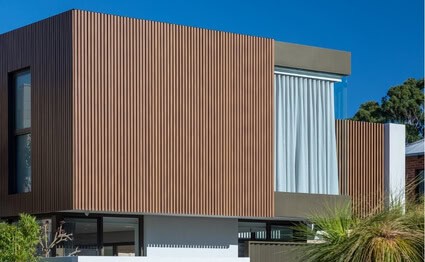
Privacy is a practical need in many Australian suburbs, but that does not mean it has to look dull. Screens can do double duty, hiding the less lovely bits while adding a strong design line to the garden. Timber battens, slatted panels, and vertical screens are especially effective because they break up views without making a space feel boxed in.
A well-placed screen can frame a seating area, highlight a path, or hide bins and utility areas that no one really wants on show. Used thoughtfully, it becomes part of the design rather than a last-minute fix.
For homeowners wanting a neat, modern finish, batten fencing can bring structure and a clean sense of rhythm to an outdoor space. The vertical lines add height and texture, and they work well in everything from contemporary front yards to more relaxed backyard layouts. It is one of those details that quietly lifts the whole scene.
Hardscape surfaces should never feel like an afterthought
Paths, patios, and paved areas often take up more visual space than the plants do, so they need proper attention. A lovely garden can be let down by a dull surface. On the other hand, a good surface can make a simple planting scheme look intentional and sharp.
Choose finishes with texture
Concrete with a softened finish, exposed aggregate, timber decking, natural stone, or even gravel can all bring different qualities to the space. Smooth surfaces feel modern and clean. Rougher ones add grip and a bit of rustic honesty. The key is balance. Too much polish and the space can feel cold. Too many rough edges and it starts to feel unfinished.
Gravel is especially useful in drier parts of Australia. It drains well, looks relaxed, and pairs beautifully with tough planting. It also gives that satisfying crunch underfoot, which sounds small but somehow makes a garden feel alive. A little sensory detail goes a long way.
Think about shadows and light
Structure is not only about what you build. It is also about what the sun does with it. In the Australian climate, light is often strong and unforgiving, which is exactly why it can work so well in landscape design. Slatted screens, angled pergolas, and layered planting cast shadows that change through the day. That movement adds depth without needing extra decoration.
Morning light can make grasses glow. Late afternoon can throw long, clean shadows across a courtyard wall. Even a narrow side passage can feel special if the light hits it properly. A garden with good shadow play often feels more expensive than it actually was, which is never a bad thing.
Keep colour restrained, then let texture do the talking
Many modern landscapes look best with a tight colour palette. Greens, soft greys, warm timber tones, black detailing, and the occasional muted flower colour can be enough. This keeps the focus on form and texture instead of creating visual noise.
That does not mean the garden has to feel sterile. Far from it. A few rusty tones from corten steel, some earthy stone, or a warm clay pot can bring character. The idea is not to remove personality. It is to stop things from shouting over one another.
Small spaces benefit from discipline
In compact Australian backyards, every choice matters. There is less room to hide messy transitions, so the lines need to work harder. Vertical elements help lift the eye. Layered planting softens boundaries. Repeated materials make the space feel unified rather than chopped up.
Even a tiny courtyard can feel elegant with one strong focal point, a narrow run of planting, and a screen that gives the eye somewhere to rest. You do not need a giant lawn or a sprawling layout. A few smart moves often beat a crowded design every time.
A simple formula that works
Use one or two main materials
Repeat plants for consistency
Add vertical elements for height
Leave some breathing space
Let light and shadow create movement
Final thoughts on getting the balance right
Modern landscape design is at its best when it feels calm but not flat, neat but not cold. Structure gives the garden confidence. Texture gives it warmth and depth. When both are working together, the space starts to feel finished in a way that is hard to fake.
In Australia, that balance matters even more. The climate asks for resilience. The lifestyle asks for ease. And the home itself usually deserves something that feels contemporary without trying too hard. A good landscape does not need to be loud to make an impression. Sometimes the smartest gardens are the ones that know exactly when to hold back.
