
The rapid growth of artificial intelligence, cloud computing, big data analytics, and high-performance computing (HPC) is placing unprecedented demands on data center networks. Modern applications generate enormous volumes of east-west traffic, requiring faster and more efficient interconnections between servers, storage systems, and switches. As a result, traditional 100G and even 400G infrastructures are increasingly struggling to meet the bandwidth requirements of next-generation data centers.
To address these challenges, many operators are deploying 800G OSFP modules to increase network capacity while maintaining scalability and efficiency. By delivering twice the bandwidth of 400G solutions, these transceivers help reduce network congestion, improve workload performance, and support the growing demand for AI-driven applications.
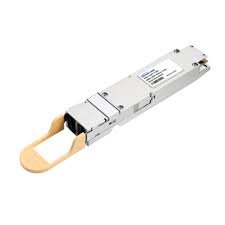
Among the latest high-speed connectivity solutions, the OSFP 800GBASE-DR8 optical transceiver has become a popular choice for hyperscale and enterprise data centers. Designed to support high-density switching environments, 800G OSFP modules provide ultra-high bandwidth, low latency, and reliable optical connectivity, making them ideal for large-scale network deployments.
Why Large-Scale Data Centers Need Higher Bandwidth
As data centers continue to expand, the amount of traffic flowing between servers grows dramatically. AI model training, machine learning workloads, distributed databases, and cloud-native applications often require thousands of servers to communicate simultaneously. In these environments, network performance becomes just as important as computing power.
Bandwidth limitations can lead to network bottlenecks, increased latency, and reduced resource utilization. When servers cannot exchange data quickly enough, expensive computing resources remain underutilized, slowing down application performance and increasing operational costs. Upgrading network links from 400G to 800G provides a practical way to overcome these challenges while preparing the infrastructure for future growth.
Additionally, data center operators are constantly looking for ways to increase rack density without significantly increasing power consumption or cabling complexity. Higher-speed optical modules help achieve these goals by delivering greater bandwidth through fewer physical connections.
Understanding OSFP 800GBASE-DR8 Optical Modules
The OSFP 800GBASE-DR8 optical transceiver is designed to transmit 800Gbps Ethernet traffic over single-mode fiber. It utilizes PAM4 modulation technology and operates at a wavelength of 1310nm. The module supports transmission distances of up to 500 meters through MPO-16/APC connectivity, making it suitable for high-speed data center interconnects.
Compared with lower-speed alternatives, the 800GBASE-DR8 standard significantly increases network throughput while maintaining compatibility with modern Ethernet architectures. The OSFP form factor also provides improved thermal performance compared to some previous-generation designs, allowing operators to deploy higher bandwidths without compromising system reliability.
Another important feature is Digital Diagnostic Monitoring (DDM), which enables administrators to monitor key operating parameters such as temperature, voltage, transmit power, and receive power. This helps simplify network maintenance and improve overall operational visibility.
How OSFP 800GBASE-DR8 Modules Improve Data Center Performance
Higher Network Throughput
One of the most obvious advantages of 800GBASE-DR8 modules is their ability to dramatically increase network throughput. An 800G connection can carry twice the data of a 400G link, reducing the number of required connections and simplifying network architecture. This increased capacity allows large-scale data centers to handle growing workloads more efficiently while minimizing congestion.
For AI clusters and cloud environments, higher throughput directly translates into faster data transfers between compute nodes. This improves application responsiveness and helps accelerate data-intensive processes such as model training and large-scale analytics.
Reduced Network Latency
Low latency is critical in modern data centers, particularly for distributed computing environments. As data travels through fewer network hops and encounters fewer bottlenecks, applications can exchange information more quickly and efficiently.
By providing substantial bandwidth headroom, 800GBASE-DR8 modules reduce the likelihood of congestion-related delays. This enables smoother communication between servers, storage systems, and networking equipment, resulting in improved overall performance for latency-sensitive workloads.
Better Scalability for Future Growth
Large-scale data centers must be designed with future expansion in mind. As new applications and services are introduced, network demands continue to increase. Deploying 800G optical infrastructure today allows organizations to accommodate future bandwidth requirements without frequent hardware upgrades.
The high capacity of OSFP 800GBASE-DR8 modules enables network architects to build scalable infrastructures capable of supporting next-generation workloads. This approach reduces long-term upgrade costs and helps protect technology investments.
Supporting AI and High-Performance Computing Environments
Accelerating AI Training Clusters
Artificial intelligence workloads often involve massive datasets and thousands of GPUs working together to train complex models. These environments require extremely fast communication between compute nodes to ensure efficient resource utilization.
OSFP 800GBASE-DR8 modules provide the bandwidth needed to support large-scale AI clusters, enabling faster data movement and reducing communication bottlenecks. This can significantly shorten training times and improve overall system productivity.
Enhancing HPC Performance
High-performance computing environments rely on fast and reliable interconnects to process scientific simulations, financial modeling, and research applications. Any delay in data transmission can negatively impact computational efficiency.
The high throughput and low-latency characteristics of 800G optical connectivity help HPC systems maintain optimal performance. By supporting rapid data exchange between nodes, these modules contribute to faster computation and improved application scalability.
Optimizing Data Center Efficiency
Beyond performance improvements, OSFP 800GBASE-DR8 modules can also enhance operational efficiency. By consolidating bandwidth into fewer physical links, organizations can reduce cabling complexity and simplify network management. This contributes to cleaner deployments and easier maintenance.
The OSFP form factor is also designed to support efficient cooling in high-density environments. Improved thermal management helps maintain stable operation while reducing the risk of overheating. Combined with advanced monitoring capabilities, this enables operators to maximize network reliability while minimizing downtime.
Conclusion
As AI, cloud computing, and HPC workloads continue to drive network demand, large-scale data centers require faster and more scalable connectivity solutions. OSFP 800GBASE-DR8 optical modules provide the bandwidth, efficiency, and reliability needed to support these modern environments.
With advantages such as higher throughput, reduced latency, improved scalability, and enhanced operational efficiency, OSFP 800GBASE-DR8 modules are becoming a key component of next-generation data center infrastructure. For organizations planning to upgrade their networks and prepare for future growth, adopting 800G optical technology represents a strategic investment in long-term performance and scalability.